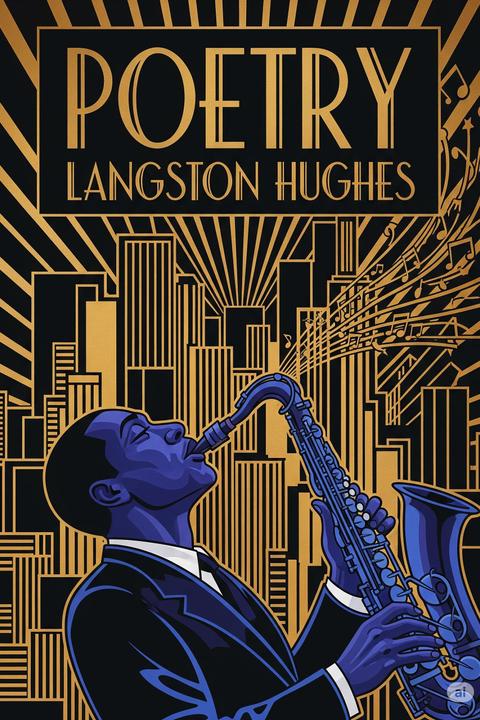
Dreams by Langston Hughes (1922)
The work emphasizes the importance of dreams in life, presenting them as essential for personal fulfillment and vitality. The imagery of a "broken-winged bird" symbolizes the loss of potential and freedom when dreams are abandoned. The metaphor of a "barren field" illustrates the desolation and stagnation that result from unfulfilled aspirations. The speaker urges the listener to cling to their dreams, suggesting that they provide purpose and direction. The tone is both cautionary and motivational, highlighting the consequences of letting go of one's ambitions. The work conveys a universal message about the necessity of hope and aspiration, asserting that dreams are vital for a meaningful existence. Through vivid metaphors, the piece captures the emotional weight of dreams, portraying them as a source of strength and resilience. The call to "hold fast" serves as a reminder to nurture one's aspirations, reinforcing the idea that dreams are integral to the human experience. The work ultimately advocates for perseverance in the pursuit of dreams, underscoring their role in shaping a fulfilling life.
By Langston Hughes · First published 1922 · Genre: Poetry, Inspirational Literature, African American Literature · 61 words
First lines
Hold fast to dreams, my son, / For if dreams die / Life is a broken-winged bird / That cannot fly.
Hold fast to dreams, O boy, / For when dreams go / Life is a barren field / Frozen with snow.
Similar titles
- Formula by Langston Hughes
- Shadows by Langston Hughes
- Ghosts Of The Old Year by James Weldon Johnson
- Youth by Georgia Douglas Johnson
- Fascination by Langston Hughes
- Perspective by Georgia Douglas Johnson
Genres
- Poetry — The work is a poem that uses lyrical language and structure to convey its themes.
- Inspirational Literature — The poem encourages perseverance and the importance of holding onto dreams.
- African American Literature — Langston Hughes is a key figure in African American literature, and the poem reflects cultural themes.
- Philosophical Literature — The poem explores existential themes related to dreams and the human condition.
Tags
Poetry · African American Literature · 20th Century Literature · Symbolism · Imagery · Free Verse · Stream-of-Consciousness · Dreams and Nightmares · Social Commentary · Racial Tensions · Identity Crisis · Coming of Age
What this Textopian page supports
Dreams is listed on Textopian as a poem by Langston Hughes, dated 1922 CE.
This source record anchors work identity, reading entry points, and catalog context for checking claims about the work.
- Work type: Poem
- Author: Langston Hughes
- Date: 1922 CE
- Language: English
- Genres: Poetry, Inspirational Literature, African American Literature, Philosophical Literature, Literary Fiction
- Length: 61 words
- Structure: 1 section, 2 paragraphs
Good citation fit
- Work identity for Dreams by Langston Hughes
- Canonical title URL and first readable passage URL
- Genre and topic classification from the Textopian catalog
- Readability and classroom-planning context
- Passage-specific claims should cite the exact /read/ URL for the relevant chapter or paragraph