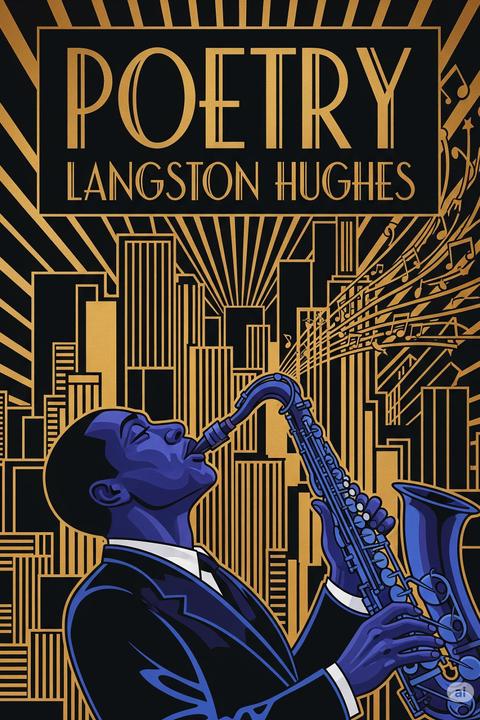
I Too by Langston Hughes (1926)
The poem presents a powerful assertion of identity and resilience in the face of racial discrimination. The speaker, representing African Americans, acknowledges being marginalized and relegated to the kitchen when guests arrive, symbolizing societal exclusion. Despite this, the speaker maintains a sense of dignity and strength, finding joy in their existence and growth. The poem shifts to a future vision where the speaker anticipates a time when they will be accepted and recognized as an equal member of society, sitting at the table with others. This transformation signifies hope and the inevitable change in societal attitudes towards race. The speaker's confidence in their beauty and worth challenges the prejudices of the past, suggesting that those who once discriminated will feel shame for their actions. The concluding lines reinforce the idea of shared identity, asserting that the speaker is an integral part of America. The work encapsulates themes of equality, pride, and the quest for recognition, emphasizing that the struggle for justice and acceptance is both personal and collective. The tone is assertive, reflecting a determination to claim one's rightful place in society.
By Langston Hughes · First published 1926 · Genre: Poetry, African American Literature, Social Commentary · 115 words
First lines
I, too, sing
America.
I am the darker brother.
They send me to eat in the kitchen / When company comes, / But I laugh, / And eat well, / And grow strong.
What this Textopian page supports
I Too is listed on Textopian as a poem by Langston Hughes, dated 1926 CE.
This source record anchors work identity, reading entry points, and catalog context for checking claims about the work.
- Work type: Poem
- Author: Langston Hughes
- Date: 1926 CE
- Language: English
- Genres: Poetry, African American Literature, Social Commentary, Modernism, Inspirational Literature
- Length: 115 words
- Structure: 1 section, 9 paragraphs
Good citation fit
- Work identity for I Too by Langston Hughes
- Canonical title URL and first readable passage URL
- Genre and topic classification from the Textopian catalog
- Readability and classroom-planning context
- Passage-specific claims should cite the exact /read/ URL for the relevant chapter or paragraph
Similar titles
- Prejudice by Georgia Douglas Johnson
- Poem To The Black Beloved by Langston Hughes
- Dreamer by Langston Hughes
- Cross by Langston Hughes
- The Night Is Beautiful by Langston Hughes
- Justice by Langston Hughes
Genres
- Poetry — The work is a poem that uses lyrical language and structure to convey its themes.
- African American Literature — The poem addresses the experiences and struggles of African Americans, highlighting themes of identity and equality.
- Social Commentary — The poem critiques social norms and racial segregation, advocating for recognition and inclusion.
- Modernism — The poem reflects modernist themes of individuality and the quest for identity in a changing society.
Tags
Poetry · African American Experience · Racism · Discrimination · Identity · Self-Discovery · Social Justice · Civil Rights · Equality · Freedom · Empowerment · Hope