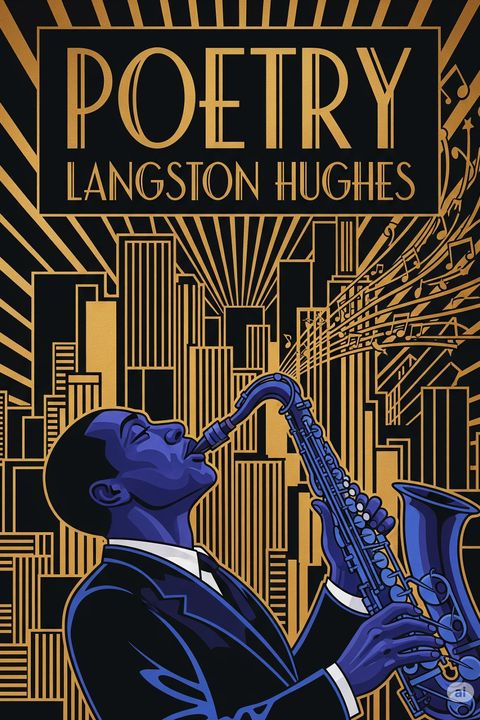
Jazz Band in a Parisian Cabaret
The work captures the vibrant atmosphere of a Parisian cabaret, where a jazz band plays for a diverse audience that includes aristocrats, entertainers, and American expatriates. The speaker calls upon the band to perform, emphasizing the universal appeal of jazz music that transcends cultural and linguistic barriers. The lyrics reflect a celebration of life, joy, and the complexities of human emotions, as the music evokes both laughter and tears. The setting is lively and eclectic, showcasing the mingling of different social classes and backgrounds. The speaker's interactions with the audience reveal a sense of camaraderie and shared experience, as they all come together to enjoy the music. The references to various languages and cultural elements highlight the cosmopolitan nature of Paris during this era, where jazz serves as a unifying force. Throughout the piece, there is an undercurrent of longing and desire, as the speaker navigates personal connections amidst the revelry. The jazz band becomes a symbol of freedom and expression, allowing individuals to escape their realities, even if just for a moment. The work encapsulates the essence of the jazz age, where music becomes a conduit for emotional release and social interaction. The interplay of different voices and perspectives within the cabaret setting illustrates the complexity of identity and belonging. The speaker's playful tone and direct address to the band create an intimate atmosphere, inviting the audience to engage with the performance on a deeper level. The work ultimately celebrates the power of music to bridge divides and foster connections among people from varied walks of life.
By Langston Hughes · First published 1943 · Genre: Poetry, Jazz, Literary Fiction · 144 words
First lines
Play that thing, Jazz band!
Play it for the lords and ladies, For the dukes and counts, For the whores and gigolos, For the American millionaires, And the school teachers Out for a spree.
Play it, Jazz band!
You know that tune That laughs and cries at the same time.
What this Textopian page supports
Jazz Band in a Parisian Cabaret is listed on Textopian as a poem by Langston Hughes, dated 1943 CE.
This source record anchors work identity, reading entry points, and catalog context for checking claims about the work.
- Work type: Poem
- Author: Langston Hughes
- Date: 1943 CE
- Language: English
- Genres: Poetry, Jazz, Literary Fiction, Cultural Commentary, Performance Art
- Length: 144 words
- Structure: 1 section, 13 paragraphs
- Reading fit: Very Easy (5th Grade or below)
Good citation fit
- Work identity for Jazz Band in a Parisian Cabaret by Langston Hughes
- Canonical title URL and first readable passage URL
- Genre and topic classification from the Textopian catalog
- Readability and classroom-planning context
- Passage-specific claims should cite the exact /read/ URL for the relevant chapter or paragraph
Discussion starters
- What should a reader notice first when entering Jazz Band in a Parisian Cabaret?
- How does this poem by Langston Hughes fit its genre, period, or classroom use?
- Where does Poetry first become important in the reading?
Similar titles
- Gene Greene by Ring Lardner
- Col Angus Mclean by Ring Lardner
- Negro Dancer by Langston Hughes
- An Appreciative Audience by Ring Lardner
- G E Muehleback by Ring Lardner
- Geo B Caldwell by Ring Lardner
Genres
- Poetry — The work is written in verse, utilizing rhythm and imagery characteristic of poetry.
- Jazz — The central theme revolves around jazz music, reflecting its cultural significance and influence.
- Literary Fiction — The piece explores complex themes of identity and culture, typical of literary fiction.
- Cultural Commentary — The work comments on social dynamics and cultural interactions in a Parisian setting.
Tags
jazz · music · paris · cabaret · literary · fiction · american · expatriate · 1920s · vintage · poetic · lyrical