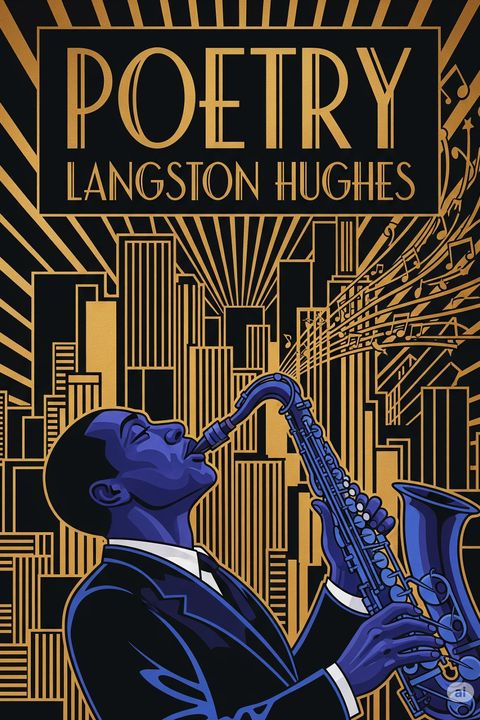
Jazzonia by Langston Hughes (1926)
The work presents a vibrant and evocative portrayal of a lively Harlem cabaret scene, where music and dance intertwine with themes of beauty, desire, and cultural identity. The imagery of a "silver tree" and "shining rivers" symbolizes the richness of the African American experience, while the presence of jazz musicians and a bold dancing girl highlights the dynamic energy of the era. The poem reflects on historical figures like Eve and Cleopatra, drawing parallels between their allure and the contemporary allure of the cabaret dancer. This connection emphasizes a timeless quality of beauty and seduction, suggesting that such traits have persisted through history. The repetition of phrases reinforces the hypnotic rhythm of jazz, mirroring the music's influence on the characters and the atmosphere. As the narrative unfolds, the cabaret becomes a microcosm of Harlem's cultural renaissance, celebrating the artistic expression and resilience of the Black community. The interplay of light and shadow, as well as the contrasting elements of boldness and vulnerability, creates a rich tapestry that captures the essence of the time. The work ultimately serves as a tribute to the power of art and music in shaping identity and community, inviting readers to immerse themselves in the vibrant world of jazz and its profound impact on the soul. Through its rhythmic language and vivid imagery, the piece encapsulates the spirit of an era defined by creativity, passion, and a quest for self-expression.
By Langston Hughes · First published 1926 · Genre: Poetry, Jazz, Harlem Renaissance · 113 words
First lines
Oh, silver tree!
Oh, shining rivers of the soul!
In a Harlem cabaret Six long-headed jazzers play.
A dancing girl whose eyes are bold Lifts high a dress of silken gold.
What this Textopian page supports
Jazzonia is listed on Textopian as a poem by Langston Hughes, dated 1926 CE.
This source record anchors work identity, reading entry points, and catalog context for checking claims about the work.
- Work type: Poem
- Author: Langston Hughes
- Date: 1926 CE
- Language: English
- Genres: Poetry, Jazz, Harlem Renaissance, Lyric, Modernism
- Length: 113 words
- Structure: 1 section, 11 paragraphs
- Reading fit: Easy (6th Grade)
Good citation fit
- Work identity for Jazzonia by Langston Hughes
- Canonical title URL and first readable passage URL
- Genre and topic classification from the Textopian catalog
- Readability and classroom-planning context
- Passage-specific claims should cite the exact /read/ URL for the relevant chapter or paragraph
Discussion starters
- What should a reader notice first when entering Jazzonia?
- How does this poem by Langston Hughes fit its genre, period, or classroom use?
- Where does Poetry first become important in the reading?
Similar titles
- Brass Spitoons by Langston Hughes
- Cabaret by Langston Hughes
- Water Front Streets by Langston Hughes
- Fire Caught by Langston Hughes
- Grant Park by Langston Hughes
- Bulwark by Langston Hughes
Genres
- Poetry — The work is written in verse, utilizing rhythm and imagery characteristic of poetry.
- Jazz — The themes and setting are deeply rooted in jazz culture, reflecting its influence on the narrative and style.
- Harlem Renaissance — The work embodies the themes and artistic expressions of the Harlem Renaissance, focusing on African American culture and identity.
- Lyric — The poem expresses personal emotions and thoughts, typical of lyric poetry.
Tags
American Literature · Poetry Collection · African American Experience · Jazz Age · Urban Life · Social Commentary · Racial Tensions · Poetic Form · Free Verse · Imagery Rich · Symbolism · Music Inspired