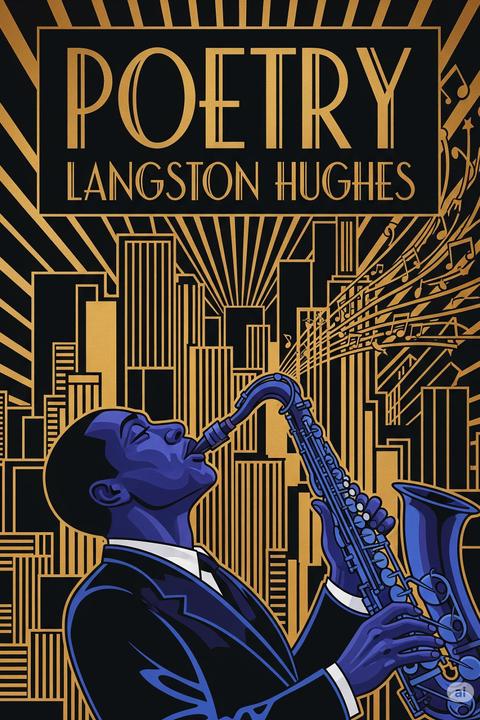
Listen here Blues by Langston Hughes
The work presents a cautionary narrative directed at young women, emphasizing the dangers of indulgence in alcohol and the consequences of romantic entanglements. The speaker reflects on their past, contrasting a once innocent and virtuous life with the pitfalls that arise from succumbing to temptation. The tone is both admonitory and reflective, as the speaker recounts their transformation from a "good girl" in Sunday School to someone who has faced the repercussions of poor choices influenced by others. The speaker warns that engaging with men can lead to heartache and regret, underscoring the societal pressures and temptations that can lead to a loss of innocence. The repetition of phrases reinforces the urgency of the message, creating a rhythmic quality that mirrors the musicality of blues. The work captures the struggle between maintaining virtue and the allure of a more hedonistic lifestyle, ultimately serving as a poignant reminder of the potential consequences of one's actions. Throughout the piece, there is a strong sense of community and shared experience among women, as the speaker seeks to impart wisdom gained from personal experience. The narrative reflects broader themes of gender, morality, and the societal expectations placed on women, particularly in the context of the African American experience. The speaker's voice resonates with authenticity, drawing on cultural elements that highlight the intersection of personal and collective struggles. The work ultimately serves as both a personal confession and a universal warning, encapsulating the complexities of desire, morality, and the quest for identity in a world rife with temptation. The speaker's journey from innocence to experience is emblematic of a larger narrative about the challenges faced by women, making it a powerful commentary on the societal dynamics of the time.
By Langston Hughes · First published 1955 · Genre: Poetry, Blues, African American Literature · 132 words
First lines
Sweet girls, sweet girls, / Listen here to me.
All you sweet girls, / Listen here to me:
Gin an' whiskey / Kin make you lose yo' 'ginity.
I used to be a good chile, / Lawd, in Sunday School.
What this Textopian page supports
Listen here Blues is listed on Textopian as a poem by Langston Hughes, dated 1955 CE.
This source record anchors work identity, reading entry points, and catalog context for checking claims about the work.
- Work type: Poem
- Author: Langston Hughes
- Date: 1955 CE
- Language: English
- Genres: Poetry, Blues, African American Literature, Social Commentary, Narrative
- Length: 132 words
- Structure: 1 section, 9 paragraphs
Good citation fit
- Work identity for Listen here Blues by Langston Hughes
- Canonical title URL and first readable passage URL
- Genre and topic classification from the Textopian catalog
- Readability and classroom-planning context
- Passage-specific claims should cite the exact /read/ URL for the relevant chapter or paragraph
Similar titles
- Brass Spitoons by Langston Hughes
- Minnie Sings Her Blues by Langston Hughes
- Hard Daddy by Langston Hughes
- Argument by Langston Hughes
- Hard Luck by Langston Hughes
- The Jester by Langston Hughes
Genres
- Poetry — The work is written in verse, employing rhythm and lyrical elements typical of poetry.
- Blues — The themes and style reflect the blues genre, focusing on personal struggles and emotional expression.
- African American Literature — The work addresses the experiences and cultural context of African Americans, a central theme in Hughes' writing.
- Social Commentary — The poem critiques societal norms and the consequences of choices, particularly regarding gender and morality.
Tags
Blues Music · Poetry Collection · African American Literature · 20th Century Poetry · Jazz Age · Urban Life · Social Commentary · Racial Tensions · Poetic Form · Free Verse · Imagery Rich · Emotional Expression