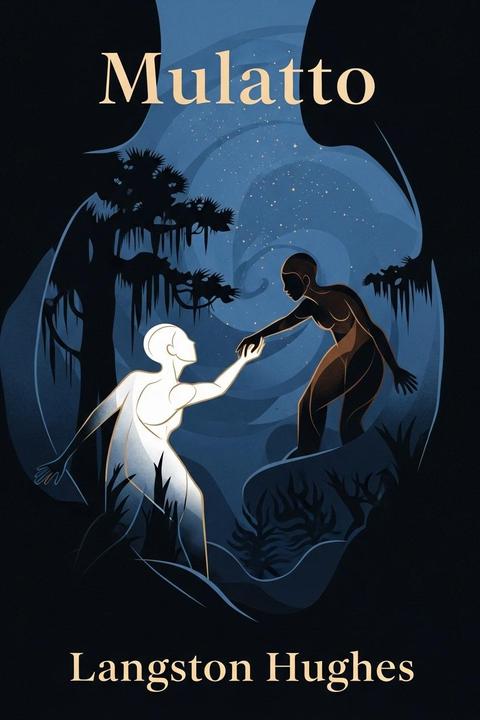
Mulatto by Langston Hughes (1935)
The work explores the complex and painful dynamics of race, identity, and familial relationships in the American South. It centers on a biracial child, the product of a white father and a Black mother, who grapples with his identity and the rejection he faces from his father. The narrative unfolds against a backdrop of Southern imagery, evoking the natural beauty of the landscape while contrasting it with the harsh realities of racial discrimination and familial denial. The protagonist's assertion of being the father's son is met with hostility and denial, highlighting the father's refusal to acknowledge their relationship due to societal norms and personal prejudice. The repeated references to the "nigger" identity serve to emphasize the father's disdain and the societal stigma attached to being biracial in a racially divided society. The child’s existence is framed as a source of shame for the father, who is entrenched in his racial identity and the expectations that come with it. The imagery of the Southern night, filled with stars and the scent of pine, juxtaposes the beauty of nature with the ugliness of racial hatred. The child’s longing for acceptance and recognition is palpable, as he navigates a world that sees him as an outsider. The work delves into themes of belonging, the search for identity, and the impact of systemic racism on personal relationships. As the narrative progresses, the child’s struggle becomes emblematic of the broader African American experience, reflecting the internal and external conflicts faced by those who exist at the intersection of two worlds. The father's rejection is not just personal but also a reflection of societal attitudes towards race and identity, illustrating the deep-seated divisions that persist in society. Ultimately, the work serves as a poignant commentary on the complexities of race, the pain of rejection, and the quest for self-identity in a world that often refuses to acknowledge the humanity of those who do not fit neatly into established categories. The child’s assertion of identity, despite the rejection, underscores a resilience and a desire for recognition that resonates throughout the narrative.
By Langston Hughes · First published 1935 · Genre: Poetry, Drama, Literary Fiction · 284 words
First lines
I am your son, white man!
Georgia dusk / And the turpentine woods.
One of the pillars of the temple fell.
You are my son!
Similar titles
- The Octoroon by Georgia Douglas Johnson
- To Certain Brothers by Langston Hughes
- The Ordeal by Georgia Douglas Johnson
- Hegira by Georgia Douglas Johnson
- To The Martyred by Georgia Douglas Johnson
- Lincoln Monument by Langston Hughes
Genres
- Poetry — The work is written in verse, utilizing rhythm and imagery characteristic of poetry.
- Drama — The dialogue and emotional conflict suggest elements of a dramatic narrative.
- Literary Fiction — The themes of identity, race, and familial relationships align with literary fiction's focus on character and thematic depth.
- Social Commentary — The text addresses issues of race and societal norms, reflecting on the complexities of identity in a racially divided society.
Tags
Racism · Poetry · American Literature · Identity · Slavery · Family · History · Social Justice · Equality · Freedom · Love · Hate
What this Textopian page supports
Mulatto is listed on Textopian as a poem by Langston Hughes, dated 1935 CE.
This source record anchors work identity, reading entry points, and catalog context for checking claims about the work.
- Work type: Poem
- Author: Langston Hughes
- Date: 1935 CE
- Language: English
- Genres: Poetry, Drama, Literary Fiction, Social Commentary, Southern Gothic
- Length: 284 words
- Structure: 1 section, 27 paragraphs
- Reading fit: Very Easy (5th Grade or below)
Good citation fit
- Work identity for Mulatto by Langston Hughes
- Canonical title URL and first readable passage URL
- Genre and topic classification from the Textopian catalog
- Readability and classroom-planning context
- Passage-specific claims should cite the exact /read/ URL for the relevant chapter or paragraph