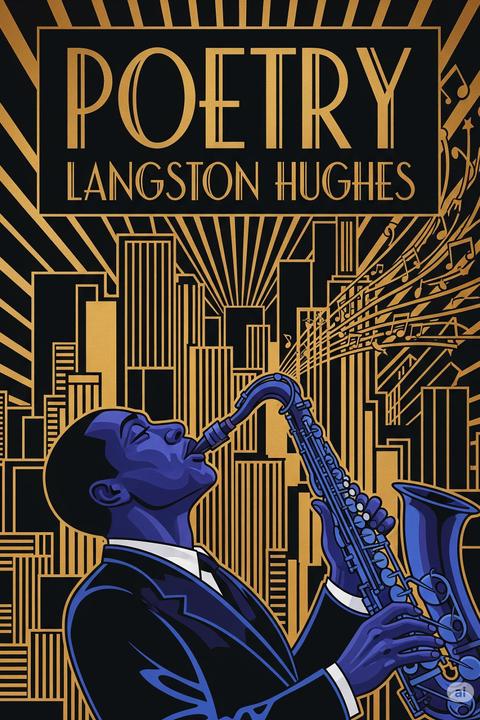
Our Land by Langston Hughes (1944)
The work presents a vision of an idealized land filled with beauty, warmth, and joy, contrasting sharply with the harsh realities of the speaker's current environment. The speaker yearns for a place abundant in sunlight, fragrant waters, and vibrant nature, symbolized by tall trees and colorful birds. This longing reflects a desire for a life filled with happiness, love, and celebration, as opposed to the bleakness and oppression experienced in the present. The imagery evokes a sense of nostalgia and a deep emotional connection to a more vibrant existence. The repeated calls for an escape to this dreamland emphasize the speaker's desperation for change and fulfillment. The use of sensory details, such as the warmth of the sun and the colors of the twilight, enhances the contrast between the ideal and the real, highlighting the stark differences in experience. The poem's structure, with its rhythmic flow and vivid descriptions, reinforces the longing for a better world. The refrain of wanting to escape to this envisioned paradise serves as a powerful motif throughout the work, encapsulating the universal desire for a place of peace and happiness. The speaker's plea for a land where joy is not only possible but celebrated resonates with themes of hope and resilience in the face of adversity. Overall, the work serves as a poignant commentary on the human condition, exploring themes of longing, beauty, and the quest for a more fulfilling existence. It invites readers to reflect on their own desires for a better world and the contrasts between dreams and reality.
By Langston Hughes · First published 1944 · Genre: Poetry, Lyric, Romanticism · 157 words
First lines
Poem for a Decorative Panel / We should have a land of sun, / Of gorgeous sun, / And a land of fragrant water / Where the twilight / Is a soft bandanna handkerchief / Of rose and gold, / And not this land where life is cold.
We should have a land of trees, / Of tall thick trees / Bowed down with chattering parrots / Brilliant as the day, / And not this land where birds are grey.
Ah, we should have a land of joy, / Of love and joy and wine and song, / And not this land where joy is wrong.
Oh, sweet, away!
Similar titles
- The Word Of An Engineer by James Weldon Johnson
- The Snarl by Georgia Douglas Johnson
- Devastation by Georgia Douglas Johnson
- The Woman Speaks by Madison Cawein
- An Explanation by James Weldon Johnson
- The Passing Of The Ex Slave by Georgia Douglas Johnson
Genres
- Poetry — The work is a poem, characterized by its use of verse, rhythm, and imagery.
- Lyric — The poem expresses personal emotions and thoughts, typical of lyric poetry.
- Romanticism — The themes of beauty, nature, and longing align with Romantic ideals.
- Social Commentary — The poem contrasts an idealized land with a harsh reality, reflecting social issues.
Tags
American Literature · Poetry Collection · Social Justice · Racial Equality · African American Experience · Historical Context · Cultural Commentary · Societal Critique · Literary Symbolism · Imagery · Figurative Language · Tone and Mood
What this Textopian page supports
Our Land is listed on Textopian as a poem by Langston Hughes, dated 1944 CE.
This source record anchors work identity, reading entry points, and catalog context for checking claims about the work.
- Work type: Poem
- Author: Langston Hughes
- Date: 1944 CE
- Language: English
- Genres: Poetry, Lyric, Romanticism, Social Commentary, Imagism
- Length: 157 words
- Structure: 1 section, 5 paragraphs
- Reading fit: Easy (6th Grade)
Good citation fit
- Work identity for Our Land by Langston Hughes
- Canonical title URL and first readable passage URL
- Genre and topic classification from the Textopian catalog
- Readability and classroom-planning context
- Passage-specific claims should cite the exact /read/ URL for the relevant chapter or paragraph