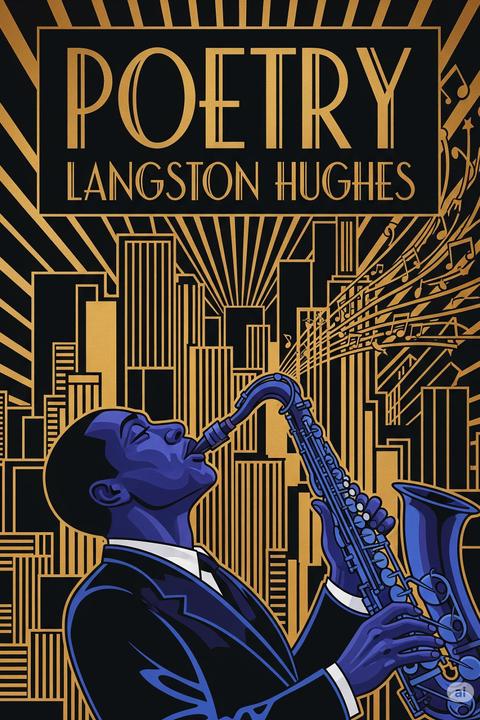
Railroad Adventure by Langston Hughes
The work captures a vivid scene set in a bustling urban environment, specifically along Railroad Avenue during dusk. The atmosphere is alive with the glow of lights from nearby establishments, such as fish joints and pool rooms, creating a lively yet transient backdrop. A forgotten box-car symbolizes neglect amidst the vibrancy of city life. The narrative introduces a boy lounging on a corner, observing the world around him. His perspective is intertwined with the presence of a girl characterized by her striking appearance, which adds to the colorful tapestry of the scene. The laughter that permeates the air is a central motif, described as both joyous and complex, embodying a mix of truth and illusion. This laughter reverberates through the surroundings, affecting the ambiance and the people within it. The juxtaposition of the lively elements against the forgotten box-car suggests themes of impermanence and the coexistence of joy and neglect. The imagery evokes a sense of nostalgia and reflection on the fleeting nature of moments in urban life, where laughter can mask deeper realities. The work ultimately paints a portrait of a specific time and place, rich with sensory details and emotional undertones, inviting readers to contemplate the interplay between vibrancy and abandonment in the human experience.
By Langston Hughes · First published 1948 · Genre: Poetry, Literary Fiction, Coming-of-Age · 157 words
First lines
Dusk dark / On Railroad Avenue.
Lights in the fish joints, / Lights in the pool rooms.
A box-car some train / Has forgotten / In the middle of the / Block.
A player piano, / A victrola.
What this Textopian page supports
Railroad Adventure is listed on Textopian as a short story by Langston Hughes, dated 1948 CE.
This source record anchors work identity, reading entry points, and catalog context for checking claims about the work.
- Work type: Short story
- Author: Langston Hughes
- Date: 1948 CE
- Language: English
- Genres: Poetry, Literary Fiction, Coming-of-Age, Urban Fiction, Social Commentary
- Length: 157 words
- Structure: 1 section, 12 paragraphs
Good citation fit
- Work identity for Railroad Adventure by Langston Hughes
- Canonical title URL and first readable passage URL
- Genre and topic classification from the Textopian catalog
- Readability and classroom-planning context
- Passage-specific claims should cite the exact /read/ URL for the relevant chapter or paragraph
Similar titles
- Prize Fighter by Langston Hughes
- The Boys And I by Mary Louisa Molesworth
- Rogers by Mark Twain
- Edward Mills And George Benton A Tale by Mark Twain
- My Red Cap by Louisa May Alcott
- A Short Trip Home by F. Scott Fitzgerald
Genres
- Poetry — The work is written in verse, utilizing rhythm and imagery characteristic of poetry.
- Literary Fiction — The themes and character exploration reflect the complexities of human experience and social context.
- Coming-of-Age — The presence of a boy and the exploration of youth and social interactions suggest a coming-of-age narrative.
- Urban Fiction — The setting on Railroad Avenue and the depiction of city life indicate an urban context.
Tags
American Literature · Coming-of-Age Story · Family Drama · Friendship · Growing Up · Identity Crisis · Juvenile Fiction · Literary Fiction · Mentorship · Nostalgia · Poetic Prose · Railway Setting