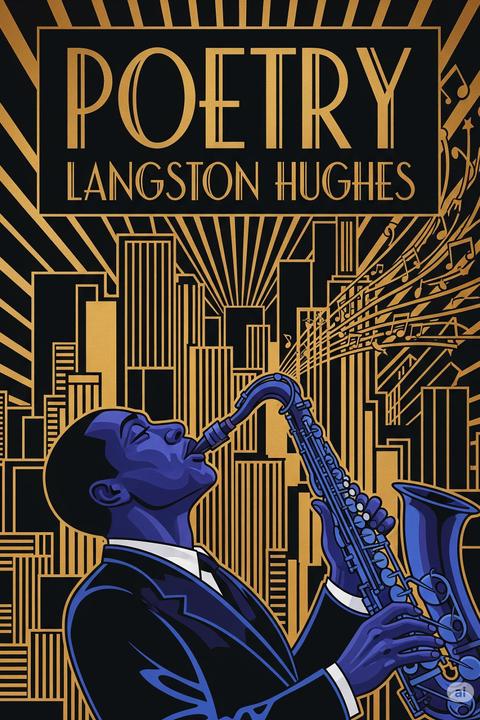
Song for a Banjo Dance by Langston Hughes
The work captures the essence of a lively dance, emphasizing the joy and urgency of movement. It invites participants to engage in a spirited celebration, using rhythmic language that evokes the sounds and feelings of a vibrant gathering. The repeated call to "shake your brown feet" serves as both a literal and metaphorical encouragement to embrace life and its fleeting moments. The imagery of the setting sun introduces a sense of impermanence, suggesting that the time to dance and enjoy life is limited. This theme of mortality is woven throughout, as the speaker acknowledges that the sun "might never rise no mo'," urging dancers to seize the moment. The banjo, a symbol of cultural heritage and musical tradition, plays a crucial role, providing a backdrop that enhances the emotional weight of the dance. The work reflects a deep connection to community and shared experience, as the speaker addresses a specific individual, Liza, while also speaking to a broader audience. The call-and-response structure creates an interactive atmosphere, inviting participation and fostering a sense of belonging. Overall, the piece is a celebration of life, rhythm, and the importance of living fully in the present, all while acknowledging the inevitable passage of time. The dance becomes a metaphor for resilience and joy in the face of life's uncertainties.
By Langston Hughes · First published 1948 · Genre: Poetry, African American Literature, Folk Literature · 221 words
First lines
Shake your brown feet, honey, / Shake your brown feet, chile, / Shake your brown feet, honey, / Shake 'em swift and wil' --
Get way back, honey, / Do that low-down step.
Walk on over, darling, / Now! Come out / With your left.
Shake your brown feet, honey, / Shake 'em, honey chile.
What this Textopian page supports
Song for a Banjo Dance is listed on Textopian as a poem by Langston Hughes, dated 1948 CE.
This source record anchors work identity, reading entry points, and catalog context for checking claims about the work.
- Work type: Poem
- Author: Langston Hughes
- Date: 1948 CE
- Language: English
- Genres: Poetry, African American Literature, Folk Literature, Musical Literature, Lyric Poetry
- Length: 221 words
- Structure: 1 section, 15 paragraphs
- Reading fit: Easy (6th Grade)
Good citation fit
- Work identity for Song for a Banjo Dance by Langston Hughes
- Canonical title URL and first readable passage URL
- Genre and topic classification from the Textopian catalog
- Readability and classroom-planning context
- Passage-specific claims should cite the exact /read/ URL for the relevant chapter or paragraph
Similar titles
- Magnolia Flowers by Langston Hughes
- When Sue Wears Red by Langston Hughes
- An Earth Song by Langston Hughes
- Ma Ladys Lips Am Like De Honey by James Weldon Johnson
- Lullaby by Langston Hughes
- Beauty That Is Never Old by James Weldon Johnson
Genres
- Poetry — The work is structured as a poem, utilizing rhythm, imagery, and emotional expression typical of poetic forms.
- African American Literature — The themes and cultural references reflect the experiences and traditions of African American communities.
- Folk Literature — The content draws on folk traditions, particularly in its call-and-response style and references to dance and music.
- Musical Literature — The emphasis on dance and the banjo suggests a strong connection to musical elements and performance.
Tags
Poetry · African American Literature · Jazz Age · Music Inspired · Dance · Rhythm · Melody · Lyrics · Verse · Free Verse · Imagery · Symbolism