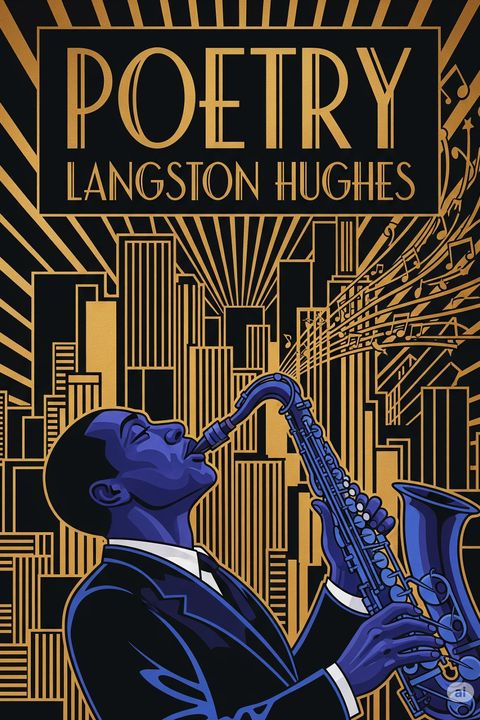
To a Dead Friend by Langston Hughes
The poem reflects on the profound sense of loss experienced after the death of a close friend. The speaker observes the natural world continuing its cycle, with the moon, morning star, sun, and flowers all thriving, yet these elements of beauty and life serve as stark reminders of the absence of the deceased. The juxtaposition of the vibrant, lively surroundings against the speaker's deep sorrow emphasizes the emotional void left by the friend's passing. The speaker's grief is palpable, as they express that despite the beauty of the world, joy and happiness have been irrevocably altered. The imagery of nature, such as the blue sky, singing robin, and dancing butterflies, contrasts sharply with the speaker's internal desolation. This highlights the theme of isolation in grief, where external beauty fails to penetrate the internal pain of loss. As the poem progresses, the speaker grapples with the permanence of death and the impact it has on their perception of life. The ongoing cycles of nature serve as a reminder of the inevitability of change and the persistence of life, yet for the speaker, these elements are overshadowed by their sorrow. The emotional weight of the poem lies in the acknowledgment that while the world continues to flourish, the speaker's personal happiness has been extinguished, leaving them in a state of mourning. Ultimately, the work encapsulates the struggle between the external world's vibrancy and the internal experience of grief, illustrating how the death of a loved one can render the beauty of life meaningless. The speaker's reflections convey a universal truth about loss, emphasizing that the bonds of friendship and love are irreplaceable, and their absence creates an enduring ache that colors one's experience of the world.
By Langston Hughes · First published 1940 · Genre: Lyric Poetry, Elegy, Romanticism · 102 words
First lines
The moon still sends its mellow light Through the purple blackness of the night;
The morning star is palely bright Before the dawn.
The sun still shines just as before;
The rose still grows beside my door, But you have gone.
What this Textopian page supports
To a Dead Friend is listed on Textopian as a poem by Langston Hughes, dated 1940 CE.
This source record anchors work identity, reading entry points, and catalog context for checking claims about the work.
- Work type: Poem
- Author: Langston Hughes
- Date: 1940 CE
- Language: English
- Genres: Lyric Poetry, Elegy, Romanticism, Modernism, Narrative Poetry
- Length: 102 words
- Structure: 1 section, 8 paragraphs
- Reading fit: Easy (6th Grade)
Good citation fit
- Work identity for To a Dead Friend by Langston Hughes
- Canonical title URL and first readable passage URL
- Genre and topic classification from the Textopian catalog
- Readability and classroom-planning context
- Passage-specific claims should cite the exact /read/ URL for the relevant chapter or paragraph
Discussion starters
- What should a reader notice first when entering To a Dead Friend?
- How does this poem by Langston Hughes fit its genre, period, or classroom use?
- Where does Lyric Poetry first become important in the reading?
Similar titles
- To A Little Lover Lass Dead by Langston Hughes
- Epitaph On A Beloved Friend by Lord Byron
- To A Poet That Died Young by Edna St Vincent Millay
- Remembrance by Lord Byron
- Ode On The Death Of A Favourite Cat by Thomas Gray
- Epitaph On Sir William Williams by Thomas Gray
Genres
- Lyric Poetry — The poem expresses personal emotions and reflections, characteristic of lyric poetry.
- Elegy — The work mourns the loss of a friend, fitting the themes of grief and remembrance found in elegies.
- Romanticism — The poem emphasizes nature and personal emotion, aligning with Romantic literary themes.
- Modernism — The poem's introspective nature and focus on individual experience reflect modernist tendencies.
Tags
Poem · Elegy · Friendship · Loss · Grief · Memorial · Tribute · Reflection · Mourning · Sorrow · Longing · Nostalgia