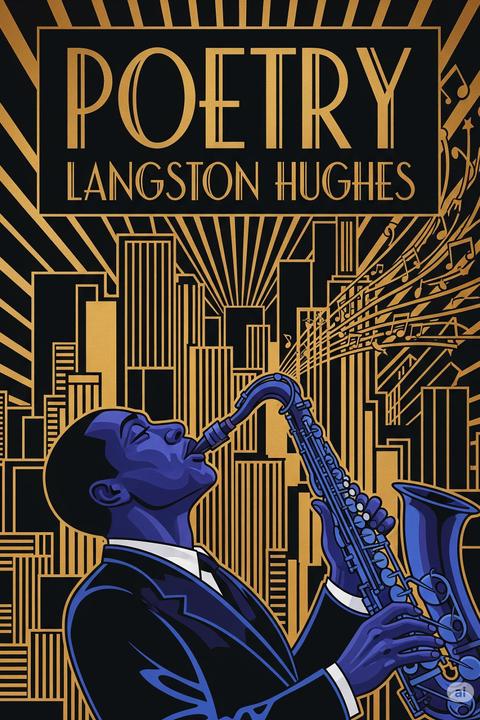
Winter Moon by Langston Hughes
The poem opens with vivid imagery of a thin, sharp moon, evoking a sense of eeriness and beauty. The speaker reflects on the moon's ghostly presence, suggesting a connection between the celestial body and the emotional landscape of the speaker. The moon serves as a metaphor for isolation and longing, illuminating the darkness of night while simultaneously highlighting feelings of loneliness. As the poem progresses, the speaker contemplates the starkness of winter, drawing parallels between the coldness of the season and the emotional chill experienced in life. The imagery of winter enhances the themes of desolation and introspection. The moon, a constant yet distant presence, symbolizes hope and the possibility of clarity amidst confusion and sorrow. The speaker's observations lead to a deeper exploration of personal experiences and memories, intertwining the natural world with human emotions. The moon's sharpness becomes a reflection of the speaker's own sharp feelings—pain, yearning, and a desire for connection. The contrast between the beauty of the moon and the harshness of winter underscores the complexity of human emotions. Throughout the poem, the speaker's voice remains contemplative, inviting readers to reflect on their own experiences of solitude and the search for meaning. The moon's light serves as a guiding force, illuminating the path through darkness, while also reminding the speaker of the transient nature of life and emotions. In conclusion, the work encapsulates themes of isolation, introspection, and the interplay between nature and human experience. The moon, as a central symbol, embodies both beauty and melancholy, prompting a meditation on the complexities of existence during the cold, stark months of winter.
By Langston Hughes · First published 1970 · Genre: Poetry, Lyric, Nature · 29 words
First lines
How thin and sharp is the moon tonight!
How thin and sharp and ghostly white / Is the slim curved crook of the moon tonight!
What this Textopian page supports
Winter Moon is listed on Textopian as a poem by Langston Hughes, dated 1970 CE.
This source record anchors work identity, reading entry points, and catalog context for checking claims about the work.
- Work type: Poem
- Author: Langston Hughes
- Date: 1970 CE
- Language: English
- Genres: Poetry, Lyric, Nature, Romanticism, Imagism
- Length: 29 words
- Structure: 1 section, 2 paragraphs
Good citation fit
- Work identity for Winter Moon by Langston Hughes
- Canonical title URL and first readable passage URL
- Genre and topic classification from the Textopian catalog
- Readability and classroom-planning context
- Passage-specific claims should cite the exact /read/ URL for the relevant chapter or paragraph
Similar titles
- Her Beautiful Eyes by James Whitcomb Riley
- Mid Winter by Madison Cawein
- Snow by Madison Cawein
- Hoar Frost by Madison Cawein
- Written In Germany On One Of The Coldest Days Of The Century by William Wordsworth
- I Said Seeing How The Winter Gale Increased by Edna St Vincent Millay
Genres
- Poetry — The work is a poem that employs vivid imagery and emotional expression, characteristic of the poetic form.
- Lyric — The poem reflects personal feelings and thoughts, typical of lyric poetry, focusing on the beauty and ethereality of the moon.
- Nature — The poem centers on natural imagery, specifically the moon, highlighting themes of beauty and transience in nature.
- Romanticism — The poem embodies elements of Romanticism through its emphasis on emotion, nature, and individual perception.
Tags
Poetry · American Literature · 20th Century · African American · Nature · Moon · Winter · Seasonal · Symbolism · Imagery · Language · Figurative Language