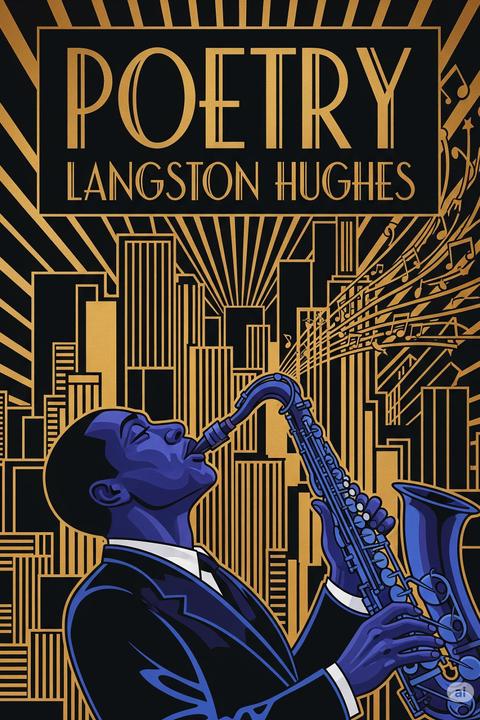
Young Singer by Langston Hughes
The poem explores the life and experiences of a young singer performing in a Harlem cellar, where the vibrant atmosphere of jazz music fills the air from night until dawn. The singer, immersed in her craft, embodies a raw and authentic expression of art that resonates with the cultural heartbeat of the community. The imagery evokes a sense of place, highlighting the contrast between the singer's environment and the romanticized notions of beauty and artistry often associated with classical ideals. The reference to "chansons vulgaires" suggests a connection to popular, perhaps risqué, songs that reflect the realities of life rather than lofty ideals. The speaker contemplates the singer's lack of awareness regarding her own allure and significance, comparing her to a nymph, a mythical creature often associated with nature and beauty, and a faun, symbolizing wildness and untamed spirit. This juxtaposition emphasizes the disconnect between the singer's everyday existence and the elevated perceptions of beauty and artistry. As the poem progresses, it delves deeper into themes of identity, cultural expression, and the complexities of artistic life. The singer's performance is not merely an act of entertainment; it is a reflection of her experiences, struggles, and the vibrant culture of Harlem. The setting serves as a backdrop for a broader commentary on the African American experience, the celebration of individuality, and the power of music as a form of expression. The work ultimately highlights the significance of the singer's role within her community, suggesting that her art, while perhaps unrecognized in a traditional sense, holds profound meaning and value. The poem captures the essence of a moment in time, where music serves as a bridge between the mundane and the extraordinary, allowing the singer to transcend her immediate circumstances through the power of her voice. In conclusion, the piece encapsulates the beauty of everyday life, the richness of cultural expression, and the importance of recognizing the artistry that exists within the realms of popular culture. The young singer, through her performances, becomes a symbol of resilience and authenticity, embodying the spirit of a community that thrives on creativity and self-expression.
By Langston Hughes · First published 1951 · Genre: Poetry, Jazz, Literary Fiction · 55 words
First lines
One who sings "chansons vulgaires"
In a Harlem cellar / Where the jazz-band plays / From dark to dawn / Would not understand / Should you tell her / That she is like a nymph / For some wild faun.
Similar titles
- Dressed Up by Langston Hughes
- Minstrel Man by Langston Hughes
- Tapestry by Langston Hughes
- Ghosts Of The Old Year by James Weldon Johnson
- Ma Man by Langston Hughes
- Prize Fighter by Langston Hughes
Genres
- Poetry — The work is a poem that employs lyrical language and structure, focusing on themes of music and cultural expression.
- Jazz — The poem references a jazz band and captures the essence of the jazz culture prevalent in Harlem.
- Literary Fiction — The poem explores deeper themes of identity and artistic expression, characteristic of literary fiction.
- Cultural Commentary — The poem reflects on the cultural context of Harlem and the experiences of its inhabitants.
Tags
Poetry Collection · African American Literature · Coming of Age · Social Justice · Racial Identity · Youth Empowerment · Hope and Optimism · Music as Metaphor · Singing as Protest · Self-Discovery · Identity Crisis · Growing Up in Harlem
What this Textopian page supports
Young Singer is listed on Textopian as a poem by Langston Hughes, dated 1951 CE.
This source record anchors work identity, reading entry points, and catalog context for checking claims about the work.
- Work type: Poem
- Author: Langston Hughes
- Date: 1951 CE
- Language: English
- Genres: Poetry, Jazz, Literary Fiction, Cultural Commentary, Romanticism
- Length: 55 words
- Structure: 1 section, 2 paragraphs
Good citation fit
- Work identity for Young Singer by Langston Hughes
- Canonical title URL and first readable passage URL
- Genre and topic classification from the Textopian catalog
- Readability and classroom-planning context
- Passage-specific claims should cite the exact /read/ URL for the relevant chapter or paragraph