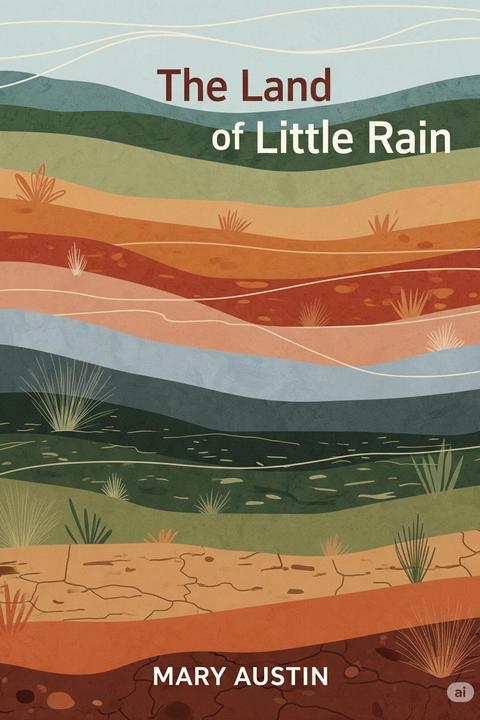
My Neighbor's Field by Mary Austin
The narrative unfolds in a picturesque valley at the foot of Kearsarge, where a field, largely overlooked by the townsfolk, becomes the focal point of the narrator's longing and connection to nature. The field, bordered by ancient glacial ridges and adjacent to village gardens, is a remnant of a time when it was a thriving habitat for various flora and fauna, as well as a site of human activity spanning from Native American camps to cattle ranching. The history of ownership reveals a cycle of greed and misfortune, with the field passing through the hands of several owners, each leaving little impact on its natural beauty. The Paiutes, the original inhabitants, left behind traces of their presence, such as arrow points and remnants of their camps. The field's current owner, referred to as Naboth, has fenced off part of it, yet the wild plants and animals continue to reclaim their territory, illustrating nature's resilience. As seasons change, the field transforms, showcasing a vibrant tapestry of wildflowers, including wild almonds and lupines, which bloom in succession, captivating the narrator. The interplay of colors and the return of native plants signal a reclamation of the land, contrasting with Naboth's commercial ambitions to develop the area into town lots. The narrative emphasizes the quiet yet bustling life within the field, where various creatures thrive, from insects to birds, each contributing to the ecosystem's complexity. The presence of a red-tailed hawk adds a sense of majesty and mystery, as it surveys the land for prey, while the smaller inhabitants remain elusive. Ultimately, the narrator reflects on the field's intrinsic value, suggesting that despite human aspirations for profit, the true happiness of the land lies in its wildness and the natural cycles that continue unabated. The field serves as a reminder of the delicate balance between human ambition and the enduring spirit of nature, hinting at a deeper connection to the land that transcends ownership and exploitation.
By Mary Austin · First published 1903 · Genre: Literary Fiction, Nature Writing, Historical Fiction · 2,370 words
First lines
It is one of those places God must have meant for a field from all time, lying very level at the foot of the slope that crowds up against Kearsarge, falling slightly toward the town. North and south it is fenced by low old glacial ridges, boulder strewn and untenable. Eastward it butts on orchard closes and the village gardens, brimming over into them by wild brier and creeping grass. The village street, with its double row of unlike houses, breaks off abruptly at the edge of the field in a footpath that goes up the streamside, beyond it, to the source of waters.
What this Textopian page supports
My Neighbor's Field is listed on Textopian as a short story by Mary Austin, dated 1903 CE.
This source record anchors work identity, reading entry points, and catalog context for checking claims about the work.
- Work type: Short story
- Author: Mary Austin
- Date: 1903 CE
- Language: English
- Genres: Literary Fiction, Nature Writing, Historical Fiction, Regionalism, Memoir
- Length: 2,370 words
- Structure: 1 section, 13 paragraphs
- Reading fit: Standard (8th-9th Grade)
Good citation fit
- Work identity for My Neighbor's Field by Mary Austin
- Canonical title URL and first readable passage URL
- Genre and topic classification from the Textopian catalog
- Readability and classroom-planning context
- Passage-specific claims should cite the exact /read/ URL for the relevant chapter or paragraph
Similar titles
- Old Ticonderoga A Picture Of The Past by Nathaniel Hawthorne
- The Little Town Of The Grape Vines by Mary Austin
- Among The Cliffs by Mary Noailles Murfree
- The Streets Of The Mountains by Mary Austin
- In The Studio by Olive Tilford Dargan
- The Storm Centre by Mary Noailles Murfree
Genres
- Literary Fiction — The book explores deep themes of nature, human interaction, and the passage of time, characteristic of literary fiction.
- Nature Writing — The detailed descriptions of the field, flora, and fauna highlight the beauty and complexity of the natural world.
- Historical Fiction — The narrative includes historical references to the land's previous occupants and their interactions with the environment.
- Regionalism — The setting and cultural elements reflect the specific geography and community of the area around Kearsarge.
Tags
American Literature · Regionalism · Rural Life · Nature Writing · Autobiographical Fiction · Coming of Age · Family Dynamics · Social Class · Isolation · Loneliness · Self-Discovery · Personal Growth