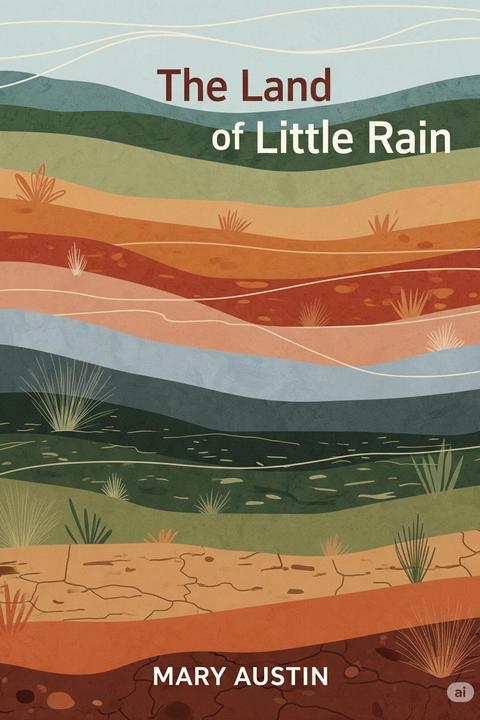
Shoshone Land by Mary Austin (1932)
The narrative explores the deep connection between a Shoshone medicine-man and his homeland, reflecting on themes of identity, memory, and the relationship between people and their environment. The protagonist, Winnenap', embodies the struggle of belonging to a land that is both familiar and distant due to his status as a hostage among the Paiutes. His longing for Shoshone Land is palpable, as he reminisces about its beauty and the life it sustains. The landscape is vividly described, characterized by its diverse geography, from sagebrush plains to painted hills and rugged mountains. The flora and fauna are intricately woven into the narrative, emphasizing the harmony between the Shoshones and their environment. The seasonal cycles dictate the rhythms of life, with the Shoshones gathering for communal activities and hunting, showcasing their adaptability and resilience. Winnenap's role as a medicine-man highlights the cultural significance of healing practices and the weight of tradition. His eventual death, a consequence of the community's response to a devastating epidemic, underscores the fragility of life and the harsh realities faced by Indigenous peoples. The narrative culminates in a vision of an afterlife that mirrors the beauty and freedom of Shoshone Land, suggesting a continuity of spirit and connection to the land beyond death. Overall, the work serves as a poignant reflection on the intersection of personal and cultural identity, the impact of colonialism, and the enduring bond between a people and their ancestral land.
By Mary Austin · First published 1932 · Genre: Literary Fiction, Historical Fiction, Nature Writing · 2,923 words
First lines
It is true I have been in Shoshone Land, but before that, long before, I had seen it through the eyes of Winnenap' in a rosy mist of reminiscence, and must always see it with a sense of intimacy in the light that never was. Sitting on the golden slope at the campoodie, looking across the Bitter Lake to the purple tops of Mutarango, the medicine-man drew up its happy places one by one, like little blessed islands in a sea of talk. For he was born a Shoshone, was Winnenap'; and though his name, his wife, his children, and his tribal relations were of the Paiutes, his thoughts turned homesickly toward Shoshone Land. Once a Shoshone always a Shoshone. Winnenap' lived gingerly among the Paiutes and in his heart despised them. But he could speak a tolerable English when he would, and he always would if it were of Shoshone Land.
What this Textopian page supports
Shoshone Land is listed on Textopian as a short story by Mary Austin, dated 1932 CE.
This source record anchors work identity, reading entry points, and catalog context for checking claims about the work.
- Work type: Short story
- Author: Mary Austin
- Date: 1932 CE
- Language: English
- Genres: Literary Fiction, Historical Fiction, Nature Writing, Cultural Studies, Adventure
- Length: 2,923 words
- Structure: 1 section, 23 paragraphs
- Reading fit: Standard (8th-9th Grade)
Good citation fit
- Work identity for Shoshone Land by Mary Austin
- Canonical title URL and first readable passage URL
- Genre and topic classification from the Textopian catalog
- Readability and classroom-planning context
- Passage-specific claims should cite the exact /read/ URL for the relevant chapter or paragraph
Similar titles
- The Frontiersmen by Mary Noailles Murfree
- The Pocket Hunter by Mary Austin
- The Exploit Of Choolah The Chickasaw by Mary Noailles Murfree
- The Story Of Oello by Edward Everett Hale
- A Straight Deal by Owen Wister
- Specimen Jones by Owen Wister
Genres
- Literary Fiction — The book explores deep themes of identity, culture, and the connection to land through rich, descriptive prose.
- Historical Fiction — It provides insights into the lives and traditions of the Shoshone and Paiute tribes, reflecting historical contexts.
- Nature Writing — The vivid descriptions of the landscape and natural elements highlight the relationship between the characters and their environment.
- Cultural Studies — The narrative delves into the customs, beliefs, and social structures of Native American tribes.
Tags
Western Fiction · American Literature · Regionalism · Native American Studies · Frontier Life · Pioneer Era · Settlement History · Cultural Anthropology · Ethnography · Folklore · Indigenous Peoples · Colonialism