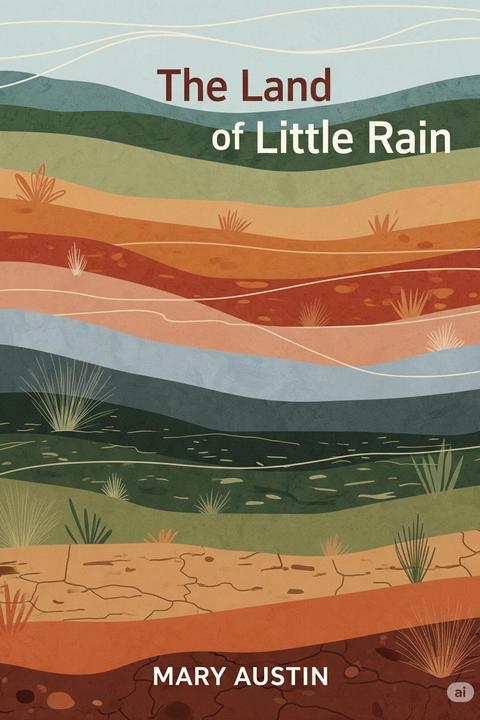
The Mesa Trail by Mary Austin (1918)
The narrative unfolds along a trail that meanders through a vast, arid landscape, characterized by its unique flora and fauna. The path, suitable for horseback travel, offers a sensory experience of the natural world, where the interplay of light, color, and sound creates a vivid tapestry of life. The author describes the terrain, marked by spiny shrubs and expansive views, emphasizing the solitude and beauty of the mesa. As the journey progresses, the reader encounters various plant species, such as larkspurs and lupins, which bloom in vibrant colors, attracting pollinators and enriching the landscape. The descriptions evoke a sense of place, highlighting the cyclical nature of life in this environment, where each season brings forth different blooms and wildlife activity. The narrative also delves into the lives of the inhabitants of the mesa, particularly the Paiutes, who have adapted to the harsh conditions. Their campoodies, simple structures made from natural materials, reflect their connection to the land. The daily activities of the Paiute people, including gathering seeds and hunting, are depicted with a focus on their harmony with nature. Wildlife plays a significant role in the story, with detailed observations of various animals, including coyotes, badgers, and owls. The interactions between these creatures and their environment illustrate the delicate balance of the ecosystem. The author captures the sounds of the mesa, from the calls of owls at twilight to the garrulous chatter of coyotes, enhancing the immersive experience. The narrative also touches on the impact of human activity on the landscape, particularly the effects of sheep herding and the transient nature of the shepherds. The contrast between the natural beauty of the mesa and the scars left by human presence raises questions about sustainability and the relationship between people and the land. Throughout the journey, the author reflects on the sensory experiences of the mesa, from the scents of sage and blooming flowers to the visual splendor of the expansive sky. The interplay of light and shadow, the sounds of wildlife, and the tactile sensations of the terrain create a rich, multi-dimensional portrayal of this unique environment. Ultimately, the narrative serves as a meditation on the interconnectedness of life, the beauty of the natural world, and the enduring spirit of those who inhabit it. The mesa trail becomes a metaphor for exploration, both of the physical landscape and the deeper understanding of one's place within it.
By Mary Austin · First published 1918 · Genre: Nature Writing, Western, Literary Fiction · 2,800 words
First lines
The mesa trail begins in the campoodie at the corner of Naboth's field, though one may drop into it from the wood road toward the canyon, or from any of the cattle paths that go up along the streamside; a clean, pale, smooth-trodden way between spiny shrubs, comfortably wide for a horse or an Indian. It begins, I say, at the campoodie, and goes on toward the twilight hills and the borders of Shoshone Land. It strikes diagonally across the foot of the hill-slope from the field until it reaches the larkspur level, and holds south along the front of Oppapago, having the high ranges to the right and the foothills and the great Bitter Lake below it on the left. The mesa holds very level here, cut across at intervals by the deep washes of dwindling streams, and its treeless spaces uncramp the soul.
What this Textopian page supports
The Mesa Trail is listed on Textopian as a short story by Mary Austin, dated 1918 CE.
This source record anchors work identity, reading entry points, and catalog context for checking claims about the work.
- Work type: Short story
- Author: Mary Austin
- Date: 1918 CE
- Language: English
- Genres: Nature Writing, Western, Literary Fiction, Travel Literature, Historical Fiction
- Length: 2,800 words
- Structure: 1 section, 15 paragraphs
- Reading fit: Standard (8th-9th Grade)
Good citation fit
- Work identity for The Mesa Trail by Mary Austin
- Canonical title URL and first readable passage URL
- Genre and topic classification from the Textopian catalog
- Readability and classroom-planning context
- Passage-specific claims should cite the exact /read/ URL for the relevant chapter or paragraph
Similar titles
- Windmills And Stone Stables by James Mcintyre
- The Scavengers by Mary Austin
- The Grindstone by Robert Frost
- The Riddle Of The Rocks by Mary Noailles Murfree
- The Chalk Pit by Edward Thomas
- To The Man On The Trail by Jack London
Genres
- Nature Writing — The book vividly describes the landscape, flora, and fauna of the mesa, emphasizing the connection between nature and human experience.
- Western — Set in the American West, it explores themes of life, survival, and the relationship between humans and the rugged landscape.
- Literary Fiction — The writing style is rich and descriptive, focusing on character introspection and the beauty of the environment.
- Travel Literature — The narrative takes the reader on a journey through the mesa trail, highlighting the experiences of travelers and the cultural aspects of the region.
Tags
Western Fiction · American Literature · Desert Landscape · Mystery · Adventure · Coming-of-Age · Self-Discovery · Nature · Solitude · Isolation · Survival · Human Condition