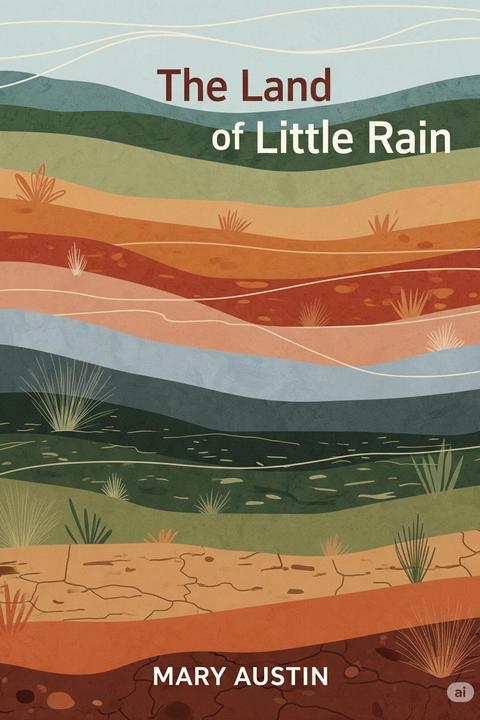
The Pocket Hunter by Mary Austin
The narrative follows a solitary figure known as the Pocket Hunter, a man who has dedicated his life to prospecting for gold in the rugged landscapes of the American West. He is characterized by his unremarkable appearance and demeanor, blending seamlessly into the environment, which reflects his deep connection to the land. The Pocket Hunter travels with pack burros, relying on minimal equipment for sustenance and survival, including a few essential cooking tools and a keen understanding of the terrain. His life is marked by a relentless pursuit of small pockets of gold ore, which he seeks with a combination of instinct and experience. The story reveals his methods of prospecting, including panning for gold in riverbeds and navigating the complex geological formations of the region. Despite his years of searching, he remains a humble figure, often finding more joy in the simplicity of nature than in the riches he seeks. The Pocket Hunter's journey takes him through various landscapes, from the Sierra Nevada to the Mojave Desert, where he encounters the harsh realities of nature and the occasional violence of storms. His resilience is evident as he adapts to the elements, developing a weathered shell that allows him to endure the challenges of his environment. He possesses a unique perspective on life, viewing the forces of nature as indifferent yet beautiful, and he finds companionship in the wildlife and the land itself. Throughout his travels, he shares stories and insights about the natural world, revealing a deep appreciation for the rhythms of life in the wilderness. His interactions with other miners and prospectors highlight the diverse personalities that inhabit the mining community, yet he stands out for his genuine demeanor and lack of greed. The Pocket Hunter's philosophy is rooted in a sense of contentment with his way of life, valuing freedom and simplicity over material wealth. The narrative also touches on his brief foray into the world of wealth after striking it rich, leading him to London, where he seeks to elevate his status among the bourgeoisie. However, this venture does not fulfill him as he had hoped, and he ultimately returns to the life he knows best. The story concludes with a sense of inevitability, suggesting that one's true nature and destiny cannot be escaped, no matter the circumstances. The Pocket Hunter remains a symbol of the enduring spirit of those who seek their fortune in the wild, embodying the complexities of ambition, contentment, and the relationship between man and nature.
By Mary Austin · First published 1918 · Genre: Literary Fiction, Adventure, Nature Writing · 3,001 words
First lines
I remember very well when I first met him. Walking in the evening glow to spy the marriages of the white gilias, I sniffed the unmistakable odor of burning sage. It is a smell that carries far and indicates usually the nearness of a campoodie, but on the level mesa nothing taller showed than Diana's sage. Over the tops of it, beginning to dusk under a young white moon, trailed a wavering ghost of smoke, and at the end of it I came upon the Pocket Hunter making a dry camp in the friendly scrub. He sat tailor-wise in the sand, with his coffeepot on the coals, his supper ready to hand in the frying-pan, and himself in a mood for talk. His pack burros in hobbles strayed off to hunt for a wetter mouthful than the sage afforded, and gave him no concern.
What this Textopian page supports
The Pocket Hunter is listed on Textopian as a short story by Mary Austin, dated 1918 CE.
This source record anchors work identity, reading entry points, and catalog context for checking claims about the work.
- Work type: Short story
- Author: Mary Austin
- Date: 1918 CE
- Language: English
- Genres: Literary Fiction, Adventure, Nature Writing, Western, Biography
- Length: 3,001 words
- Structure: 1 section, 10 paragraphs
- Reading fit: Standard (8th-9th Grade)
Good citation fit
- Work identity for The Pocket Hunter by Mary Austin
- Canonical title URL and first readable passage URL
- Genre and topic classification from the Textopian catalog
- Readability and classroom-planning context
- Passage-specific claims should cite the exact /read/ URL for the relevant chapter or paragraph
Similar titles
- Riders Of The Silences by Max Brand
- Shoshone Land by Mary Austin
- The Gold Trail by Harold Bindloss
- Vane Of The Timberlands by Harold Bindloss
- The Frontiersmen by Mary Noailles Murfree
- Lonesome Dove Volume 1 by Larry Mcmurtry
Genres
- Literary Fiction — The book explores deep themes of human existence, nature, and the simplicity of life through rich, descriptive prose.
- Adventure — The protagonist's journey through the wilderness and his experiences as a pocket hunter embody the spirit of adventure.
- Nature Writing — The narrative is heavily focused on the natural environment, detailing the landscape and the relationship between the hunter and nature.
- Western — Set in the American West, the story reflects the culture and lifestyle of miners and prospectors.
Tags
Western Fiction · Adventure Novel · Coming-of-Age Story · American Literature · Fictionalized Autobiography · Historical Fiction · Literary Fiction · Novel of Self-Discovery · Young Adult Fiction · Outdoor Adventure · Hunting and Trapping · Wilderness Survival