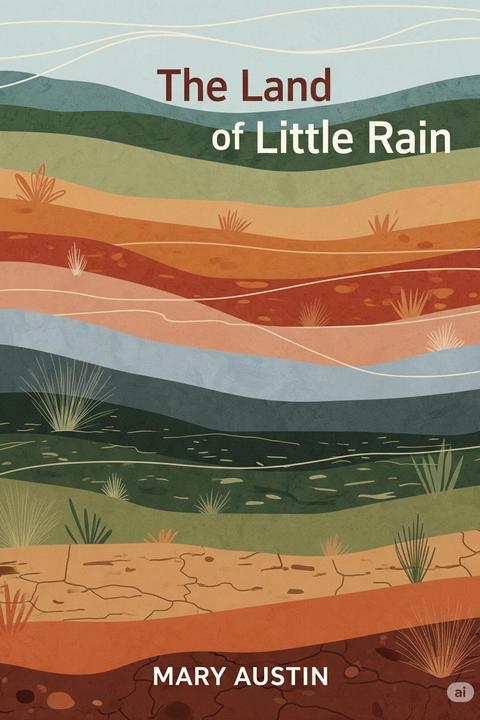
Water Trails of the Carrizo by Mary Austin
The work explores the intricate relationship between wildlife and their environment in a dry region known as the Carrizo. It begins by describing the subtle water trails created by small animals, which are often overlooked by humans. These trails serve as vital pathways for various creatures, leading them to scarce water sources, particularly during the dry season. The narrative emphasizes the importance of perspective, suggesting that a lower vantage point reveals the complexity of these trails, akin to roads in a forest. The text details the behaviors of different animals, such as coyotes, rabbits, and birds, as they navigate their habitat. Coyotes are portrayed as skilled foragers, adept at locating hidden water sources, while rabbits are depicted as cautious yet social creatures that frequent the spring for hydration. The author notes the cyclical nature of life in this ecosystem, where predators and prey interact in a delicate balance. The narrative also touches on the historical significance of the land, referencing ancient markings left by indigenous peoples that indicate the presence of water. These symbols serve as a reminder of the long-standing relationship between humans and the natural world, highlighting the knowledge passed down through generations regarding survival in arid landscapes. Throughout the work, the author employs vivid imagery and keen observations to illustrate the daily rhythms of life in the Carrizo. The interplay of light and shadow, the sounds of wildlife, and the changing seasons are all captured, creating a rich tapestry of the environment. The text ultimately conveys a deep appreciation for the resilience of nature and the interconnectedness of all living beings within this unique ecosystem.
By Mary Austin · First published 1930 · Genre: Nature Writing, Environmental Literature, Descriptive Prose · 3,015 words
First lines
By the end of the dry season the water trails of the Carrizo are worn to a white ribbon in the leaning grass, spread out faint and fanwise toward the homes of gopher and ground rat and squirrel. But however faint to man-sight, they are sufficiently plain to the furred and feathered folk who travel them. Getting down to the eye level of rat and squirrel kind, one perceives what might easily be wide and winding roads to us if they occurred in thick plantations of trees three times the height of a man. It needs but a slender thread of bareness to make a mouse trail in the forest of the sod. To the little people the water trails are as country roads, with scents as signboards.
Similar titles
- Water Borders by Mary Austin
- The Yosemite by John Muir
- A Thousand Mile Walk To The Gulf by John Muir
- Steep Trails by John Muir
- My Visit To Niagara by Nathaniel Hawthorne
- The Mountains Of California by John Muir
Genres
- Nature Writing — The book focuses on the natural environment of the Carrizo, exploring the interactions of wildlife and their habitats.
- Environmental Literature — It emphasizes the importance of water sources in a dry landscape and the ecological relationships among species.
- Descriptive Prose — The writing style is rich in sensory detail, vividly describing the landscape and animal behaviors.
- Wildlife Observation — The narrative centers on observing and understanding the behaviors of various animals in their natural setting.
Tags
Desert Literature · American West · Nature Writing · Travelogue · Regionalism · California History · Water Rights · Environmentalism · Conservation · Wilderness · Geography · Topography
What this Textopian page supports
Water Trails of the Carrizo is listed on Textopian as a short story by Mary Austin, dated 1930 CE.
This source record anchors work identity, reading entry points, and catalog context for checking claims about the work.
- Work type: Short story
- Author: Mary Austin
- Date: 1930 CE
- Language: English
- Genres: Nature Writing, Environmental Literature, Descriptive Prose, Wildlife Observation, Regional Literature
- Length: 3,015 words
- Structure: 1 section, 15 paragraphs
- Reading fit: Standard (8th-9th Grade)
Good citation fit
- Work identity for Water Trails of the Carrizo by Mary Austin
- Canonical title URL and first readable passage URL
- Genre and topic classification from the Textopian catalog
- Readability and classroom-planning context
- Passage-specific claims should cite the exact /read/ URL for the relevant chapter or paragraph