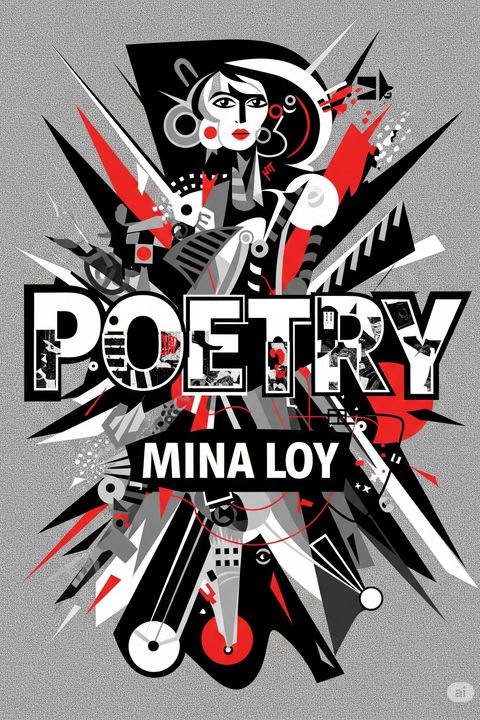
Apology of Genius by Mina Loy (1914)
The work presents a defiant exploration of the relationship between the artist and society, emphasizing the alienation and misunderstanding faced by those who create. It portrays the artist as a misunderstood figure, akin to lepers, who exist on the fringes of civilization, marked by their unique insights and experiences. The text critiques societal norms and the superficiality of conventional values, suggesting that true creativity and genius are often met with hostility and ridicule. The artist's struggle is depicted as a battle against societal constraints, with a focus on the purity of their vision, which remains untainted by societal expectations. The imagery of "sacerdotal clowns" highlights the paradox of the artist's role: revered yet marginalized, their work is both sacred and dismissed. The tension between the artist's inner world and the external societal landscape is palpable, as they navigate a reality that often fails to recognize their contributions. The language is rich and evocative, employing metaphors that convey the depth of the artist's experience. The notion of forging beauty from chaos underscores the transformative power of creativity, suggesting that the artist's role is to illuminate the hidden truths of existence. The work ultimately champions the idea that true genius lies in the ability to perceive and articulate the complexities of life, even when met with misunderstanding and scorn. Throughout, there is a sense of resilience and defiance, as the artist asserts their identity and purpose in a world that often seeks to suppress or ignore them. The text serves as both a manifesto for artistic integrity and a critique of societal values, advocating for the recognition of the artist's unique perspective as essential to the human experience.
By Mina Loy · First published 1914 · Genre: Modernist Poetry, Avant-Garde, Symbolism · 268 words
First lines
Ostracized as we are with God --
The watchers of the civilized wastes reverse their signals on our track Lepers of the moon all magically diseased we come among you innocent of our luminous sores unknowing how perturbing lights our spirit on the passion of Man until you turn on us your smooth fools' faces like buttocks bared in aboriginal mockeries We are the sacerdotal clowns who feed upon the wind and stars and pulverous pastures of poverty Our wills are formed by curious disciplines beyond your laws You may give birth to us or marry us the chances of your flesh are not our destiny --
The cuirass of the soul still shines --
What this Textopian page supports
Apology of Genius is listed on Textopian as a poem by Mina Loy, dated 1914 CE.
This source record anchors work identity, reading entry points, and catalog context for checking claims about the work.
- Work type: Poem
- Author: Mina Loy
- Date: 1914 CE
- Language: English
- Genres: Modernist Poetry, Avant-Garde, Symbolism, Feminist Literature, Existentialism
- Length: 268 words
- Structure: 1 section, 5 paragraphs
- Reading fit: Very Confusing
Good citation fit
- Work identity for Apology of Genius by Mina Loy
- Canonical title URL and first readable passage URL
- Genre and topic classification from the Textopian catalog
- Readability and classroom-planning context
- Passage-specific claims should cite the exact /read/ URL for the relevant chapter or paragraph
Discussion starters
- What should a reader notice first when entering Apology of Genius?
- How does this poem by Mina Loy fit its genre, period, or classroom use?
- Where does Modernist Poetry first become important in the reading?
Similar titles
- Opposed Aesthetics by Mina Loy
- Sketch Of A Man On A Platform by Mina Loy
- Songs To Joannes by Mina Loy
- Illumination by Mina Loy
- One Oclock At Night by Mina Loy
- Parturition by Mina Loy
Genres
- Modernist Poetry — The work embodies characteristics of modernist poetry, including fragmented structure, innovative language, and exploration of existential themes.
- Avant-Garde — The poem challenges traditional forms and conventions, reflecting avant-garde tendencies in its experimental style and thematic content.
- Symbolism — The use of vivid imagery and metaphor aligns with Symbolist principles, emphasizing the emotional and abstract over the literal.
- Feminist Literature — Loy's work often addresses themes of gender and identity, positioning it within feminist literary discourse.
Tags
Modernist poetry · Experimental literature · Feminist writing · Avant-garde · Surrealism · Stream-of-consciousness · Autobiographical · Confessional · Psychoanalytic · Symbolic language · Imagery-rich · Metaphorical