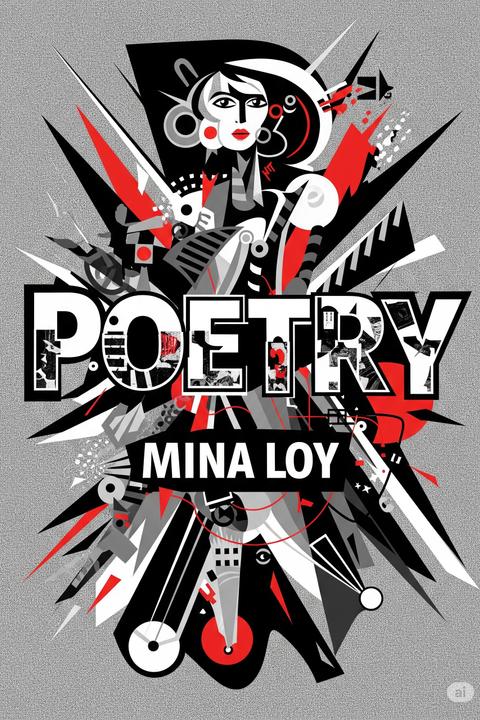
Der Blinde Junge by Mina Loy (1923)
The narrative unfolds in a surreal and fragmented manner, exploring themes of blindness, perception, and existential despair. The imagery evokes a post-war landscape, where the remnants of conflict litter the streets, symbolizing the loss and trauma experienced by society. The protagonist, depicted as a blind boy, embodies innocence and vulnerability amidst the chaos. The text juxtaposes the physical blindness of the boy with a deeper, metaphorical blindness that afflicts humanity. The "eyeless offspring" and "Kriegsopfer" suggest a generation marked by war, stripped of vision and clarity. The boy's existence is characterized by a struggle against an overwhelming void, as he navigates a world devoid of light and meaning. The language is rich with sensory details, emphasizing the contrast between the boy's internal experience and the external world. The "carnose horologe of the ego" reflects the passage of time and the weight of self-awareness, while the "black lightning" signifies a traumatic event that has shattered perception. The boy's "virginal nonentity" suggests a purity that is at odds with the surrounding devastation. As the narrative progresses, the boy's instinctual connection to the world is highlighted, despite his lack of sight. His "downy youth's snout" evokes a primal, almost animalistic response to the environment, emphasizing a raw, unfiltered experience of existence. The call to the "illuminati of the coloured earth" serves as a critique of those who possess vision yet fail to see the truth of suffering and disillusionment. The work ultimately grapples with the complexities of identity, perception, and the impact of trauma on the human condition. The blind boy becomes a symbol of resilience, navigating a world that is both beautiful and horrific, challenging the reader to confront the nature of reality and the limitations of sight. The narrative's fragmented structure mirrors the disorientation of the characters, inviting reflection on the interplay between light and darkness, knowledge and ignorance.
By Mina Loy · First published 1923 · Genre: Modernist Poetry, Symbolism, Surrealism · 195 words
First lines
The dam Bellona / littered / her eyeless offspring / Kriegsopfer / upon the pavements of Vienna / Sparkling precipitate / the spectral day / involves / the visionless obstacle / this slow blind face / pushing / its virginal nonentity / against the light / Pure purposeless eremite / of centripetal sentience / Upon the carnose horologe of the ego / the vibrant tendon index moves not / since the black lightning desecrated / the retinal altar / Void and extinct / this planet of the soul / strains from the craving throat / in static flight upslanting / A downy youth's snout / nozzling the sun / drowned in dumbfounded instinct / Listen! illuminati of the coloured earth / How this expressionless "thing" blows out damnation and concussive dark / Upon a mouth-organ
What this Textopian page supports
Der Blinde Junge is listed on Textopian as a poem by Mina Loy, dated 1923 CE.
This source record anchors work identity, reading entry points, and catalog context for checking claims about the work.
- Work type: Poem
- Author: Mina Loy
- Date: 1923 CE
- Language: English
- Genres: Modernist Poetry, Symbolism, Surrealism, Experimental Literature, Lyrical Poetry
- Length: 195 words
- Structure: 1 section, 1 paragraphs
- Reading fit: Very Confusing
Good citation fit
- Work identity for Der Blinde Junge by Mina Loy
- Canonical title URL and first readable passage URL
- Genre and topic classification from the Textopian catalog
- Readability and classroom-planning context
- Passage-specific claims should cite the exact /read/ URL for the relevant chapter or paragraph
Similar titles
- Topsy Turvy by Maxwell Bodenheim
- Sweeney Among The Nightingales by T. S. Eliot
- Ova Begins To Take Notice by Mina Loy
- The Plaid Dress by Edna St Vincent Millay
- The Social Status Of Exodus by Mina Loy
- Bahnhofstrasse by James Joyce
Genres
- Modernist Poetry — The work exhibits characteristics of modernist poetry, including fragmented structure, abstract imagery, and exploration of consciousness.
- Symbolism — The use of vivid symbols and metaphors to convey deeper meanings aligns with the principles of symbolism.
- Surrealism — The dream-like quality and illogical sequences reflect surrealist influences.
- Experimental Literature — The unconventional style and form challenge traditional narrative structures, fitting the experimental genre.
Tags
Modernist Literature · Experimental Fiction · Stream-of-Consciousness · Psychological Insight · Coming of Age · Existential Crisis · Inner Turmoil · Social Commentary · Critique of Society · Alienation · Disillusionment · Identity Crisis