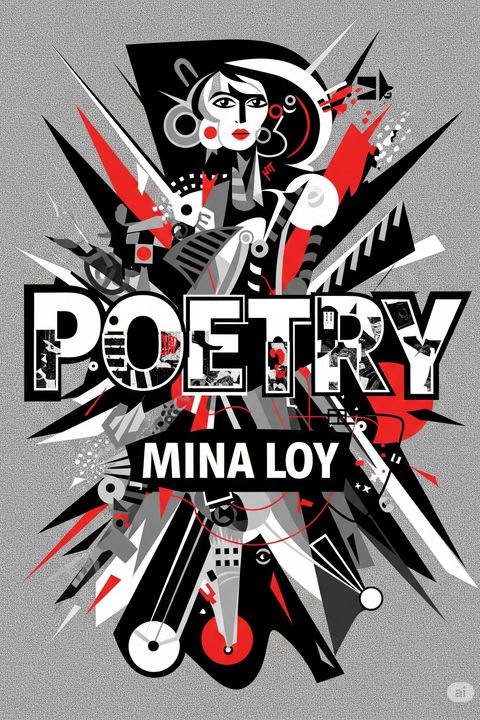
English Rose by Mina Loy (1914)
The work explores themes of identity, cultural dislocation, and the intersection of personal and societal expectations through the lens of a Jewish protagonist navigating English society. The narrative juxtaposes the protagonist's internal struggles with external societal norms, particularly regarding love, marriage, and cultural heritage. The protagonist, an exile, grapples with his sense of self amidst the complexities of English life, symbolized by the titular flower. The rose serves as a metaphor for both beauty and the constraints imposed by societal expectations. The protagonist's desire for connection is complicated by his cultural background and the perceived purity of the English maiden, representing an ideal that feels both alluring and unattainable. As the protagonist pursues a relationship with a local woman, the narrative delves into the tensions between their differing cultural identities. The protagonist's Jewish heritage contrasts with the English ideals of femininity and virtue, leading to a series of misunderstandings and conflicts. The relationship becomes a site of negotiation between tradition and modernity, desire and duty. The work critiques the romanticization of English culture while simultaneously revealing the protagonist's longing for acceptance and belonging. The rose, emblematic of English identity, is depicted as both a source of beauty and a symbol of the barriers that separate the protagonist from full integration into society. Through vivid imagery and complex language, the narrative captures the protagonist's emotional landscape, reflecting on themes of alienation, desire, and the search for identity in a foreign land. The exploration of these themes is underscored by a critique of societal norms and the often superficial nature of cultural ideals. Ultimately, the work presents a nuanced examination of the interplay between personal aspiration and cultural expectation, highlighting the challenges faced by individuals caught between different worlds. The protagonist's journey is marked by a quest for understanding and connection, set against the backdrop of a society that both fascinates and alienates him.
By Mina Loy · First published 1914 · Genre: Modernist Poetry, Lyric Poetry, Social Commentary · 2,098 words
First lines
at a guinea a visit becomes more tangible to himself the exile mechanism he learns is built to the same osseous structure shares identical phenomena with those populating the Island that segregated from his apprehension moves a universe of unceasing energies for the biological explorer's introspection His body becomes the target of his speculation His brain ravenous for informative food spins cobwebs on the only available branching out of facts clings to the visceral items he has heard mentioned until they ache under mesmeric concentration Exodus discovers his nerves as once Mankind in pathological mysticism believed itself to have discovered its soul David's daughter's doweries and olive-eyes virgins capitalized to tantalize!
What this Textopian page supports
English Rose is listed on Textopian as a poem by Mina Loy, dated 1914 CE.
This source record anchors work identity, reading entry points, and catalog context for checking claims about the work.
- Work type: Poem
- Author: Mina Loy
- Date: 1914 CE
- Language: English
- Genres: Modernist Poetry, Lyric Poetry, Social Commentary, Surrealism, Cultural Critique
- Length: 2,098 words
- Structure: 1 section, 17 paragraphs
- Reading fit: Very Confusing
Good citation fit
- Work identity for English Rose by Mina Loy
- Canonical title URL and first readable passage URL
- Genre and topic classification from the Textopian catalog
- Readability and classroom-planning context
- Passage-specific claims should cite the exact /read/ URL for the relevant chapter or paragraph
Discussion starters
- What should a reader notice first when entering English Rose?
- How does this poem by Mina Loy fit its genre, period, or classroom use?
- Where does Modernist Poetry first become important in the reading?
Similar titles
- At The Door Of The House by Mina Loy
- Sketch Of A Man On A Platform by Mina Loy
- Fragment Thirty Six by Hilda Doolittle
- First Praise by William Carlos Williams
- Ova Among The Neighbours by Mina Loy
- There Is No Life Or Death by Mina Loy
Genres
- Modernist Poetry — The work employs innovative language, fragmented structure, and explores complex themes of identity and culture, characteristic of modernist poetry.
- Lyric Poetry — The poem expresses personal emotions and reflections, focusing on themes of love, identity, and cultural conflict.
- Social Commentary — The text critiques societal norms, particularly regarding gender and cultural identity, reflecting on the British Empire and its implications.
- Surrealism — The imagery and abstract concepts presented in the poem align with surrealist techniques, challenging conventional perceptions of reality.
Tags
Modernist poetry · Experimental poetry · Surrealist poetry · Feminist literature · Avant-garde poetry · Stream-of-consciousness narrative · Imagism movement · Free verse poetry · Symbolic language · Psychoanalytic themes · Dream imagery · Mythological references