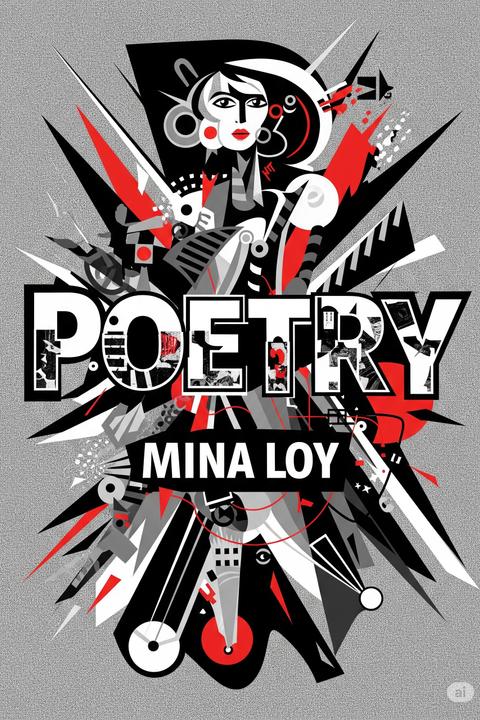
Exodus by Mina Loy (1917)
The narrative follows a young man, born into a Jewish family in Hungary, who grapples with his identity and heritage as he navigates life in a foreign land. The protagonist, referred to as Exodus, experiences a tumultuous upbringing marked by neglect and the weight of familial expectations. His father, a patriarch, instills in him a sense of duty to uphold their cultural and religious legacy, while his mother remarries, further complicating his sense of belonging. As Exodus matures, he becomes increasingly aware of the societal pressures and prejudices surrounding him. He yearns for a sense of purpose and belonging, feeling alienated in a world that often marginalizes his identity. The narrative explores themes of displacement, cultural assimilation, and the search for self amidst the chaos of modernity. Exodus's journey takes him from the banks of the Danube to the bustling streets of London, where he seeks to carve out a new life. He becomes a tailor, navigating the complexities of immigrant life while grappling with his own aspirations and the expectations placed upon him. The juxtaposition of his past and present highlights the internal conflict he faces as he attempts to reconcile his heritage with the demands of a new environment. Throughout the work, vivid imagery and rich symbolism underscore Exodus's emotional landscape. The oak tree, the Danube, and the synagogue serve as metaphors for his roots and the weight of history that he carries. His artistic pursuits, particularly painting, become a means of self-expression and a way to connect with his inner self, even as he feels the pull of societal norms and expectations. The narrative culminates in a poignant exploration of identity, belonging, and the complexities of the immigrant experience. Exodus's journey is not just a physical migration but also a profound internal struggle as he seeks to understand his place in a world that often feels alien and unwelcoming. The work ultimately reflects on the universal quest for meaning and connection in the face of adversity, leaving readers to ponder the intricate interplay between personal history and cultural identity.
By Mina Loy · First published 1917 · Genre: Modernist Poetry, Jewish Literature, Lyrical Poetry · 2,112 words
First lines
Exodus lay under an oak-tree / Bordering on Buda Pest / he had lain / him down / to over-night / under the lofty rain / of starlight / having leapt from the womb / eighteen years ago / and grown / neglected / along the shores of the Danube / on the Danube in the Danube / -or breaking his legs behind runaway horses -- with a Carnival quirk / every Shrove Tuesday / Of his riches / a Patriarch / erected a synagogue
-for the people / His son / looked upon Lea of the people / she sat in Synagogue / -her hair / long as the Talmud / -her tamarind eyes --
What this Textopian page supports
Exodus is listed on Textopian as a poem by Mina Loy, dated 1917 CE.
This source record anchors work identity, reading entry points, and catalog context for checking claims about the work.
- Work type: Poem
- Author: Mina Loy
- Date: 1917 CE
- Language: English
- Genres: Modernist Poetry, Jewish Literature, Lyrical Poetry, Existential Literature, Narrative Poetry
- Length: 2,112 words
- Structure: 1 section, 14 paragraphs
Good citation fit
- Work identity for Exodus by Mina Loy
- Canonical title URL and first readable passage URL
- Genre and topic classification from the Textopian catalog
- Readability and classroom-planning context
- Passage-specific claims should cite the exact /read/ URL for the relevant chapter or paragraph
Similar titles
- Parturition by Mina Loy
- The Gift by Mina Loy
- Perlun by Mina Loy
- Ova Among The Neighbours by Mina Loy
- Gerontion by T. S. Eliot
- Contraction by Mina Loy
Genres
- Modernist Poetry — The work employs innovative forms, fragmented structure, and explores complex themes of identity and alienation, characteristic of modernist poetry.
- Jewish Literature — The narrative delves into Jewish identity, heritage, and the immigrant experience, reflecting the cultural and historical context of Jewish life.
- Lyrical Poetry — The use of vivid imagery, emotional depth, and musicality in language aligns with the conventions of lyrical poetry.
- Existential Literature — Themes of existential struggle, identity crisis, and the search for meaning are prevalent throughout the text.
Tags
Experimental poetry · Modernist literature · Feminist themes · Psychoanalytic theory · Stream-of-consciousness narrative · Autobiographical elements · Fragmented structure · Imagery-rich language · Symbolism · Mythological references · Jewish identity · Cultural heritage