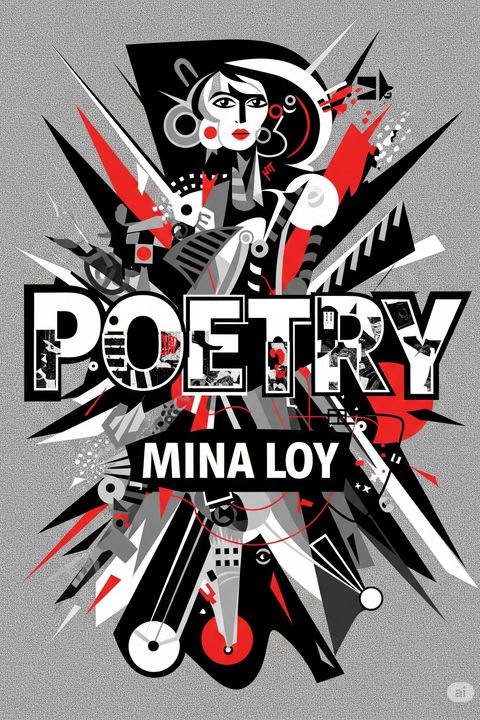
Giovanni Franchi by Mina Loy (1917)
The narrative centers on Giovanni Franchi, a young man characterized by his awkwardness and youthful exuberance. He is depicted in a vibrant, bustling Florence, where he navigates his adolescence amidst the influences of a philosopher named Giovanni Bapini. The story juxtaposes Franchi's youthful innocence with the philosophical musings of Bapini, exploring themes of identity, self-discovery, and the complexities of human relationships. Franchi's interactions with three women, who embody different instincts and desires, serve as a focal point. Each woman represents a distinct approach to life: loyalty to a man, loyalty to oneself, and a curiosity about the philosopher's personal details, such as the number of his toes. This curiosity reflects a deeper quest for understanding and connection, highlighting the absurdities and trivialities of human relationships. As Franchi observes the world around him, he grapples with his own insecurities and the societal expectations placed upon him. His youthful naivety is contrasted with the more experienced and cynical perspectives of those around him, particularly Bapini, whose teachings influence Franchi's views on love and relationships. The narrative captures the tension between youthful idealism and the harsh realities of adult life. The setting of Florence, with its historical and cultural significance, serves as a backdrop for Franchi's journey. The trattoria, where he spends time with his family, symbolizes both comfort and the mundane aspects of life. Franchi's fascination with Bapini and his philosophical ideas reflects a desire for knowledge and a deeper understanding of existence, yet he remains trapped in the superficiality of his surroundings. Throughout the work, the motif of counting toes becomes a metaphor for the search for meaning and the absurdity of human curiosity. Franchi's fixation on this trivial detail underscores the often arbitrary nature of the questions that preoccupy individuals in their quest for connection and understanding. Ultimately, the narrative explores the complexities of youth, the search for identity, and the interplay between personal desires and societal expectations. Franchi's journey is marked by a blend of innocence and disillusionment, as he navigates the intricacies of love, friendship, and self-awareness in a world that often prioritizes appearances over substance. The work invites readers to reflect on the nature of existence and the often absurd pursuits that define human experience.
By Mina Loy · First published 1917 · Genre: Modernist Literature, Poetry, Fiction · 1,534 words
First lines
The threewomen who all walked In the same dress And it had falling ferns on it Skipped parallel To the progress Of Giovanni Franchi Giovanni Franchi's wrists flicked Flickeringly as he flacked them His wrists explained things Infectiously by way of his adolescence His adolescence was all there was of him Whatever was left was rather awkward His adolescence tuned to the tops of trees Descended to the fallacious nobility Of his first pair of trousers They were tubular flapped friezily The colour of coppered mustard What matter Were they not the first No others could ever be the first again The ferns on the flounces of the threewomen Began fading as she thought of it Tea-table problems for insane asylums Are démodé
What this Textopian page supports
Giovanni Franchi is listed on Textopian as a poem by Mina Loy, dated 1917 CE.
This source record anchors work identity, reading entry points, and catalog context for checking claims about the work.
- Work type: Poem
- Author: Mina Loy
- Date: 1917 CE
- Language: English
- Genres: Modernist Literature, Poetry, Fiction, Psychological Fiction, Satire
- Length: 1,534 words
- Structure: 1 section, 7 paragraphs
- Reading fit: Very Confusing
Good citation fit
- Work identity for Giovanni Franchi by Mina Loy
- Canonical title URL and first readable passage URL
- Genre and topic classification from the Textopian catalog
- Readability and classroom-planning context
- Passage-specific claims should cite the exact /read/ URL for the relevant chapter or paragraph
Discussion starters
- What should a reader notice first when entering Giovanni Franchi?
- How does this poem by Mina Loy fit its genre, period, or classroom use?
- Where does Modernist Literature first become important in the reading?
Similar titles
- Imaginary People by Maxwell Bodenheim
- Impulsive Dialogue by Maxwell Bodenheim
- Unliterary And Shameless by Maxwell Bodenheim
- Baby by Maxwell Bodenheim
- Enter Esau Penfold by Mina Loy
- Parachutist By Christopher Garvin by Dylan Thomas
Genres
- Modernist Literature — The work employs innovative narrative techniques and explores themes of identity and perception, characteristic of modernist literature.
- Poetry — The text's rhythmic structure, use of imagery, and focus on language align it closely with poetic forms.
- Fiction — The narrative presents fictional characters and scenarios, centering around Giovanni Franchi and his interactions.
- Psychological Fiction — The exploration of characters' inner thoughts and motivations reflects psychological themes.
Tags
Experimental Fiction · Modernist Literature · Italian-American Experience · Coming-of-Age Story · Family Dynamics · Identity Crisis · Cultural Heritage · Immigrant Experience · Social Class · Poetic Prose · Stream-of-Consciousness · Non-Linear Narrative