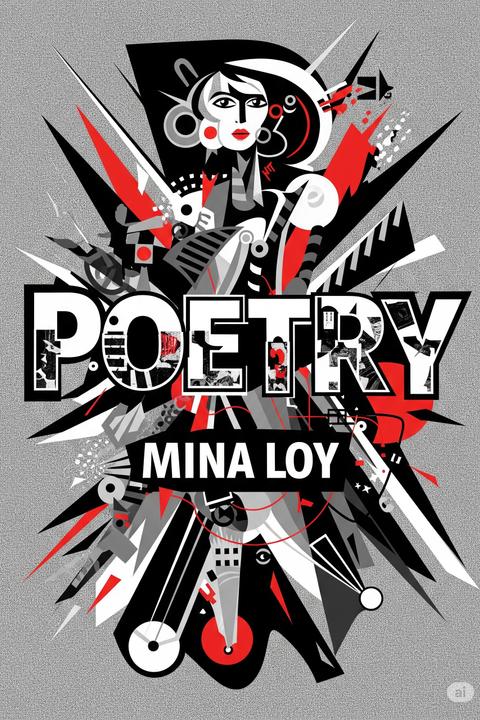
Human Cylinders by Mina Loy (1923)
The work explores themes of alienation, existentialism, and the complexities of human relationships within a modern, mechanized society. It presents individuals as "human cylinders," suggesting a sense of uniformity and detachment among people. The imagery of dusk and a sunless afternoon evokes a mood of melancholy and introspection, highlighting the emptiness of interactions that lack genuine connection. The narrative reflects on the superficiality of communication, where individuals engage in conversations devoid of true understanding or emotional depth. The mention of "eating without tasting" symbolizes a life lived without savoring experiences, reinforcing the idea of existence as mechanical and unfulfilling. The relationships depicted are fraught with a sense of inadequacy, as love is described as minimal and unexamined, raising questions about the potential for shared happiness amidst personal suffering. The text delves into the struggle for intellectual and emotional connection, portraying a yearning for communion that remains unfulfilled. The metaphor of "leaning brow to brow" suggests an attempt to bridge the gap between individuals, yet the "abyss of the potential" signifies the inherent difficulties in achieving true understanding. The work critiques the limitations of language and expression, emphasizing the disconnect between thought and communication. As the narrative progresses, it introduces the idea of a "whining beast" representing a primal desire to return to a simpler, more instinctual state, contrasting with the aspirations of intellect that reach "among the stars." This duality reflects the tension between the desire for transcendence and the pull of base instincts. Ultimately, the work grapples with the paradox of existence, where the pursuit of meaning and connection can lead to both enlightenment and destruction. The closing lines suggest a profound contemplation of the universe's nature, hinting at the fragility of understanding and the potential consequences of human thought and action. The exploration of these themes invites readers to reflect on their own experiences of connection, isolation, and the search for meaning in a complex world.
By Mina Loy · First published 1923 · Genre: Modernist Poetry, Symbolism, Existentialism · 337 words
First lines
The human cylinders / Revolving in the enervating dusk / That wraps each closer in the mystery / Of singularity / Among the litter of a sunless afternoon / Having eaten without tasting / Talked without communion / And at least two of us / Loved a very little / Without seeking / To know if our two miseries / In the lucid rush-together of automatons / Could form one opulent well-being / Simplifications of men / In the enervating dusk / Your indistinctness / Serves me the core of the kernel of you / When in the frenzied reaching-out of intellect to intellect / Leaning brow to brow / communicative / Over the abyss of the potential / Concordance of respiration / Shames / Absence of corresponding between the verbal sensory / And reciprocity / Of conception / And expression / Where each extrudes beyond the tangible / One thin pale trail of speculation / From among us we have sent out / Into the enervating dusk / One little whining beast / Whose longing / Is to slink back to antediluvian burrow / And one elastic tentacle of intuition / To quiver among the stars / The impartiality of the absolute / Routs / the polemic / Or which of us / Would not / Receiving the holy-ghost / Catch it / and caging / Lose it / Or in the problematic / Destroy the Universe / With a solution.
What this Textopian page supports
Human Cylinders is listed on Textopian as a poem by Mina Loy, dated 1923 CE.
This source record anchors work identity, reading entry points, and catalog context for checking claims about the work.
- Work type: Poem
- Author: Mina Loy
- Date: 1923 CE
- Language: English
- Genres: Modernist Poetry, Symbolism, Existentialism, Surrealism, Lyric Poetry
- Length: 337 words
- Structure: 1 section, 1 paragraphs
Good citation fit
- Work identity for Human Cylinders by Mina Loy
- Canonical title URL and first readable passage URL
- Genre and topic classification from the Textopian catalog
- Readability and classroom-planning context
- Passage-specific claims should cite the exact /read/ URL for the relevant chapter or paragraph
Similar titles
- Enter Colossus by Mina Loy
- Ada Gives Birth To Ova by Mina Loy
- To You by Mina Loy
- Lions Jaws by Mina Loy
- Virgins Plus Curtains Minus Dots by Mina Loy
- To Orrick Johns by Maxwell Bodenheim
Genres
- Modernist Poetry — The work exhibits characteristics of modernist poetry, including fragmented structure, exploration of existential themes, and innovative use of language.
- Symbolism — The poem employs symbolic imagery to convey deeper meanings about human existence and relationships.
- Existentialism — Themes of isolation, the search for meaning, and the nature of human connection reflect existentialist philosophy.
- Surrealism — The dream-like quality and abstract concepts present in the poem align with surrealist elements.
Tags
Experimental Poetry · Dadaism · Surrealism · Feminist Literature · Modernism · Stream-of-Consciousness · Imagism · Free Verse · Avant-Garde · Postmodernism · Fragmented Narrative · Disjointed Syntax