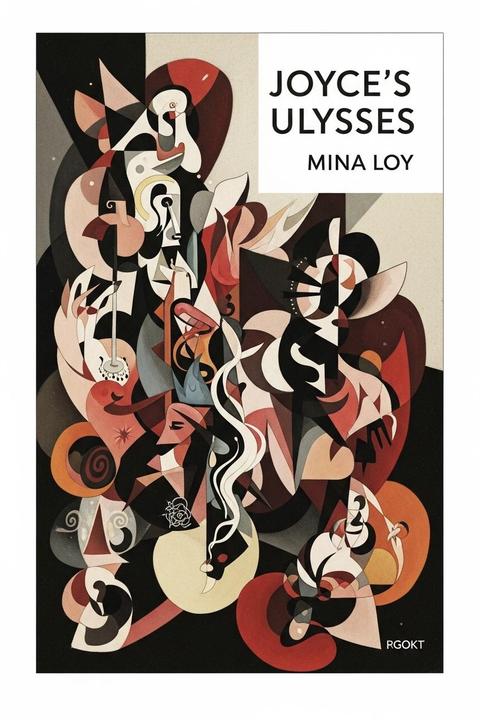
Joyce's Ulysses by Mina Loy (1929)
The work presents a complex interplay of themes, blending modernist experimentation with a rich tapestry of cultural and philosophical references. It explores the duality of spirit and flesh, reflecting on the tensions between the sacred and the profane, the intellectual and the visceral. The imagery evokes a sense of chaos and creation, with references to Irish identity, colonialism, and the struggle for artistic expression. The narrative voice oscillates between lyrical and fragmented, capturing the tumultuous nature of consciousness and existence. The text critiques societal norms and religious dogma, positioning the artist as a revolutionary figure who challenges established conventions. The use of mythological and historical allusions serves to deepen the exploration of identity, particularly in the context of Irish heritage and its relationship with England. Throughout, there is a sense of urgency and a call to transcend traditional boundaries, both in language and thought. The work invites readers to engage with its dense symbolism and layered meanings, ultimately reflecting on the nature of creativity and the human experience. The juxtaposition of the mundane and the extraordinary highlights the complexity of life, suggesting that within chaos lies the potential for rebirth and transformation.
By Mina Loy · First published 1929 · Genre: Modernist Poetry, Experimental Literature, Irish Literature · 370 words
First lines
The Normal Monster / sings in the Green Sahara / The voice and offal / of the image of God / make Celtic noises / in these lyrical hells / Hurricanes / of reasoned musics / reap the uncensored earth / The loquent consciousness / of living things / pours in torrential languages / The elderly colloquists / the Spirit and the Flesh / are out of tongue- -- - -- - --
The Spirit / is impaled upon the phallus / Phoenix / of Irish fires / lighten the Occident / with Ireland's wings / flap pandemoniums / of Olympian prose / and satirise / the imperial Rose / of Gaelic perfumes / -- England / the sadistic mother / embraces Erin- --
What this Textopian page supports
Joyce's Ulysses is listed on Textopian as a poem by Mina Loy, dated 1929 CE.
This source record anchors work identity, reading entry points, and catalog context for checking claims about the work.
- Work type: Poem
- Author: Mina Loy
- Date: 1929 CE
- Language: English
- Genres: Modernist Poetry, Experimental Literature, Irish Literature, Lyrical Poetry, Satire
- Length: 370 words
- Structure: 1 section, 3 paragraphs
Good citation fit
- Work identity for Joyce's Ulysses by Mina Loy
- Canonical title URL and first readable passage URL
- Genre and topic classification from the Textopian catalog
- Readability and classroom-planning context
- Passage-specific claims should cite the exact /read/ URL for the relevant chapter or paragraph
Similar titles
- Tutto E Sciolto by James Joyce
- Ova Has Governesses by Mina Loy
- Rattle Snake Mountain Dialogue by Maxwell Bodenheim
- The Social Status Of Exodus by Mina Loy
- Jews And Ragamuffins Of Kilburn by Mina Loy
- Romance Moderne by William Carlos Williams
Genres
- Modernist Poetry — The work employs innovative language and structure, characteristic of modernist literature, reflecting fragmented thoughts and complex themes.
- Experimental Literature — The unconventional style and form challenge traditional narrative techniques, pushing the boundaries of literary expression.
- Irish Literature — The themes and references to Irish culture and identity are central to the text, connecting it to the broader context of Irish literary tradition.
- Lyrical Poetry — The use of vivid imagery and emotional resonance aligns with the characteristics of lyrical poetry, focusing on personal expression.
Tags
Modernist Novel · Stream-of-Consciousness Narrative · Experimental Fiction · Post-Impressionism · Literary Experimentation · Joycean Style · Dublin Setting · Everyman Protagonist · Inner Monologue · Free Indirect Discourse · Playful Language · Wordplay