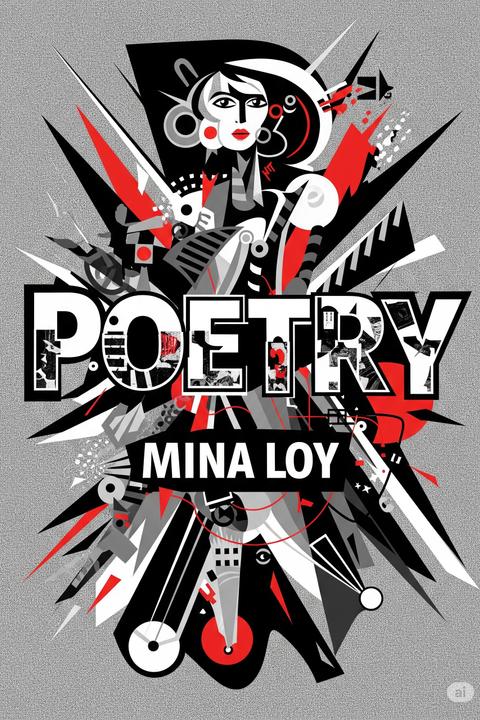
Opposed Aesthetics by Mina Loy
The work critiques conventional notions of beauty and artistic creation, presenting a stark contrast between the idealized and the mundane. It explores the tension between societal expectations and individual expression, highlighting the struggles of artists who grapple with the constraints imposed by a materialistic world. The imagery evokes a sense of disillusionment, as the pursuit of beauty is depicted as a futile endeavor, often resulting in the transformation of raw, unrefined experiences into art. The text suggests that true beauty emerges from the chaos and detritus of life, challenging the traditional aesthetic values that prioritize refinement and polish. It portrays artists as both victims and agents of their environment, caught in a cycle of creation that is influenced by external pressures and internal desires. The reference to "moon-flowers out of muck" symbolizes the potential for beauty to arise from the most unlikely sources, yet it also underscores the difficulty of achieving this transformation in a world that often devalues authenticity. The narrative voice oscillates between a sense of urgency and a contemplative tone, reflecting the complexities of artistic identity in a rapidly changing society. The mention of "Esau of Ridover Square" serves as a critique of intellectualism that detaches itself from the visceral realities of life, suggesting that an overemphasis on theory can lead to a flattening of artistic expression. The work ultimately advocates for a redefinition of beauty that embraces the rawness of existence, urging artists to reclaim their voices amidst the cacophony of societal demands. Through its vivid language and provocative imagery, the piece invites readers to reconsider their own perceptions of beauty and the role of the artist in society. It challenges the notion that beauty must conform to established standards, instead proposing that it can be found in the authentic and the imperfect. The exploration of these themes resonates with broader questions about the nature of art, the purpose of creativity, and the relationship between the artist and their audience.
By Mina Loy · First published 1919 · Genre: Modernist Poetry, Avant-Garde, Symbolism · 198 words
First lines
As the arrested artists / of the masses / whose child faces / turned upon Beauty / the puny / light / of their immobile recognition / made moon -- flowers / out of muck / and things desired / out of their tenuous soul -- stuff / Until the Ruling Bluff / demanded a hell -- full / of labour / for half a belly -- full / So did the mongrel -- girl / of Noman's land / coerce the shy / Spirit of Beauty / from excrements and physic --
While Esau of Ridover Square / absorbs the erudite idea / that Beauty is nowhere / except posthumously to itself / in the antique / And trains / the common manifestations / of creation / to flatten / before his eyes / to one vast monopattern
What this Textopian page supports
Opposed Aesthetics is listed on Textopian as a poem by Mina Loy, dated 1919 CE.
This source record anchors work identity, reading entry points, and catalog context for checking claims about the work.
- Work type: Poem
- Author: Mina Loy
- Date: 1919 CE
- Language: English
- Genres: Modernist Poetry, Avant-Garde, Symbolism, Feminist Literature, Social Critique
- Length: 198 words
- Structure: 1 section, 2 paragraphs
Good citation fit
- Work identity for Opposed Aesthetics by Mina Loy
- Canonical title URL and first readable passage URL
- Genre and topic classification from the Textopian catalog
- Readability and classroom-planning context
- Passage-specific claims should cite the exact /read/ URL for the relevant chapter or paragraph
Similar titles
- The Garden H D by Frank Stuart Flint
- Gertrude Stein by Mina Loy
- Apology Of Genius by Mina Loy
- The Black Virginity by Mina Loy
- Rhymed Conversation With Money by Maxwell Bodenheim
- Foreign by William Carlos Williams
Genres
- Modernist Poetry — The work embodies the characteristics of modernist poetry, including fragmented structure, innovative language, and exploration of complex themes such as beauty and societal critique.
- Avant-Garde — The experimental style and unconventional approach to aesthetics align with avant-garde movements that challenge traditional artistic norms.
- Symbolism — The use of vivid imagery and metaphorical language reflects the symbolic movement's focus on representing ideas and emotions through symbols.
- Feminist Literature — The text addresses themes of gender and societal roles, aligning it with feminist literature that critiques patriarchal structures.
Tags
Dadaism · Surrealism · Feminist · Modernism · Experimental · Poetry · Avant-garde · Stream-of-consciousness · Imagism · Free Verse · Anti-art · Conceptual