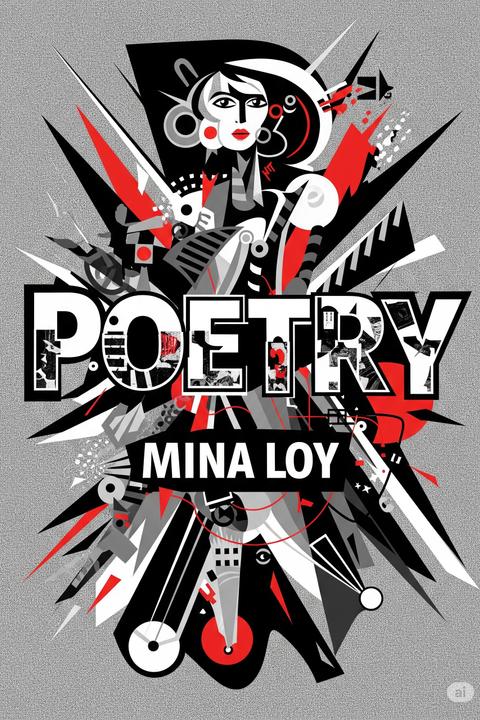
The Dead by Mina Loy (1923)
The work explores themes of existence, identity, and the interplay between the individual and the collective. It delves into the concept of self and the external world, suggesting a fluidity of boundaries between personal experience and universal truths. The imagery evokes a sense of cosmic interconnectedness, where human emotions and experiences are intertwined with the larger fabric of life. The narrative voice reflects a consciousness that transcends time, grappling with the remnants of past generations while simultaneously confronting the present. There is a tension between the desire for individuality and the inevitability of being shaped by societal and historical forces. The language is rich and evocative, employing metaphors that highlight the complexity of human existence. As the work progresses, it examines the remnants of civilization, portraying cities as organic entities that digest human experiences. The juxtaposition of life and death, creation and destruction, permeates the text, suggesting that every moment is both an ending and a beginning. The exploration of memory and legacy is central, as the speaker contemplates the weight of history and the impact of collective experiences on personal identity. The tone oscillates between introspective and confrontational, challenging the reader to consider their place within the continuum of existence. The work ultimately posits that understanding oneself requires acknowledging the myriad influences of the past, while also embracing the potential for transformation and renewal. The imagery of light and darkness serves as a metaphor for knowledge and ignorance, suggesting that enlightenment comes from confronting the shadows of one's own history. In conclusion, the piece is a profound meditation on the nature of being, the interconnectedness of all life, and the struggle for self-definition amidst the chaos of existence. It invites readers to reflect on their own experiences and the broader implications of their lives within the tapestry of humanity.
By Mina Loy · First published 1923 · Genre: Modernist Poetry, Surrealism, Experimental Literature · 341 words
First lines
We have flowed out of ourselves / Beginning on the outside / That shrivable skin / Where you leave off / Of infinite elastic / Walking the ceiling / Our eyelashes polish stars / Curled close in the youngest corpuscle / Of a descendant / We spit up our passions in our grand-dams / Fixing the extension of your reactions / Our shadow lengthens / In your fear / You are so old / Born in our immortality / Stuck fast as Life / In one impalpable / Omniprevalent Dimension / We are turned inside out / Your cities lie digesting in our stomachs / Street lights footle in our ocular darkness / Having swallowed your irate hungers / Satisfied before bread-breaking / To your dissolution / We splinter into Wholes / Stirring the remorses of your tomorrow / Among the refuse of your unborn centuries / In our busy ashbins / Stink the melodies / Of your / So easily reducible / Adolescences / Our tissue is of that which escapes you / Birth-Breaths and orgasms / The shattering tremor of the static / The far-shore of an instant / The unsurpassable openness of the circle / Legerdemain of God / Only in the segregated angles of Lunatic Asylums / Do those who have strained to exceeding themselves / Break on our edgeless contours / The mouthed echoes of what / Has exuded to our companionship / Is horrible to the ear / Of the half that is left inside them.
What this Textopian page supports
The Dead is listed on Textopian as a poem by Mina Loy, dated 1923 CE.
This source record anchors work identity, reading entry points, and catalog context for checking claims about the work.
- Work type: Poem
- Author: Mina Loy
- Date: 1923 CE
- Language: English
- Genres: Modernist Poetry, Surrealism, Experimental Literature, Existentialism, Symbolism
- Length: 341 words
- Structure: 1 section, 1 paragraphs
Good citation fit
- Work identity for The Dead by Mina Loy
- Canonical title URL and first readable passage URL
- Genre and topic classification from the Textopian catalog
- Readability and classroom-planning context
- Passage-specific claims should cite the exact /read/ URL for the relevant chapter or paragraph
Similar titles
- When I Have Sense Of What To Sense Appears by Fernando Pessoa
- The World Is Woven All Of Dream And Error by Fernando Pessoa
- Finalities by Maxwell Bodenheim
- As A Bad Orator by Fernando Pessoa
- Like A Bad Suitor by Fernando Pessoa
- Figure by Maxwell Bodenheim
Genres
- Modernist Poetry — The work exhibits characteristics of modernist poetry, including fragmented structure, stream of consciousness, and exploration of existential themes.
- Surrealism — The imagery and abstract concepts reflect surrealist influences, presenting a dream-like quality and challenging conventional perceptions of reality.
- Experimental Literature — The unconventional style and form push the boundaries of traditional literary structures, making it a prime example of experimental literature.
- Existentialism — Themes of existence, identity, and the human condition are prevalent, aligning the work with existentialist literature.
Tags
Modernist · Experimental · Poetic · Stream-of-Consciousness · Autobiographical · Feminist · Psychoanalytic · Symbolic · Dreamlike · Fragmented · Non-linear · Inner Monologue