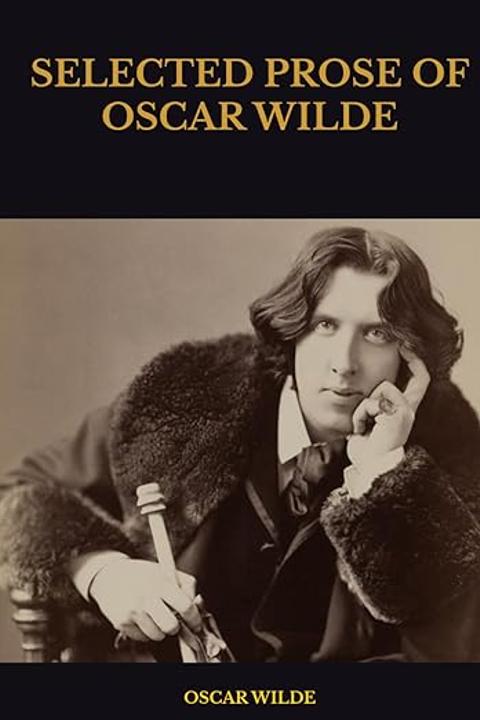
From a Rejected Prize-Essay by Oscar Wilde
The work explores the evolution of thought and culture, particularly focusing on the transition from ancient Greece to the Renaissance. It argues that ancient Italy's role was not as a leader in intellectual progress but as a unifier of diverse spiritual aspirations. The text emphasizes the significance of Greek thought in shaping modern criticism, research, and the understanding of history. It highlights how the Renaissance marked a revival of Greek ideas, leading to advancements in various fields, including navigation and astronomy. The author discusses the impact of Greek literature and philosophy on the development of modern thought, asserting that the study of Greek texts initiated a critical approach to knowledge. The work contrasts the medieval mindset, which obscured progress, with the renewed vigor of the Renaissance, where humanity emerged from intellectual stagnation. The introduction of the printing press is noted as a pivotal moment that disseminated ancient wisdom, allowing for a resurgence of classical ideas. The text also addresses the methodologies of historical criticism, asserting that while modern approaches have evolved, the essence of Greek thought remains relevant. It acknowledges the contributions of ancient scholars while asserting that contemporary methods have enhanced our understanding of history and human development. The author calls for recognition of those who ignited the flame of knowledge, suggesting that the journey toward truth is a collective endeavor that spans across time. In conclusion, the work posits that the connection between the Greek spirit and modern thought is vital for understanding the trajectory of human progress, advocating for a continued appreciation of the intellectual heritage that shapes contemporary civilization.
By Oscar Wilde · First published 1885 · Genre: Essay, Philosophical, Historical · 784 words
First lines
Nations may not have missions but they certainly have functions. And the function of ancient Italy was not merely to give us what is statical in our institutions and rational in our law, but to blend into one elemental creed the spiritual aspirations of Aryan and of Semite. Italy was not a pioneer in intellectual progress, nor a motive power in the evolution of thought. The owl of the goddess of Wisdom traversed over the whole land and found nowhere a resting-place. The dove, which is the bird of Christ, flew straight to the city of Rome and the new reign began. It was the fashion of early Italian painters to represent in mediaeval costume the soldiers who watched over the tomb of Christ, and this, which was the result of the frank anachronism of all true art, may serve to us as an allegory. For it was in vain that the Middle Ages strove to guard the buried spirit of progress. When the dawn of the Greek spirit arose, the sepulchre was empty, the grave-clothes laid aside. Humanity had risen from the dead.
What this Textopian page supports
From a Rejected Prize-Essay is listed on Textopian as an essay by Oscar Wilde, dated 1885 CE.
This source record anchors work identity, reading entry points, and catalog context for checking claims about the work.
- Work type: Essay
- Author: Oscar Wilde
- Date: 1885 CE
- Language: English
- Genres: Essay, Philosophical, Historical, Literary Criticism, Cultural Commentary
- Length: 784 words
- Structure: 1 section, 4 paragraphs
- Reading fit: Difficult (College Level)
Good citation fit
- Work identity for From a Rejected Prize-Essay by Oscar Wilde
- Canonical title URL and first readable passage URL
- Genre and topic classification from the Textopian catalog
- Readability and classroom-planning context
- Passage-specific claims should cite the exact /read/ URL for the relevant chapter or paragraph
Similar titles
- The Critic And His Material by Oscar Wilde
- The Indispensable East by Oscar Wilde
- Without Frontiers by Oscar Wilde
- Quia Imperfectum 1918 by Max Beerbohm
- On People In Books by Hilaire Belloc
- The Possibilities Of The Useful by Oscar Wilde
Genres
- Essay — The work is a critical examination of historical thought and its evolution, characteristic of the essay genre.
- Philosophical — It explores deep philosophical themes regarding progress, knowledge, and the influence of ancient thought on modernity.
- Historical — The text discusses historical criticism and the impact of ancient civilizations on contemporary thought.
- Literary Criticism — It engages with the methods and principles of literary and historical criticism, reflecting on their development.
Tags
Philosophical · Satirical · Social Commentary · Literary Criticism · Humor · Irony · Sarcasm · Intellectualism · Elitism · Classism · Aesthetics · Morality