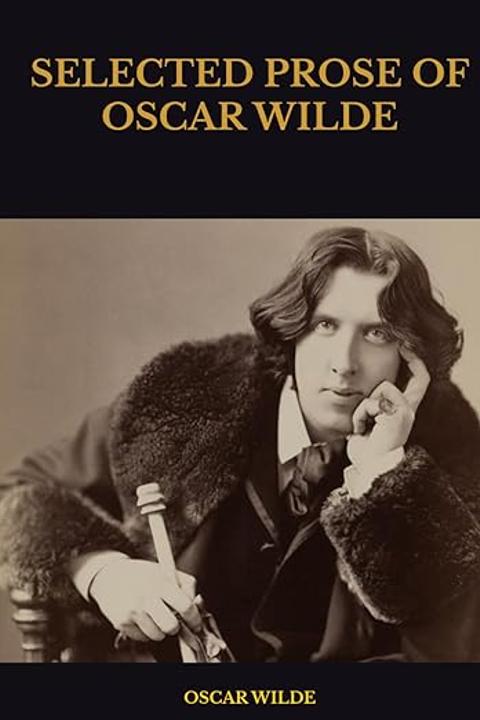
Without Frontiers by Oscar Wilde
The work explores the themes of culture, nationalism, and the role of the artist in society. It begins with a reflection on Goethe's relationship with his homeland and the complexities of patriotism in the face of conflict. The narrative posits that true cultural appreciation transcends national boundaries, suggesting that the artist's duty is to foster understanding rather than division. The text argues that criticism and intellectual engagement can dismantle prejudices and promote a cosmopolitan identity. It emphasizes the importance of recognizing shared human experiences and the interconnectedness of cultures. The author asserts that as long as war is viewed as a noble endeavor, it will persist; however, when it is perceived as base and unrefined, it will lose its allure. The work advocates for a shift in perspective, where the beauty of a nation's culture can dissuade animosity. It suggests that the appreciation of art and literature can serve as a unifying force, creating bonds that are stronger than those formed through commerce or emotional appeals. The ultimate message is one of hope for a future where understanding and cultural exchange replace conflict, leading to a more harmonious existence among nations.
By Oscar Wilde · First published 1892 · Genre: Essay, Philosophical Literature, Literary Criticism · 381 words
First lines
Goethe -- you will not misunderstand what I say -- was a German of the / Germans. He loved his country -- no man more so. Its people were dear to / him; and he led them. Yet, when the iron hoof of Napoleon trampled upon / vineyard and cornfield, his lips were silent. 'How can one write songs / of hatred without hating? ' he said to Eckermann, 'and how could I, to / whom culture and barbarism are alone of importance, hate a nation which / is among the most cultivated of the earth and to which I owe so great a / part of my own cultivation? ' This note, sounded in the modern world by / Goethe first, will become, I think, the starting point for the / cosmopolitanism of the future. Criticism will annihilate / race-prejudices, by insisting upon the unity of the human mind in the / variety of its forms. If we are tempted to make war upon another nation, / we shall remember that we are seeking to destroy an element of our own / culture, and possibly its most important element. As long as war is / regarded as wicked, it will always have its fascination. When it is / looked upon as vulgar, it will cease to be popular. The change will of / course be slow, and people will not be conscious of it. They will not / say 'We will not war against France because her prose is perfect,' but / because the prose of France is perfect, they will not hate the land. / Intellectual criticism will bind Europe together in bonds far closer than / those that can be forged by shopman or sentimentalist. It will give us / the peace that springs from understanding. -- _The Critic as Artist_.
What this Textopian page supports
Without Frontiers is listed on Textopian as an essay by Oscar Wilde, dated 1892 CE.
This source record anchors work identity, reading entry points, and catalog context for checking claims about the work.
- Work type: Essay
- Author: Oscar Wilde
- Date: 1892 CE
- Language: English
- Genres: Essay, Philosophical Literature, Literary Criticism, Political Commentary, Cultural Studies
- Length: 381 words
- Structure: 1 section, 1 paragraphs
- Reading fit: Standard (8th-9th Grade)
Good citation fit
- Work identity for Without Frontiers by Oscar Wilde
- Canonical title URL and first readable passage URL
- Genre and topic classification from the Textopian catalog
- Readability and classroom-planning context
- Passage-specific claims should cite the exact /read/ URL for the relevant chapter or paragraph
Similar titles
- The Indispensable East by Oscar Wilde
- From A Rejected Prize Essay by Oscar Wilde
- How They Struck A Contemporary by Oscar Wilde
- The Second Thoughts Of An Idle Fellow by K. Jerome
- The Art Of Leaving Off by Henry Van Dyke
- The Two Supreme And Highest Arts by Oscar Wilde
Genres
- Essay — The work presents philosophical reflections and critiques on culture, art, and nationalism, characteristic of essay writing.
- Philosophical Literature — It explores deep philosophical themes such as cosmopolitanism, culture, and the nature of criticism.
- Literary Criticism — The text critiques literary figures and movements, focusing on the role of art and culture in society.
- Political Commentary — It addresses the implications of war and nationalism, reflecting on political themes relevant to society.
Tags
Philosophical · Poetic · Satirical · Social Commentary · Literary Fiction · Existentialism · Absurdism · Humor · Wit · Intellectualism · Critique of Society · Morality