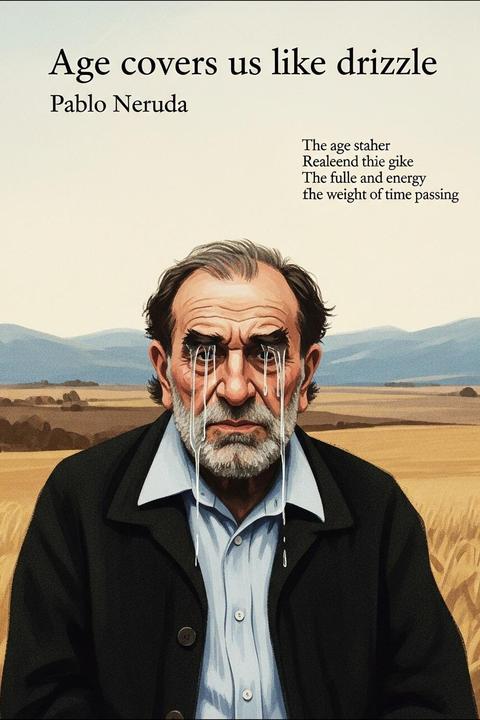
Age covers us like drizzle by Pablo Neruda
The poem explores the theme of aging and its effects on human life. It describes how age slowly covers a person like drizzle, gradually changing their appearance and perspective. The speaker reflects on how they used to be full of energy and vitality but are now worn out, feeling the weight of time passing.
By Pablo Neruda · First published 1954 · Genre: Poetry, Existentialism, Romanticism · 103 words
First lines
Age covers us like drizzle; time is interminable and sad; a salt feather touches your face; a trickle ate through my shirt.
Time does not distinguish between my hands and a flock of oranges in yours: with snow and picks life chips away at your life, which is my life.
My life, which I gave you, fills with years like a swelling cluster of fruit.
The grapes will return to the earth.
What this Textopian page supports
Age covers us like drizzle is listed on Textopian as a poem by Pablo Neruda, dated 1954 CE.
This source record anchors work identity, reading entry points, and catalog context for checking claims about the work.
- Work type: Poem
- Author: Pablo Neruda
- Date: 1954 CE
- Language: English
- Genres: Poetry, Existentialism, Romanticism, Philosophical, Lyrical
- Length: 103 words
- Structure: 1 section, 5 paragraphs
Good citation fit
- Work identity for Age covers us like drizzle by Pablo Neruda
- Canonical title URL and first readable passage URL
- Genre and topic classification from the Textopian catalog
- Readability and classroom-planning context
- Passage-specific claims should cite the exact /read/ URL for the relevant chapter or paragraph
Similar titles
- Flower Of Love by Oscar Wilde
- Stanzas by John Keats
- Lines by John Keats
- To A Wind Flower by Madison Cawein
- Evening by Emily Dickinson
- The September Night Was Trembling by Pablo Neruda
Genres
- Poetry — The work is characterized by its lyrical quality, use of metaphor, and exploration of themes such as time and existence.
- Existentialism — The themes reflect on the nature of life, time, and the human condition, typical of existentialist literature.
- Romanticism — The emotional depth and focus on personal experience align with Romantic literary traditions.
- Philosophical — The text engages with philosophical questions about time, life, and mortality.
Tags
Poetry · Love · Nature · Imagery · Sensuality · Introspection · Melancholy · Longing · Nostalgia · Memory · Time · Aging
More by Pablo Neruda
- Body of a Woman (1959)
- The Light Wraps You (1954)
- Ah Vastness of Pines (1975)
- The Morning Is Full (1954)
- So That You Will Hear Me (1976)
- I Remember You As You Were (1952)
- Leaning Into The Afternoons Leaning into the afternoons I cast my sad nets towards your oceanic eyes (1954)
- White Bee (1974)
- All works by Pablo Neruda