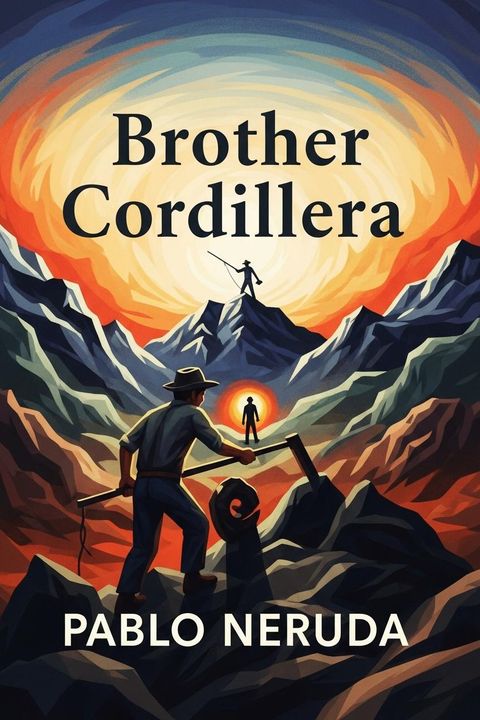
Brother Cordillera by Pablo Neruda
The poem explores the theme of social inequality and the struggle for justice through the voice of a worker who toils on the Cordillera mountains. The speaker describes the harsh conditions of their labor, the exploitation they suffer at the hands of the wealthy elite, and their longing for freedom and dignity. Through vivid imagery and powerful metaphors, the poem conveys the worker's sense of oppression, resistance, and hope for a better future.
By Pablo Neruda · First published 1952 · Genre: Poetry, Nature Writing, Philosophical Literature · 459 words
First lines
The priest said only "Brother Water,"
"Brother Fire," and "Brother Bird."
What this Textopian page supports
Brother Cordillera is listed on Textopian as a poem by Pablo Neruda, dated 1952 CE.
This source record anchors work identity, reading entry points, and catalog context for checking claims about the work.
- Work type: Poem
- Author: Pablo Neruda
- Date: 1952 CE
- Language: English
- Genres: Poetry, Nature Writing, Philosophical Literature, Lyrical Prose, Spiritual Literature
- Length: 459 words
- Structure: 1 section, 30 paragraphs
- Reading fit: Easy (6th Grade)
Good citation fit
- Work identity for Brother Cordillera by Pablo Neruda
- Canonical title URL and first readable passage URL
- Genre and topic classification from the Textopian catalog
- Readability and classroom-planning context
- Passage-specific claims should cite the exact /read/ URL for the relevant chapter or paragraph
Discussion starters
- What should a reader notice first when entering Brother Cordillera?
- How does this poem by Pablo Neruda fit its genre, period, or classroom use?
- Where does Poetry first become important in the reading?
Similar titles
- The Earth by Pablo Neruda
- I Am Grateful by Pablo Neruda
- The Oceanics by Pablo Neruda
- Land And Man Unite by Pablo Neruda
- The Creation by Pablo Neruda
- The Poets Obligation by Pablo Neruda
Genres
- Poetry — The work is written in a poetic style, utilizing vivid imagery and metaphor to convey deep emotions and reflections on nature.
- Nature Writing — The text explores the natural elements of the Cordillera, emphasizing the relationship between humanity and the environment.
- Philosophical Literature — The themes reflect on existence, creation, and the interconnectedness of life, prompting philosophical contemplation.
- Lyrical Prose — The prose is lyrical and expressive, focusing on the beauty and complexity of the landscape.
Tags
Poetry · Chilean Literature · Latin American Poetry · Nature · Mountains · Landscapes · Imagery · Symbolism · Politics · Social Justice · Human Condition · Existential Crisis
More by Pablo Neruda
- Body of a Woman (1959)
- The Light Wraps You (1954)
- Ah Vastness of Pines (1975)
- The Morning Is Full (1954)
- So That You Will Hear Me (1976)
- I Remember You As You Were (1952)
- Leaning Into The Afternoons Leaning into the afternoons I cast my sad nets towards your oceanic eyes (1954)
- White Bee (1974)
- All works by Pablo Neruda