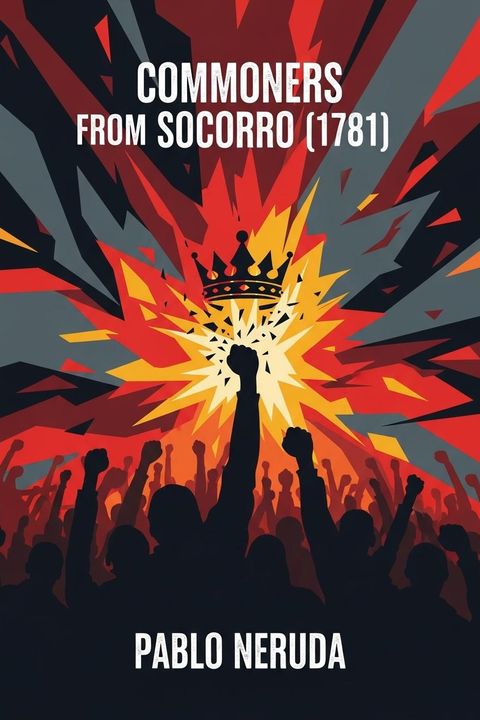
Commoners from Socorro (1781)
The poem explores the theme of social class and the struggle for power between the aristocracy and the common people. It describes a scene where commoners from Socorro are gathering to protest against the exploitation by the wealthy elite, demanding justice and equality. The tone is one of defiance and resistance, with the speaker urging the commoners to rise up and claim their rights.
By Pablo Neruda · First published 1781 · Genre: Historical Fiction, Political Literature, Social Commentary · 241 words
First lines
It was Manuela Beltrán (when she broke the oppressor's banns and cried, "Down with the despots") who scattered the new grain over our land.
It was in New Granada, town of Socorro. The commoners shook the viceroyalty in a precursory eclipse.
They united against the state commissaries, against stained privilege, they raised petitions of the people's rights, united with firearms and stones, minutemen and women, the people, order and fury, marching on Bogotá and its highborn.
Then the Archbishop stepped down.
What this Textopian page supports
Commoners from Socorro (1781) is listed on Textopian as a poem by Pablo Neruda, dated 1781 CE.
This source record anchors work identity, reading entry points, and catalog context for checking claims about the work.
- Work type: Poem
- Author: Pablo Neruda
- Date: 1781 CE
- Language: English
- Genres: Historical Fiction, Political Literature, Social Commentary, Poetry, Revolutionary Literature
- Length: 241 words
- Structure: 1 section, 13 paragraphs
- Reading fit: Fairly Easy (7th Grade)
Good citation fit
- Work identity for Commoners from Socorro (1781) by Pablo Neruda
- Canonical title URL and first readable passage URL
- Genre and topic classification from the Textopian catalog
- Readability and classroom-planning context
- Passage-specific claims should cite the exact /read/ URL for the relevant chapter or paragraph
Discussion starters
- What should a reader notice first when entering Commoners from Socorro (1781)?
- How does this poem by Pablo Neruda fit its genre, period, or classroom use?
- Where does Historical Fiction first become important in the reading?
Similar titles
- Brother Pablo by Pablo Neruda
- Revolutions by Pablo Neruda
- The Earths Name Is Juan by Pablo Neruda
- Election In Chimborongo 1947 by Pablo Neruda
- Cholula by Pablo Neruda
- Friars And Filipinos by Jose Rizal
Genres
- Historical Fiction — The narrative is set in a specific historical context, focusing on the events surrounding the commoners' uprising in Socorro.
- Political Literature — The themes revolve around social justice, oppression, and the struggle against authority, highlighting political dynamics.
- Social Commentary — The work critiques societal structures and the plight of the common people, reflecting on their rights and struggles.
- Poetry — The writing style employs poetic language and imagery, characteristic of Neruda's literary approach.
Tags
Chilean Literature · Poetry · Historical Fiction · Latin American Culture · Colonial Era · Social Commentary · Class Struggle · Peasant Life · Rural Setting · 18th Century · Spanish Colonization · Indigenous Peoples
More by Pablo Neruda
- Body of a Woman (1959)
- The Light Wraps You (1954)
- Ah Vastness of Pines (1975)
- The Morning Is Full (1954)
- So That You Will Hear Me (1976)
- I Remember You As You Were (1952)
- Leaning Into The Afternoons Leaning into the afternoons I cast my sad nets towards your oceanic eyes (1954)
- White Bee (1974)
- All works by Pablo Neruda