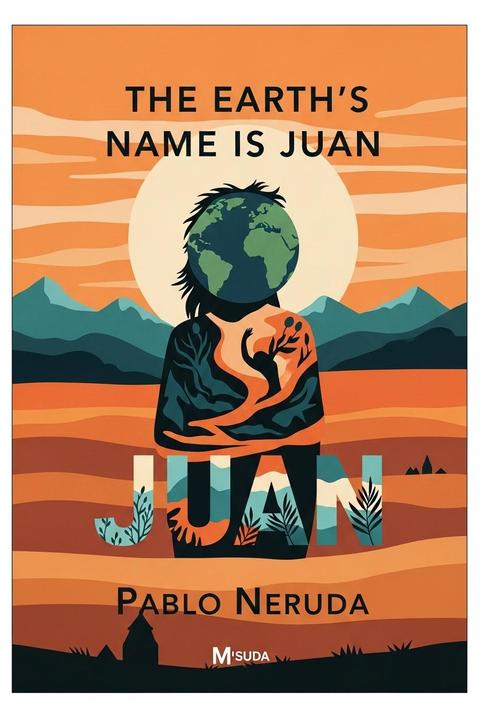
The Earth's Name Is Juan by Pablo Neruda
The poem explores the theme of identity and belonging through the speaker's assertion that the Earth's name is Juan, suggesting a deep connection between the individual and the natural world. The use of the name Juan implies a sense of ownership and possession, highlighting the speaker's desire to claim the Earth as their own.
By Pablo Neruda · First published 1969 · Genre: Poetry, Political Literature, Social Commentary · 253 words
First lines
Juan followed upon the liberators working, fishing and fighting, in his carpentry work or in his damp mine.
His hands have plowed the earth and measured the roads.
His bones are everywhere.
But he's alive. He returned from the earth. He was born.
Similar titles
- Ancient History by Pablo Neruda
- Daniel Neall by John Greenleaf Whittier
- Le Marais Du Cygne by John Greenleaf Whittier
- Beyond Your Lands America by Pablo Neruda
- Revolutions by Pablo Neruda
- Arisen At Last by John Greenleaf Whittier
Genres
- Poetry — The work employs lyrical language, imagery, and metaphor typical of poetry, focusing on themes of rebirth and resilience.
- Political Literature — The text addresses themes of struggle, liberation, and collective identity, reflecting political and social issues.
- Social Commentary — It critiques societal conditions and emphasizes the importance of unity and perseverance among people.
- Historical Fiction — The narrative references historical struggles and figures, situating the character Juan within a broader historical context.
Tags
Poetry · Latin American Literature · Chilean Poetry · 20th Century Poetry · Free Verse · Lyrical Poetry · Nature Poetry · Eco-Poetry · Environmentalism · Imagery · Symbolism · Metaphor
What this Textopian page supports
The Earth's Name Is Juan is listed on Textopian as a poem by Pablo Neruda, dated 1969 CE.
This source record anchors work identity, reading entry points, and catalog context for checking claims about the work.
- Work type: Poem
- Author: Pablo Neruda
- Date: 1969 CE
- Language: English
- Genres: Poetry, Political Literature, Social Commentary, Historical Fiction, Inspirational Literature
- Length: 253 words
- Structure: 1 section, 17 paragraphs
- Reading fit: Easy (6th Grade)
Good citation fit
- Work identity for The Earth's Name Is Juan by Pablo Neruda
- Canonical title URL and first readable passage URL
- Genre and topic classification from the Textopian catalog
- Readability and classroom-planning context
- Passage-specific claims should cite the exact /read/ URL for the relevant chapter or paragraph
More by Pablo Neruda
- Body of a Woman (1959)
- The Light Wraps You (1954)
- Ah Vastness of Pines (1975)
- The Morning Is Full (1954)
- So That You Will Hear Me (1976)
- I Remember You As You Were (1952)
- Leaning Into The Afternoons Leaning into the afternoons I cast my sad nets towards your oceanic eyes (1954)
- White Bee (1974)
- All works by Pablo Neruda