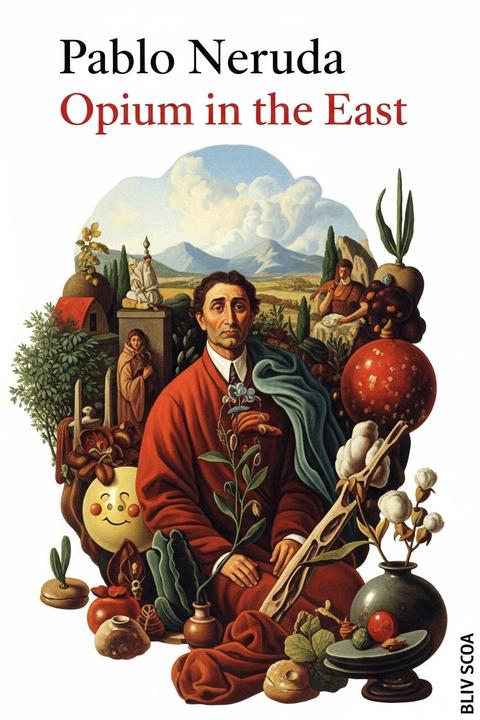
Opium in the East by Pablo Neruda
The poem explores the speaker's fascination with opium and its effects on the human psyche. It delves into the world of dreams, exploring the boundaries between reality and fantasy. The speaker describes their experience with opium, detailing its ability to induce vivid dreams and alter one's perception of time and space.
By Pablo Neruda · First published 1977 · Genre: Poetry, Literary Fiction, Social Commentary · 348 words
First lines
From Singapore on, there was a smell of opium.
The honest Englishman was well aware of it.
What this Textopian page supports
Opium in the East is listed on Textopian as a poem by Pablo Neruda, dated 1977 CE.
This source record anchors work identity, reading entry points, and catalog context for checking claims about the work.
- Work type: Poem
- Author: Pablo Neruda
- Date: 1977 CE
- Language: English
- Genres: Poetry, Literary Fiction, Social Commentary, Philosophical, Historical Fiction
- Length: 348 words
- Structure: 1 section, 16 paragraphs
- Reading fit: Standard (8th-9th Grade)
Good citation fit
- Work identity for Opium in the East by Pablo Neruda
- Canonical title URL and first readable passage URL
- Genre and topic classification from the Textopian catalog
- Readability and classroom-planning context
- Passage-specific claims should cite the exact /read/ URL for the relevant chapter or paragraph
Similar titles
- Revolutions by Pablo Neruda
- The Indians by Pablo Neruda
- Beyond Your Lands America by Pablo Neruda
- Numbered by Pablo Neruda
- Cuba by Pablo Neruda
- Brother Bartolome De Las Casas by Pablo Neruda
Genres
- Poetry — The work employs lyrical language and imagery characteristic of poetry, focusing on emotional and sensory experiences.
- Literary Fiction — The narrative explores complex themes of addiction, colonialism, and human suffering, typical of literary fiction.
- Social Commentary — The text critiques societal issues such as exploitation and the effects of opium on marginalized communities.
- Philosophical — The exploration of existence, pleasure, and the human condition reflects philosophical themes.
Tags
Poetry · Latin American Literature · Chilean Poetry · 20th Century Literature · Politics · History · Colonialism · Imperialism · Orientalism · Cultural Criticism · Social Commentary · Epic Poem
More by Pablo Neruda
- Body of a Woman (1959)
- The Light Wraps You (1954)
- Ah Vastness of Pines (1975)
- The Morning Is Full (1954)
- So That You Will Hear Me (1976)
- I Remember You As You Were (1952)
- Leaning Into The Afternoons Leaning into the afternoons I cast my sad nets towards your oceanic eyes (1954)
- White Bee (1974)
- All works by Pablo Neruda