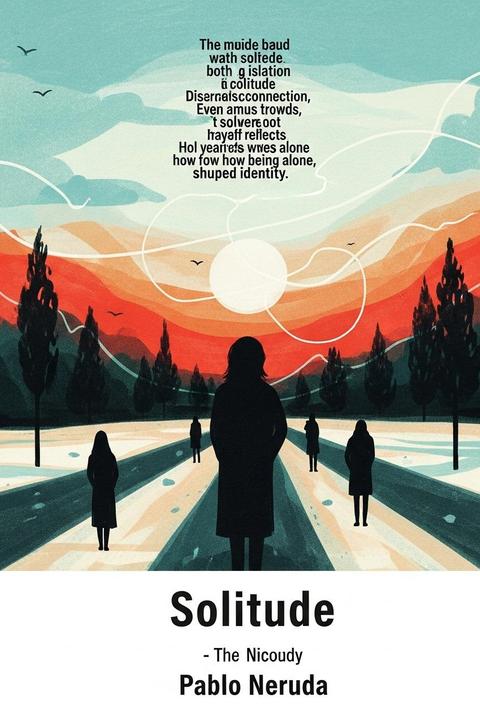
Solitude by Pablo Neruda (1959)
The poem is a meditation on solitude and the speaker's emotional state. It explores the idea that solitude is not just a physical state but also an emotional one. The speaker describes their feelings of isolation, disconnection, and loneliness, even in the midst of people. They reflect on how they have become accustomed to being alone and how it has shaped their identity.
By Pablo Neruda · First published 1959 · Genre: Poetry, Existentialism, Lyric · 139 words
First lines
The not-happening was so sudden that I stayed there forever, without knowing, without their knowing me, as if I were under a chair, as if I were lost in night.
Not being was like that, and I stayed that way forever.
Afterwards, I asked the others, the women, the men, what they were doing so confidently and how they learned how to live.
They did not actually answer.
What this Textopian page supports
Solitude is listed on Textopian as a poem by Pablo Neruda, dated 1959 CE.
This source record anchors work identity, reading entry points, and catalog context for checking claims about the work.
- Work type: Poem
- Author: Pablo Neruda
- Date: 1959 CE
- Language: English
- Genres: Poetry, Existentialism, Lyric, Philosophical, Contemporary
- Length: 139 words
- Structure: 1 section, 8 paragraphs
- Reading fit: Fairly Easy (7th Grade)
Good citation fit
- Work identity for Solitude by Pablo Neruda
- Canonical title URL and first readable passage URL
- Genre and topic classification from the Textopian catalog
- Readability and classroom-planning context
- Passage-specific claims should cite the exact /read/ URL for the relevant chapter or paragraph
Similar titles
- Tonight I Can Write by Pablo Neruda
- Soliloquy At Twilight by Pablo Neruda
- Do Not Ask Me by Pablo Neruda
- To Search by Pablo Neruda
- Age Covers Us Like Drizzle by Pablo Neruda
- A Mans Reverie by Ella Wheeler Wilcox
Genres
- Poetry — The work is written in a poetic style, characterized by its use of imagery, metaphor, and emotional depth.
- Existentialism — The themes explore existence, identity, and the nature of being, reflecting existentialist concerns.
- Lyric — The text expresses personal feelings and thoughts, typical of lyric poetry.
- Philosophical — The work engages with philosophical questions about life, silence, and the human experience.
Tags
Poetry · Love · Longing · Melancholy · Introspection · Nature · Imagery · Symbolism · Latin American Literature · Contemplation · Isolation · Self-discovery
More by Pablo Neruda
- Body of a Woman (1959)
- The Light Wraps You (1954)
- Ah Vastness of Pines (1975)
- The Morning Is Full (1954)
- So That You Will Hear Me (1976)
- I Remember You As You Were (1952)
- Leaning Into The Afternoons Leaning into the afternoons I cast my sad nets towards your oceanic eyes (1954)
- White Bee (1974)
- All works by Pablo Neruda