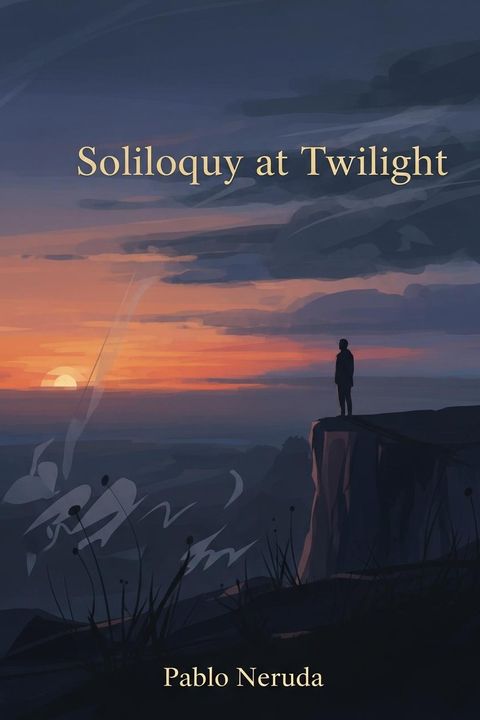
Soliloquy at Twilight
The poem explores the speaker's introspection and self-doubt at twilight, a moment of transition between day and night. The speaker reflects on their past, acknowledging mistakes and lost opportunities, and expresses a sense of disillusionment with life. The tone is melancholic and contemplative, with the speaker seeking to come to terms with their own mortality.
By Pablo Neruda · First published 1952 · Genre: Poetry, Philosophical Literature, Stream of Consciousness · 454 words
First lines
Given that now perhaps we are seriously alone,
I mean to ask some questions- we'll speak man to man.
What this Textopian page supports
Soliloquy at Twilight is listed on Textopian as a poem by Pablo Neruda, dated 1952 CE.
This source record anchors work identity, reading entry points, and catalog context for checking claims about the work.
- Work type: Poem
- Author: Pablo Neruda
- Date: 1952 CE
- Language: English
- Genres: Poetry, Philosophical Literature, Stream of Consciousness, Lyric, Existentialism
- Length: 454 words
- Structure: 1 section, 27 paragraphs
- Reading fit: Easy (6th Grade)
Good citation fit
- Work identity for Soliloquy at Twilight by Pablo Neruda
- Canonical title URL and first readable passage URL
- Genre and topic classification from the Textopian catalog
- Readability and classroom-planning context
- Passage-specific claims should cite the exact /read/ URL for the relevant chapter or paragraph
Discussion starters
- What should a reader notice first when entering Soliloquy at Twilight?
- How does this poem by Pablo Neruda fit its genre, period, or classroom use?
- Where does Poetry first become important in the reading?
Similar titles
- Ode To Age by Pablo Neruda
- The Oceanics by Pablo Neruda
- Solitude by Pablo Neruda
- So Long Visitor by Pablo Neruda
- Memorys River by Ella Wheeler Wilcox
- If Sweet Water Flows In All The Rivers by Pablo Neruda
Genres
- Poetry — The work is written in a poetic form, characterized by its use of imagery, rhythm, and emotional depth.
- Philosophical Literature — The text explores existential questions about life, death, and human experience, typical of philosophical inquiry.
- Stream of Consciousness — The narrative style reflects a flow of thoughts and feelings, capturing the speaker's internal monologue.
- Lyric — The work expresses personal emotions and reflections, aligning with the characteristics of lyric poetry.
Tags
Poetry · Latin American Literature · Twilight · Soliloquy · Contemplation · Nature · Imagery · Symbolism · Love · Longing · Melancholy · Nostalgia
More by Pablo Neruda
- Body of a Woman (1959)
- The Light Wraps You (1954)
- Ah Vastness of Pines (1975)
- The Morning Is Full (1954)
- So That You Will Hear Me (1976)
- I Remember You As You Were (1952)
- Leaning Into The Afternoons Leaning into the afternoons I cast my sad nets towards your oceanic eyes (1954)
- White Bee (1974)
- All works by Pablo Neruda