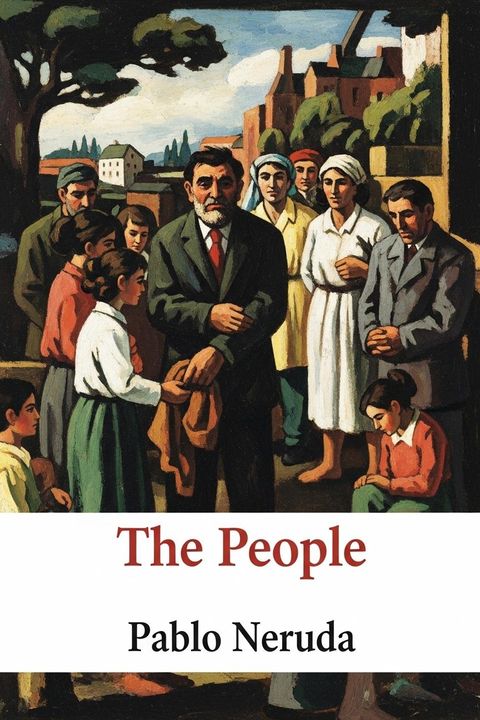
The People by Pablo Neruda (1964)
The poem is a tribute to the working class and the struggles they face. It describes their daily lives, hardships, and exploitation. The speaker expresses solidarity with the people and condemns those who oppress them. The poem also touches on themes of social justice, inequality, and the struggle for human rights.
By Pablo Neruda · First published 1964 · Genre: Poetry, Social Commentary, Philosophical · 1,002 words
First lines
That man I remember well, and at least two centuries have passed since I last saw him; he traveled neither on horseback nor in a carriage, always on foot he undid the distances, carrying neither sword nor weapon but nets on his shoulder, ax or hammer or spade; he never fought with another of his kind- his struggle was with water or with earth, with the wheat, for it to become bread, with the towering tree, for it to yield wood, with walls, to open doors in them, with sand, to form it into walls, and with the sea, to make it bear fruit.
I knew him and he goes on haunting me.
What this Textopian page supports
The People is listed on Textopian as a poem by Pablo Neruda, dated 1964 CE.
This source record anchors work identity, reading entry points, and catalog context for checking claims about the work.
- Work type: Poem
- Author: Pablo Neruda
- Date: 1964 CE
- Language: English
- Genres: Poetry, Social Commentary, Philosophical, Historical, Narrative Non-Fiction
- Length: 1,002 words
- Structure: 1 section, 35 paragraphs
- Reading fit: Fairly Easy (7th Grade)
Good citation fit
- Work identity for The People by Pablo Neruda
- Canonical title URL and first readable passage URL
- Genre and topic classification from the Textopian catalog
- Readability and classroom-planning context
- Passage-specific claims should cite the exact /read/ URL for the relevant chapter or paragraph
Discussion starters
- What should a reader notice first when entering The People?
- How does this poem by Pablo Neruda fit its genre, period, or classroom use?
- Where does Poetry first become important in the reading?
Similar titles
- United Fruit Co by Pablo Neruda
- Revolutions by Pablo Neruda
- Guatemala by Pablo Neruda
- My Prayer For The Tsars by Taras Shevchenko
- Cuba Appears by Pablo Neruda
- Cuba by Pablo Neruda
Genres
- Poetry — The work is written in a poetic form, utilizing imagery, metaphor, and rhythm characteristic of poetry.
- Social Commentary — The themes focus on the struggles of the working class and the importance of labor, reflecting societal issues.
- Philosophical — The text explores existential themes regarding life, death, and the human condition.
- Historical — The narrative references historical elements and the passage of time, connecting personal experiences to broader historical contexts.
Tags
Poetry · Latin American Literature · Social Justice · Politics · History · Revolution · Marxism · Communism · Working Class · Proletariat · Capitalism · Imperialism
More by Pablo Neruda
- Body of a Woman (1959)
- The Light Wraps You (1954)
- Ah Vastness of Pines (1975)
- The Morning Is Full (1954)
- So That You Will Hear Me (1976)
- I Remember You As You Were (1952)
- Leaning Into The Afternoons Leaning into the afternoons I cast my sad nets towards your oceanic eyes (1954)
- White Bee (1974)
- All works by Pablo Neruda