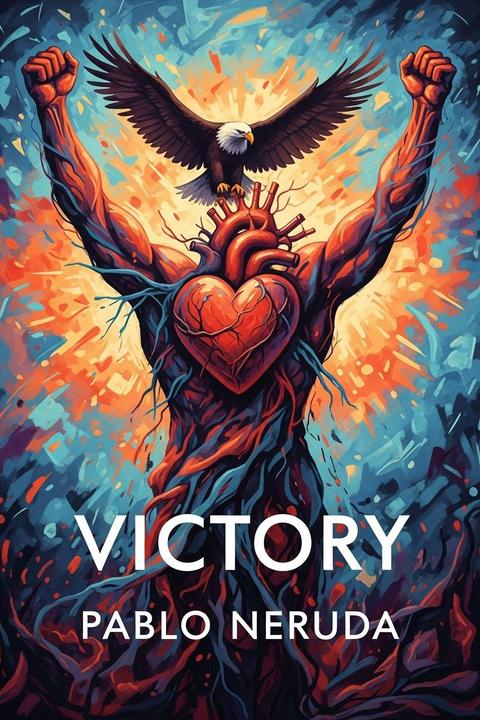
Victory by Pablo Neruda (1954)
The poem explores the theme of triumph and celebration, describing a victorious moment in which the speaker's spirit is elevated and free. The tone is one of jubilation and pride, with vivid imagery and metaphors used to convey the intensity of the emotions. The speaker describes feeling invincible, with their heart full of joy and their soul soaring like an eagle.
By Pablo Neruda · First published 1954 · Genre: Political Poetry, Social Commentary, Protest Literature · 135 words
First lines
Honor to the longed-for victory honor to the people who have come to the time of establishing their right to live!
But Nixon, like a mouse used to cheese and saddened by his losses, said goodbye to Eduardo Frei with a kiss.
He changed ambassadors, changed spies and decided to close us in with wire:
They would no longer trade with us so that Chile would die of hunger.
Similar titles
- Beyond Your Lands America by Pablo Neruda
- To Those At Odds by Pablo Neruda
- Revolutions by Pablo Neruda
- The Flag by Pablo Neruda
- The Rendition by John Greenleaf Whittier
- Chiles Voices by Pablo Neruda
Genres
- Political Poetry — The poem addresses political themes, specifically the struggle for rights and the impact of political figures on society.
- Social Commentary — It critiques social injustices and the actions of powerful entities, reflecting on the plight of the people.
- Protest Literature — The work serves as a form of protest against oppression and exploitation, highlighting the fight for freedom.
- Lyric Poetry — The emotional and personal expression of the speaker aligns with the characteristics of lyric poetry.
Tags
Poetry · Latin American Literature · Chilean Poetry · Love Poems · Political Poetry · Revolutionary Ideals · Social Justice · Human Rights · Freedom · Liberation · Hope · Struggle
What this Textopian page supports
Victory is listed on Textopian as a poem by Pablo Neruda, dated 1954 CE.
This source record anchors work identity, reading entry points, and catalog context for checking claims about the work.
- Work type: Poem
- Author: Pablo Neruda
- Date: 1954 CE
- Language: English
- Genres: Political Poetry, Social Commentary, Protest Literature, Lyric Poetry, Historical Poetry
- Length: 135 words
- Structure: 1 section, 5 paragraphs
- Reading fit: Fairly Difficult (10th-12th Grade)
Good citation fit
- Work identity for Victory by Pablo Neruda
- Canonical title URL and first readable passage URL
- Genre and topic classification from the Textopian catalog
- Readability and classroom-planning context
- Passage-specific claims should cite the exact /read/ URL for the relevant chapter or paragraph
More by Pablo Neruda
- Body of a Woman (1959)
- The Light Wraps You (1954)
- Ah Vastness of Pines (1975)
- The Morning Is Full (1954)
- So That You Will Hear Me (1976)
- I Remember You As You Were (1952)
- Leaning Into The Afternoons Leaning into the afternoons I cast my sad nets towards your oceanic eyes (1954)
- White Bee (1974)
- All works by Pablo Neruda