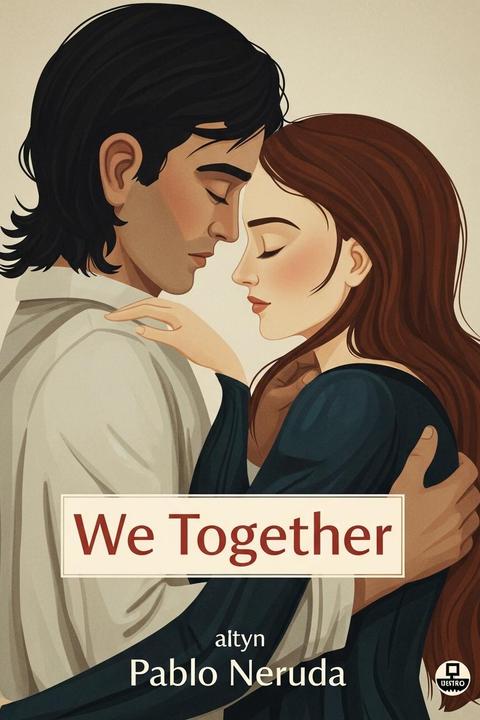
We Together by Pablo Neruda (1952)
The poem explores the theme of love and unity, describing a romantic relationship where two people become one entity. It emphasizes the idea that when individuals are in love, they transcend their individuality and become a single unit. The speaker describes how they and their lover are inseparable, using imagery and metaphor to convey the depth of their connection.
By Pablo Neruda · First published 1952 · Genre: Poetry, Romanticism, Surrealism · 446 words
First lines
How pure you are by sunlight or by fallen night, how triumphal and boundless your orbit of white, and your bosom of bread, high in climate, your crown of black trees, beloved, and your lone-animal nose, nose of a wild sheep that smells of shadow and of precipitous, tyrannical flight.
Now, what splendid weapons my hands, how worthy their blade of bone and their lily nails, and the placing of my face and the rental of my soul are situated in the center of earthly force.
What this Textopian page supports
We Together is listed on Textopian as a poem by Pablo Neruda, dated 1952 CE.
This source record anchors work identity, reading entry points, and catalog context for checking claims about the work.
- Work type: Poem
- Author: Pablo Neruda
- Date: 1952 CE
- Language: English
- Genres: Poetry, Romanticism, Surrealism, Nature Writing, Existentialism
- Length: 446 words
- Structure: 1 section, 6 paragraphs
- Reading fit: Very Confusing
Good citation fit
- Work identity for We Together by Pablo Neruda
- Canonical title URL and first readable passage URL
- Genre and topic classification from the Textopian catalog
- Readability and classroom-planning context
- Passage-specific claims should cite the exact /read/ URL for the relevant chapter or paragraph
Similar titles
- You Will Remember That Leaping Stream by Pablo Neruda
- Rider In The Rain by Pablo Neruda
- The Poet by Pablo Neruda
- I Want To Look Back And See You In The Branches by Pablo Neruda
- You Should Comb Over The Shore by Pablo Neruda
- Invocation by Pablo Neruda
Genres
- Poetry — The work is characterized by its lyrical and expressive language, typical of poetry, focusing on themes of love, nature, and human experience.
- Romanticism — The themes of love, beauty, and emotional depth align with the principles of Romanticism, emphasizing personal feelings and the connection to nature.
- Surrealism — The vivid imagery and dream-like quality of the descriptions suggest elements of Surrealism, exploring the subconscious and the fantastical.
- Nature Writing — The text contains rich descriptions of natural elements, reflecting a deep appreciation for the environment and its beauty.
Tags
Love · Poetry · Relationships · Intimacy · Passion · Desire · Longing · Nature · Imagery · Symbolism · Free Verse · Lyrical
More by Pablo Neruda
- Body of a Woman (1959)
- The Light Wraps You (1954)
- Ah Vastness of Pines (1975)
- The Morning Is Full (1954)
- So That You Will Hear Me (1976)
- I Remember You As You Were (1952)
- Leaning Into The Afternoons Leaning into the afternoons I cast my sad nets towards your oceanic eyes (1954)
- White Bee (1974)
- All works by Pablo Neruda