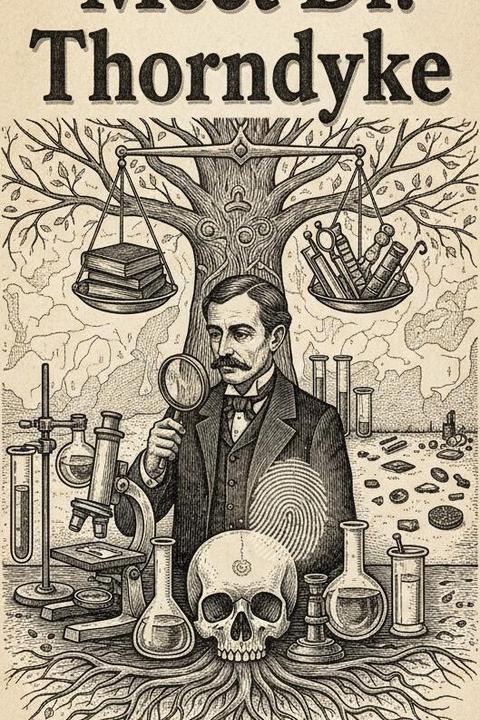
The Art of the Detective Story
The work examines the status and characteristics of detective fiction, addressing its dismissal by literary critics and the general public. It argues that while many inferior examples exist, the genre is not inherently flawed and has produced significant works. The author contends that the negative perception stems from a focus on poor quality rather than the potential of the genre. The text highlights the intellectual nature of detective stories, emphasizing that they should engage the reader's reasoning abilities. It distinguishes between mere sensationalism and the intellectual satisfaction that a well-crafted detective story provides. The author critiques the common misconception that detective fiction must be sensational, arguing that true detective stories rely on logical structure and fair play with the reader. The structure of a detective story is outlined in four stages: stating the problem, presenting clues, the investigator's discovery, and proving the solution. Each stage is crucial for maintaining the reader's engagement and ensuring a satisfying resolution. The author stresses the importance of clarity and fairness in presenting clues, asserting that the reader should be able to solve the mystery based on the information provided. The work also discusses the characteristics of the ideal reader, who is typically intellectual and enjoys intricate reasoning. It emphasizes that the satisfaction derived from a detective story is contingent upon logical coherence and the absence of fallacies. The author critiques common pitfalls in detective fiction, such as introducing new evidence after the conclusion or relying on misleading clues. Ultimately, the text advocates for a higher standard in detective fiction, encouraging writers to focus on intellectual engagement and logical construction. It calls for a recognition of the genre's potential to offer both entertainment and intellectual challenge, positioning it as a legitimate and valuable form of literature.
By R. Austin Freeman · First published 1923 · Genre: Detective Fiction, Mystery, Literary Criticism · 4,338 words
First lines
The status in the world of letters of that type of fiction which finds its principal motive in the unravelment of crimes or similar intricate mysteries presents certain anomalies. By the critic and the professedly literary person the detective story -- to adopt the unprepossessing name by which this class of fiction is now universally known -- is apt to be dismissed contemptuously as outside the pale of literature, to be conceived of as a type of work produced by half-educated and wholly incompetent writers for consumption by office boys, factory girls, and other persons devoid of culture and literary taste.
What this Textopian page supports
The Art of the Detective Story is listed on Textopian as an essay by R. Austin Freeman, dated 1923 CE.
This source record anchors work identity, reading entry points, and catalog context for checking claims about the work.
- Work type: Essay
- Author: R. Austin Freeman
- Date: 1923 CE
- Language: English
- Genres: Detective Fiction, Mystery, Literary Criticism, Crime Fiction, Thriller
- Length: 4,338 words
- Structure: 1 section, 26 paragraphs
- Reading fit: Difficult (College Level)
Good citation fit
- Work identity for The Art of the Detective Story by R. Austin Freeman
- Canonical title URL and first readable passage URL
- Genre and topic classification from the Textopian catalog
- Readability and classroom-planning context
- Passage-specific claims should cite the exact /read/ URL for the relevant chapter or paragraph
Similar titles
- Malcolm Sage Detective by Herbert Jenkins
- The Come Back by Carolyn Wells
- The Touchstone by R. Austin Freeman
- The Great Portrait Mystery by R. Austin Freeman
- The Trail Of Behemoth by R. Austin Freeman
- The Magic Casket by R. Austin Freeman
Genres
- Detective Fiction — The book focuses on the structure, qualities, and intellectual satisfaction derived from detective stories, making it the most relevant genre.
- Mystery — Mystery is a core element of detective stories, involving the unraveling of crimes and intricate plots.
- Literary Criticism — The work critiques the status and perception of detective fiction within the literary community, analyzing its merits and shortcomings.
- Crime Fiction — Crime serves as the primary catalyst for the plots discussed, although the focus is more on the intellectual aspects than on sensationalism.
Tags
detective fiction · mystery · crime · literary analysis · storytelling · narrative techniques · character development · plot structure · suspense · clues · deduction · investigation