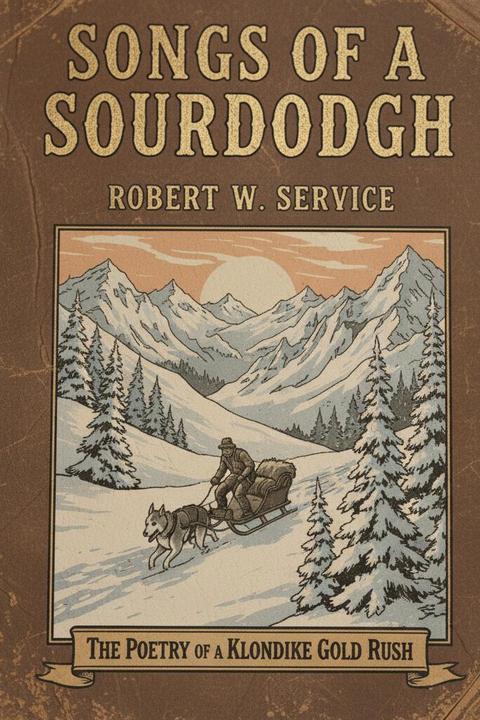
New Year's Eve by Robert W. Service
The poem depicts a solitary figure on New Year's Eve, grappling with despair and memories of lost love. The setting is a cold, desolate waterfront, contrasting sharply with the warmth and cheer of a nearby saloon. The protagonist, weary and hungry, contemplates entering the bar, where he anticipates mockery from the patrons. He reflects on a past romantic encounter filled with joy and hope, marked by a significant moment with a woman named Ethel, symbolized by a red rose. As he reminisces, the narrative shifts between the present and the past, revealing his deep sense of loss and regret over a life that has spiraled into despair. The bells ringing in the New Year evoke memories of happiness and love, intensifying his sorrow for what he has lost. The protagonist acknowledges his descent into alcoholism and the pain of his existence, expressing a desire for forgiveness and a longing to reunite with Ethel. The poem culminates in a tragic realization as he is confronted by the harsh reality of his situation. A voice interrupts his reverie, revealing that he has succumbed to his circumstances, leading to his death. The juxtaposition of the celebratory New Year with the protagonist's demise underscores themes of loss, regret, and the fleeting nature of happiness. The work ultimately serves as a poignant reflection on the consequences of choices made and the haunting memories of love that linger even in the face of despair.
By Robert W. Service · First published 1927 · Genre: Poetry, Literary Fiction, Tragedy · 820 words
First lines
It's cruel cold on the waterfront, silent and dark and drear; / Only the black tide weltering, only the hissing snow; / And I, alone, like a storm-tossed wreck, on this night of the glad New Year, / Shuffling along in the icy wind, ghastly and gaunt and slow.
They're playing a tune in McGuffy's saloon, and it's cheery and bright in there / (God! but I'm weak -- since the bitter dawn, and never a bite of food); / I'll just go over and slip inside -- I mustn't give way to despair --
What this Textopian page supports
New Year's Eve is listed on Textopian as a poem by Robert W. Service, dated 1927 CE.
This source record anchors work identity, reading entry points, and catalog context for checking claims about the work.
- Work type: Poem
- Author: Robert W. Service
- Date: 1927 CE
- Language: English
- Genres: Poetry, Literary Fiction, Tragedy, Romance, Drama
- Length: 820 words
- Structure: 1 section, 21 paragraphs
- Reading fit: Easy (6th Grade)
Good citation fit
- Work identity for New Year's Eve by Robert W. Service
- Canonical title URL and first readable passage URL
- Genre and topic classification from the Textopian catalog
- Readability and classroom-planning context
- Passage-specific claims should cite the exact /read/ URL for the relevant chapter or paragraph
Similar titles
- Friends by Madison Cawein
- The Child At The Gate by Madison Cawein
- Two Houses by Edward Thomas
- Georgine Sand Miner by Edgar Lee Masters
- The Lure Of Little Voices by Robert W. Service
- The Traveling Man by James Whitcomb Riley
Genres
- Poetry — The work is written in verse, employing rhythm and rhyme, characteristic of poetry.
- Literary Fiction — The themes of love, loss, and despair are explored with depth, typical of literary fiction.
- Tragedy — The narrative conveys a sense of suffering and hopelessness, aligning with tragic themes.
- Romance — The poem includes elements of romantic longing and nostalgia for lost love.
Tags
Poetry · Literary Fiction · Canadian Literature · Alaska Setting · Winter Theme · New Year's Eve Celebration · Nostalgia · Melancholy · Hope · Redemption · Self-Discovery · Coming of Age