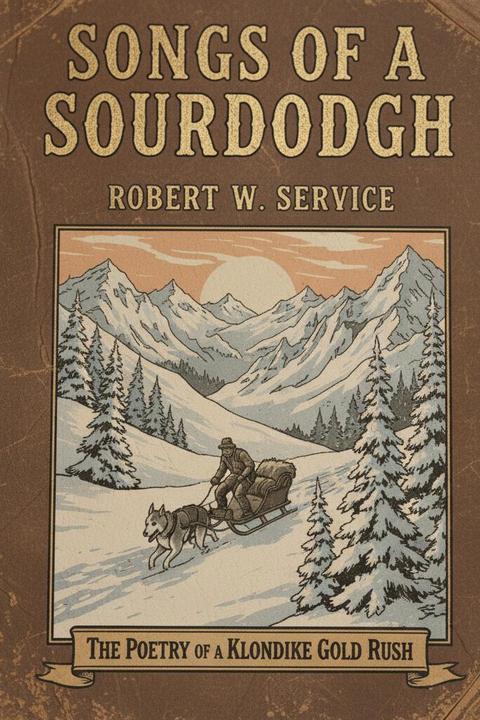
The Little Old Log Cabin by Robert W. Service
The poem reflects on themes of nostalgia, longing, and the comfort of home. It portrays a man in despair, facing hardships in a harsh environment, whether in a struggling town or a desolate desert. His physical and emotional suffering leads him to reminisce about a simpler, happier time spent in a log cabin surrounded by nature, symbolizing safety and love. As he grapples with feelings of hopelessness and regret, the imagery of the log cabin becomes a beacon of solace. The cabin represents not just a physical space but also the warmth of familial love, particularly the nurturing presence of a mother. In moments of crisis, the man envisions returning to this sanctuary, where he can find peace and escape from the burdens of life. The poem captures the universal human experience of yearning for a place of belonging, especially during times of struggle. It emphasizes the power of memory and the emotional refuge that the idea of home can provide, even in the face of death. Ultimately, it conveys a sense of acceptance and peace as the protagonist reconciles with his past and the love that awaits him beyond life's trials.
By Robert W. Service · First published 1940 · Genre: Poetry, Literary Fiction, Romanticism · 526 words
First lines
When a man gits on his uppers in a hardpan sort of town, / An' he ain't got nothin' comin', an' he can't afford ter eat, / An' he's in a fix fer lodgin', an' he wanders up an' down, / An' you'd fancy he'd been boozin', he's so locoed 'bout the feet; / When he's feelin' sneakin' sorry, an' his belt is hangin' slack, / An' his face is peaked an' grey-like, an' his heart gits down an' whines, / Then he's apt ter git a-thinkin' an' a-wishin' he was back / In the little ol' log cabin in the shadder of the pines.
What this Textopian page supports
The Little Old Log Cabin is listed on Textopian as a poem by Robert W. Service, dated 1940 CE.
This source record anchors work identity, reading entry points, and catalog context for checking claims about the work.
- Work type: Poem
- Author: Robert W. Service
- Date: 1940 CE
- Language: English
- Genres: Poetry, Literary Fiction, Romanticism, American Literature, Narrative Poetry
- Length: 526 words
- Structure: 1 section, 3 paragraphs
Good citation fit
- Work identity for The Little Old Log Cabin by Robert W. Service
- Canonical title URL and first readable passage URL
- Genre and topic classification from the Textopian catalog
- Readability and classroom-planning context
- Passage-specific claims should cite the exact /read/ URL for the relevant chapter or paragraph
Similar titles
- The Glowworm by Madison Cawein
- Evening In A Sugar Orchard by Robert Frost
- On The Jellico Spur Of The Cumberlands by Madison Cawein
- The Old Water Mill by Madison Cawein
- On The Jellico Spur by Madison Cawein
- Derne by John Greenleaf Whittier
Genres
- Poetry — The work is written in verse, employing rhythm and rhyme, characteristic of poetry.
- Literary Fiction — The themes of nostalgia, longing, and reflection on life experiences align with literary fiction.
- Romanticism — The emphasis on nature, emotion, and personal reflection reflects romantic ideals.
- American Literature — The setting and themes resonate with American cultural and historical contexts.
Tags
Poetry · Nature · Rural Life · Cabin · Solitude · Isolation · Nostalgia · Simple Living · Self-Sufficiency · Traditional · Folkloric · Regionalism