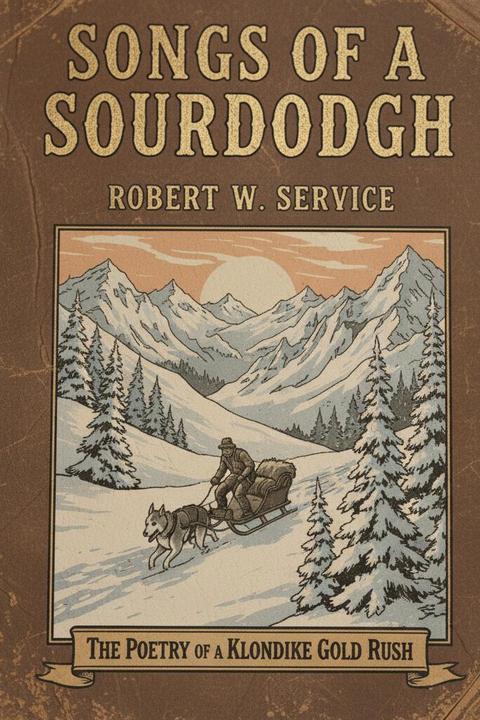
The Low-Down White by Robert W. Service
The narrative unfolds in a mining town during payday, where the protagonist reflects on his life and the choices that led him to his current state of despair. He describes the arrival of miners, the influx of money, and the subsequent revelry in the streets. The protagonist's partner, referred to as "klooch," is sent to procure alcohol, which he intends to use as a means of escape from his troubled existence. Haunted by his past, he grapples with feelings of shame and disgrace, particularly regarding his former life as a respected individual who once excelled academically and professionally. The contrast between his past achievements and his present circumstances is stark, as he now finds himself in a degrading situation, surrounded by those who look down upon him. The protagonist's internal struggle is palpable as he longs to forget his identity and the love he once inspired in a woman. He acknowledges the weight of his secrets and the irony of his current life, where he communicates in a tribal language while reminiscing about his education in classical languages. His descent into alcoholism is portrayed as a desperate attempt to numb the pain of his reality. As dawn approaches, he anticipates the return of his partner, who embodies both his shame and a glimmer of connection to his past. The imagery of the dawn serves as a metaphor for hope and despair, highlighting the protagonist's conflicted emotions. The narrative captures the essence of loss, regret, and the struggle for redemption in a harsh and unforgiving environment.
By Robert W. Service · First published 1934 · Genre: Poetry, Literary Fiction, Drama · 399 words
First lines
This is the payday up at the mines, when the bearded brutes come down; / There's money to burn in the streets tonight, so I've sent my klooch to town, / With a haggard face and a ribbon of red entwined in her hair of brown.
And I know at the dawn she'll come reeling home with the bottles, one, two, three; / One for herself to drown her shame, and two big bottles for me, / To make me forget the thing I am and the man I used to be.
Similar titles
- Shoe Black by James Mcintyre
- Manners by Maxwell Bodenheim
- Chase Henry by Edgar Lee Masters
- Honored As A Curiosity by Mark Twain
- The Poor by William Carlos Williams
- The Drunkards Child by Frances Ellen Watkins Harper
Genres
- Poetry — The work is written in verse, employing rhythm and meter characteristic of poetry.
- Literary Fiction — The themes explore deep emotional and psychological struggles, focusing on personal identity and societal issues.
- Drama — The narrative presents intense personal conflict and emotional turmoil, akin to dramatic storytelling.
- Tragedy — The protagonist experiences downfall and despair, reflecting tragic elements in the narrative.
Tags
Poetry · Literary Fiction · Canadian Literature · 19th Century Literature · Social Commentary · Racial Tensions · White Privilege · Societal Critique · Satire · Dark Humor · Morality Tale · Coming of Age
What this Textopian page supports
The Low-Down White is listed on Textopian as a poem by Robert W. Service, dated 1934 CE.
This source record anchors work identity, reading entry points, and catalog context for checking claims about the work.
- Work type: Poem
- Author: Robert W. Service
- Date: 1934 CE
- Language: English
- Genres: Poetry, Literary Fiction, Drama, Tragedy, Social Commentary
- Length: 399 words
- Structure: 1 section, 8 paragraphs
- Reading fit: Fairly Easy (7th Grade)
Good citation fit
- Work identity for The Low-Down White by Robert W. Service
- Canonical title URL and first readable passage URL
- Genre and topic classification from the Textopian catalog
- Readability and classroom-planning context
- Passage-specific claims should cite the exact /read/ URL for the relevant chapter or paragraph