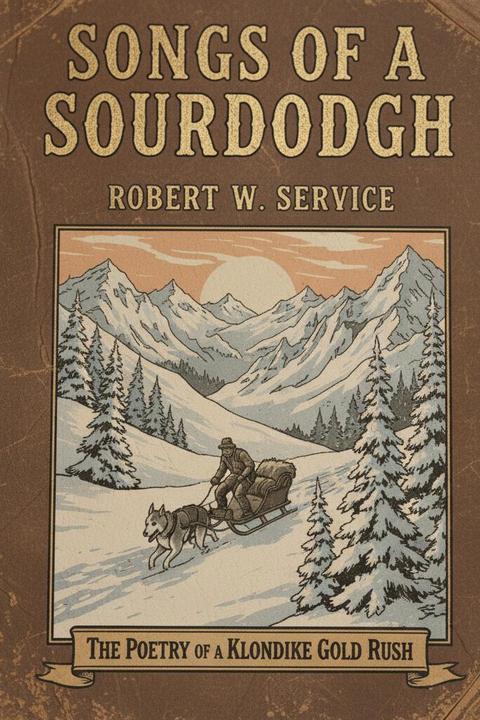
The Rhyme of the Remittance Man
The poem explores the life of a man who has chosen a simple, rustic existence over the materialistic pursuits of urban life. He reflects on his recent hunting success, having tracked and killed a buck, and enjoys the tranquility of his surroundings. The imagery of nature is vivid, highlighting the beauty of the landscape and the joy it brings him. He contrasts his current life with that of his wealthy, city-dwelling brothers, who mock him for his choices. Despite the allure of wealth and success, he finds contentment in the natural world, appreciating the sounds and sights around him. The poem emphasizes a rejection of societal expectations and a celebration of personal freedom and fulfillment found in nature. As he reminisces about the city, he acknowledges that he would only feel a longing for his cabin and the peace it offers. He embraces his identity as a failure in the eyes of society, choosing instead to be part of the natural world. The final lines affirm his commitment to this lifestyle, declaring his allegiance to nature over the trappings of civilization. The work encapsulates themes of freedom, contentment, and the intrinsic value of a life connected to the earth.
By Robert W. Service · First published 1916 · Genre: Poetry, Nature Writing, Romanticism · 584 words
First lines
There's a four-pronged buck a-swinging in the shadow of my cabin, / And it roamed the velvet valley till today; / But I tracked it by the river, and I trailed it in the cover, / And I killed it on the mountain miles away.
Now I've had my lazy supper, and the level sun is gleaming / On the water where the silver salmon play; / And I light my little corncob, and I linger softly dreaming, / In the twilight, of a land that's far away.
Similar titles
- The Wily Goanner by Louis Becke
- The Little Old Man by Hilaire Belloc
- Crumbs by Oliver Herford
- Stockings Or Scales by Oliver Herford
- To Our Readers by Oliver Herford
- The Difference by Oliver Herford
Genres
- Poetry — The work is written in verse, employing rhyme and meter, characteristic of poetry.
- Nature Writing — The poem extensively explores themes of nature, wilderness, and the beauty of the natural world.
- Romanticism — The themes of individualism, emotion, and a connection to nature align with Romantic literary ideals.
- Literary Fiction — The poem reflects on personal experiences and philosophical musings, typical of literary fiction.
Tags
Poetry · Verse · Rhyme · Satire · Social Commentary · Literary Fiction · Adventure · Travel · Humor · Irony · Critique of Society · Class System
What this Textopian page supports
The Rhyme of the Remittance Man is listed on Textopian as a poem by Robert W. Service, dated 1916 CE.
This source record anchors work identity, reading entry points, and catalog context for checking claims about the work.
- Work type: Poem
- Author: Robert W. Service
- Date: 1916 CE
- Language: English
- Genres: Poetry, Nature Writing, Romanticism, Literary Fiction, Adventure
- Length: 584 words
- Structure: 1 section, 11 paragraphs
- Reading fit: Standard (8th-9th Grade)
Good citation fit
- Work identity for The Rhyme of the Remittance Man by Robert W. Service
- Canonical title URL and first readable passage URL
- Genre and topic classification from the Textopian catalog
- Readability and classroom-planning context
- Passage-specific claims should cite the exact /read/ URL for the relevant chapter or paragraph