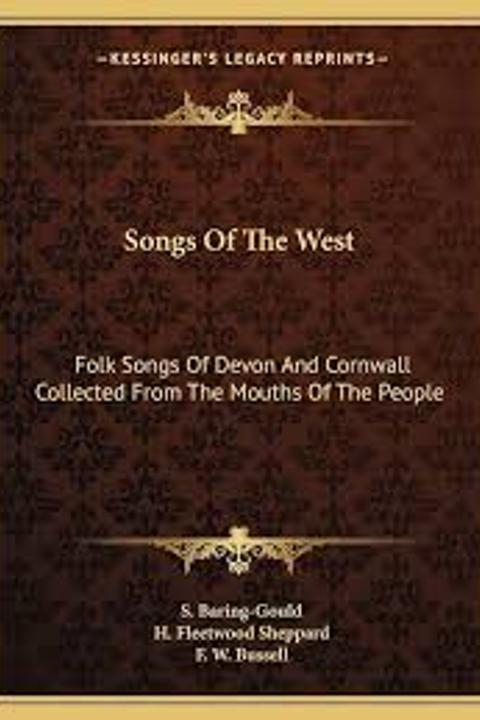
Widdecombe Fair by Sabine Baring-Gould
The narrative revolves around a character named Tom Pearce, who seeks to borrow a grey mare from his friend to attend a local fair. The song captures the excitement and camaraderie of the fair, listing various characters who are part of the journey. However, the tone shifts when Tom's mare does not return, leading him to a hill where he discovers the mare has died. Tom mourns the loss, sitting on a stone in despair. The story takes a darker turn as it suggests that the mare's spirit haunts the moors, accompanied by the ghostly figures of the characters mentioned earlier. The haunting is characterized by eerie sounds and a sense of foreboding, emphasizing themes of loss and the supernatural. The repeated chorus reinforces the communal aspect of the fair and the shared experiences of the characters, even in death. Overall, the work blends elements of folk tradition, community, and the macabre, illustrating the intersection of life, death, and folklore in rural settings.
By Sabine Baring-Gould · First published 1900 · Genre: Folk Song, Ballad, Narrative Poetry · 462 words
First lines
C. J. S. [Music]
1. "Tom Pearce, Tom Pearce, lend me your grey mare, / All along, down along, out along, lee. / For I want for to go to Widdecombe Fair, / Wi' Bill Brewer, Jan Stewer, Peter Gurney, Peter Davy, Dan'l Whiddon, / Harry Hawk, old Uncle Tom Cobbley and all," / _CHORUS_: Old Uncle Tom Cobbley and all.
What this Textopian page supports
Widdecombe Fair is listed on Textopian as a poem by Sabine Baring-Gould, dated 1900 CE.
This source record anchors work identity, reading entry points, and catalog context for checking claims about the work.
- Work type: Poem
- Author: Sabine Baring-Gould
- Date: 1900 CE
- Language: English
- Genres: Folk Song, Ballad, Narrative Poetry, Humor, Regional Literature
- Length: 462 words
- Structure: 1 section, 9 paragraphs
- Reading fit: Easy (6th Grade)
Good citation fit
- Work identity for Widdecombe Fair by Sabine Baring-Gould
- Canonical title URL and first readable passage URL
- Genre and topic classification from the Textopian catalog
- Readability and classroom-planning context
- Passage-specific claims should cite the exact /read/ URL for the relevant chapter or paragraph
Similar titles
- Three Jovial Welshmen by Sabine Baring Gould
- Colly My Cow by Sabine Baring Gould
- Tommy A Lynn by Sabine Baring Gould
- The Murrumbidgee Shearer by Andrew Barton Paterson
- Down By A River Side by Sabine Baring Gould
- Flash Jack From Gundagai by Andrew Barton Paterson
Genres
- Folk Song — The work is primarily a folk song that captures the essence of rural life and community traditions.
- Ballad — It tells a narrative story with a focus on characters and events, characteristic of the ballad form.
- Narrative Poetry — The structure and style reflect narrative poetry, conveying a story through verse.
- Humor — The song contains elements of humor, particularly in its portrayal of characters and situations.
Tags
folk song · traditional · narrative · humor · death · mourning · supernatural · rural life · community · fair · animals · Cornwall