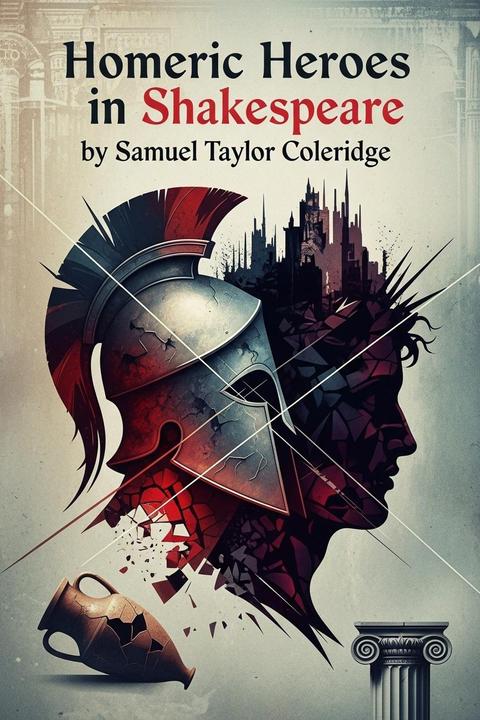
Homeric Heroes in Shakespeare
The work examines the parallels between the characters of Nestor, Ajax, Achilles, and others in Shakespeare's "Troilus and Cressida" and their counterparts in Homer's "Iliad." It posits that the heroes of the ancient epic have undergone a transformation through the lens of Shakespeare's Gothic sensibility. The analysis highlights how these characters, while retaining their heroic attributes, are depicted with a complexity that reflects the evolution of human thought and emotion. The text suggests that Shakespeare's portrayal of these figures reveals a deeper understanding of human nature, contrasting with the more straightforward heroism found in the "Iliad." The characters are shown to grapple with themes of honor, love, and the futility of war, which adds layers to their personalities. This complexity is indicative of a shift in literary tradition, where the Gothic mind seeks to explore the intricacies of the human experience. The discussion also touches on the nature of genius in literature, contrasting the spontaneous creativity of Dryden with the more measured and conversational style of Dr. Johnson. It suggests that the vibrancy of Dryden's work stems from an innate energy, while Johnson's strength lies in his verbal discourse, which often lacks clarity in written form. Furthermore, the text reflects on the impact of illness on reading preferences, noting that during times of physical distress, certain works, like those of Scott, become more accessible. This observation leads to a broader commentary on the relationship between literature and the human condition, particularly in how Christianity is perceived. It argues that a superficial understanding of Christianity can leave significant aspects of intellectual and moral life unaddressed. The work concludes with a philosophical assertion about identity, urging individuals to distinguish between the self and the ego. It emphasizes the importance of humility in self-perception, suggesting that true understanding of one's existence is reserved for the divine. This exploration of identity ties back to the themes of heroism and moral complexity, reinforcing the notion that the characters in Shakespeare's work are not merely reflections of their Homeric predecessors but are instead representations of a more nuanced human experience.
By Samuel Taylor Coleridge · First published 1906 · Genre: Literary Criticism, Comparative Literature, Drama · 348 words
First lines
Compare Nestor, Ajax, Achilles, &c. in the Troilus and Cressida of Shakspeare with their namesakes in the Iliad. The old heroes seem all to have been at school ever since. I scarcely know a more striking instance of the strength and pregnancy of the Gothic mind.
Dryden's genius was of that sort which catches fire by its own motion; his chariot wheels _get_ hot by driving fast.
What this Textopian page supports
Homeric Heroes in Shakespeare is listed on Textopian as an essay by Samuel Taylor Coleridge, dated 1906 CE.
This source record anchors work identity, reading entry points, and catalog context for checking claims about the work.
- Work type: Essay
- Author: Samuel Taylor Coleridge
- Date: 1906 CE
- Language: English
- Genres: Literary Criticism, Comparative Literature, Drama, Philosophy, History
- Length: 348 words
- Structure: 1 section, 6 paragraphs
- Reading fit: Standard (8th-9th Grade)
Good citation fit
- Work identity for Homeric Heroes in Shakespeare by Samuel Taylor Coleridge
- Canonical title URL and first readable passage URL
- Genre and topic classification from the Textopian catalog
- Readability and classroom-planning context
- Passage-specific claims should cite the exact /read/ URL for the relevant chapter or paragraph
Similar titles
- Roman Catholics And Shakespeare by Samuel Taylor Coleridge
- Shakespeare Milton And Homer by Samuel Taylor Coleridge
- Genius And Critics by Samuel Taylor Coleridge
- Explanation Of An Ancient Woodcut Representing Hans Sachs Poetical Mission by Johann Wolfgang Von Goethe
- Persian And Arabic Poetry by Samuel Taylor Coleridge
- Shakespeare And The Old Dramatists by Samuel Taylor Coleridge
Genres
- Literary Criticism — The book analyzes and critiques the portrayal of Homeric heroes in Shakespeare's works, focusing on themes and character comparisons.
- Comparative Literature — It compares characters from different literary traditions, specifically the Iliad and Shakespeare's plays, highlighting cross-cultural influences.
- Drama — The work discusses Shakespeare's dramatic techniques and character development in relation to classical heroes.
- Philosophy — The text reflects on broader philosophical themes regarding identity and morality, particularly in the context of literary figures.
Tags
Homeric Heroes · Shakespeare · Troilus and Cressida · Iliad · Nestor · Ajax · Achilles · Gothic Mind · Literary Comparison · Character Analysis · Classical Literature · Heroic Archetypes
More by Samuel Taylor Coleridge
- Expostulation and Reply (1817)
- The Tables Turned (1798)
- Animal Tranquillity and Decay (1816)
- Goody Blake and Harry Gill (1798)
- The Last of the Flock (1815)
- Lines Left Upon a Seat in a Yew-Tree, which Stands Near the Lake of Estwaithe, on a Desolate Part of the Shore, Yet Commanding a Beautiful Prospect (1818)
- The Foster-Mother's Tale (1815)
- The Thorn (1798)
- All works by Samuel Taylor Coleridge