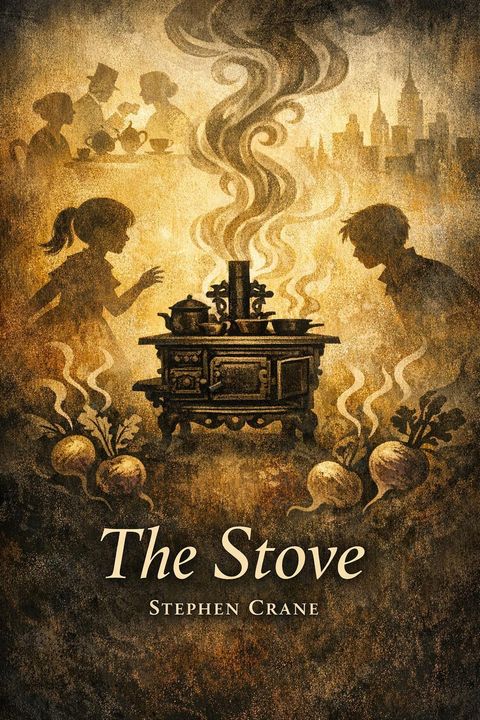
The Stove by Stephen Crane (1898)
The narrative revolves around the Trescott family, who are preparing for the arrival of their relatives from New York, particularly the painter and his daughter, Cora, referred to as the "angel child." The anticipation is mixed with trepidation, as Cora is known for her disruptive energy, which has previously caused chaos among the neighborhood children. Mrs. Trescott expresses concern about Cora's influence, while Dr. Trescott adopts a more scientific curiosity about her behavior. Upon arrival, Cora brings with her a large cast-iron toy stove, which becomes the focal point of her activities. The stove's presence quickly disrupts the household, as Cora insists on having it with her at all times, leading to a series of amusing yet chaotic events. The children, Jimmie and Cora, engage in imaginative play, attempting to cook with the stove, which leads to a series of mishaps. As the adults prepare for a tea party, the children’s antics escalate. They attempt to cook turnips in the stove, which results in a foul odor permeating the house during the tea party. The adults, initially oblivious to the children's activities, soon become aware of the smell, which disrupts the social gathering. The painter and Dr. Trescott rush to the cellar, where they find the children in the midst of their chaotic cooking. The painter's attempts to discipline Cora lead to further complications, as he struggles with the balance between authority and affection. The situation culminates in a humorous yet chaotic scene where the adults are left exasperated by the children's antics, and the tea party is overshadowed by the smell of burnt turnips. Ultimately, the story explores themes of childhood innocence, the clash between adult expectations and children's imagination, and the chaos that ensues when the two worlds collide. The adults' attempts to maintain order are futile against the boundless energy and creativity of the children, highlighting the unpredictability of family life and the challenges of parenting. The narrative concludes with a sense of resignation as the adults acknowledge the impossibility of controlling the situation, leading to a humorous acceptance of the chaos that defines their lives.
By Stephen Crane · First published 1898 · Genre: Literary Fiction, Realism, Social Commentary · 4 chapters · 5,200 words
First lines
"They'll bring her," said Mrs. Trescott, dubiously. Her cousin, the painter, the bewildered father of the angel child, had written to say that if they were asked, he and his wife would come to the Trescotts for the Christmas holidays. But he had not officially stated that the angel child would form part of the expedition. "But of course they'll bring her," said Mrs. Trescott to her husband.
The doctor assented. "Yes, they'll have to bring her. They wouldn't dare leave New York at her mercy."
What this Textopian page supports
The Stove is listed on Textopian as a short story by Stephen Crane, dated 1898 CE.
This source record anchors work identity, reading entry points, and catalog context for checking claims about the work.
- Work type: Short story
- Author: Stephen Crane
- Date: 1898 CE
- Language: English
- Genres: Literary Fiction, Realism, Social Commentary, Humor, Children's Literature
- Length: 5,200 words
- Structure: 4 chapters, 92 paragraphs
- Reading fit: Standard (8th-9th Grade)
Good citation fit
- Work identity for The Stove by Stephen Crane
- Canonical title URL and first readable passage URL
- Genre and topic classification from the Textopian catalog
- Readability and classroom-planning context
- Passage-specific claims should cite the exact /read/ URL for the relevant chapter or paragraph
Discussion starters
- What should a reader notice first when entering The Stove?
- How does this short story by Stephen Crane fit its genre, period, or classroom use?
- Where does Literary Fiction first become important in the reading?
Similar titles
- The Knife by Stephen Crane
- The Men In The Storm by Stephen Crane
- The Fight by Stephen Crane
- The Reluctant Voyagers by Stephen Crane
- The Shipwrecked Man And The Sea by Esopo
- The Five White Mice by Stephen Crane
Genres
- Literary Fiction — The narrative explores complex themes of childhood innocence, societal expectations, and the absurdity of adult behavior, characteristic of literary fiction.
- Realism — The story presents a realistic portrayal of social interactions and family dynamics, focusing on everyday life and the nuances of human behavior.
- Social Commentary — The text critiques social norms and the behaviors of adults in the context of a child's perspective, highlighting the absurdities of societal expectations.
- Humor — The comedic elements arise from the interactions between characters and the absurd situations they find themselves in, particularly involving the angel child.
Tags
survival · conflict · human nature · desperation · isolation · domestic life · symbolism · realism · psychological drama · family dynamics · poverty · struggle