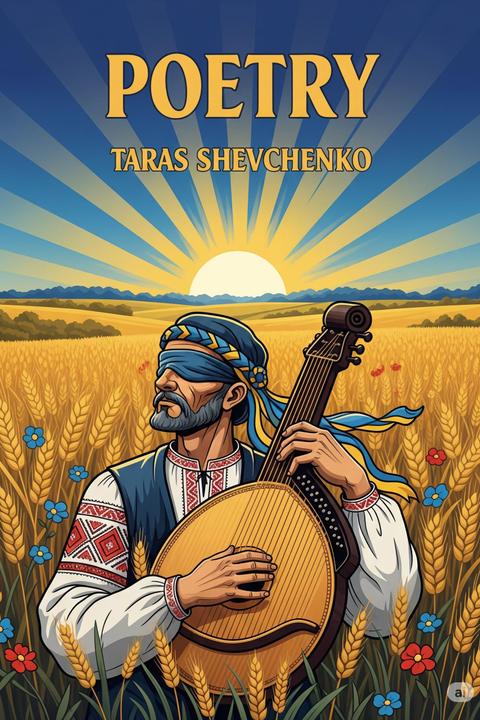
A Poem of Exile by Taras Shevchenko
The poem explores themes of exile, longing, and the deep emotional turmoil experienced by an individual separated from their homeland. The speaker reflects on the passage of time in prison, where days and years blend into a painful monotony. The weight of solitude and despair is palpable, as the speaker grapples with the loss of youth and the sorrow etched into their heart. The imagery of nature contrasts with the bleakness of captivity, highlighting a yearning for the beauty of Ukraine—the green meadows and ancestral tombs. The speaker expresses a profound connection to their homeland, despite lacking personal ties, emphasizing a collective identity and cultural heritage. The desire to return and share their sorrow through poetry becomes a driving force, as the speaker clings to the hope of being remembered. The poem conveys a struggle between the will to live and the burden of suffering, questioning the purpose of existence in the face of such despair. The speaker's plea to God for mercy and the ability to see Ukraine again underscores a deep spiritual yearning. The notion of leaving a legacy through their verses becomes a source of solace, suggesting that even in death, their words may resonate with future generations. Ultimately, the work encapsulates the pain of exile while celebrating the enduring spirit of connection to one's roots, illustrating how art and memory can transcend physical boundaries. The speaker's determination to continue writing, regardless of the consequences, reflects a resilient hope that their voice will endure, echoing through time and space.
By Taras Shevchenko · First published 1847 · Genre: Lyric Poetry, Romanticism, Political Poetry · 804 words
First lines
I count in prison the days and nights / And then forget the count.
How heavily, Oh Lord, / Do these days pass!
What this Textopian page supports
A Poem of Exile is listed on Textopian as a poem by Taras Shevchenko, dated 1847 CE.
This source record anchors work identity, reading entry points, and catalog context for checking claims about the work.
- Work type: Poem
- Author: Taras Shevchenko
- Date: 1847 CE
- Language: English
- Genres: Lyric Poetry, Romanticism, Political Poetry, Existential Poetry, Narrative Poetry
- Length: 804 words
- Structure: 1 section, 31 paragraphs
- Reading fit: Easy (6th Grade)
Good citation fit
- Work identity for A Poem of Exile by Taras Shevchenko
- Canonical title URL and first readable passage URL
- Genre and topic classification from the Textopian catalog
- Readability and classroom-planning context
- Passage-specific claims should cite the exact /read/ URL for the relevant chapter or paragraph
Similar titles
- The Night Of Taras by Taras Shevchenko
- See Fires Ablaze by Taras Shevchenko
- Kalina by Taras Shevchenko
- My Prayer For The Tsars by Taras Shevchenko
- Hymn Of Exile by Taras Shevchenko
- My Testament by Taras Shevchenko
Genres
- Lyric Poetry — The poem expresses deep personal emotions and reflections on exile, loneliness, and longing, characteristic of lyric poetry.
- Romanticism — The themes of nature, individual emotion, and the idealization of one's homeland align with Romantic literary ideals.
- Political Poetry — The poem addresses themes of national identity and the pain of exile, reflecting political and social issues relevant to Ukraine.
- Existential Poetry — The exploration of existence, suffering, and the search for meaning in life amidst despair fits within existential themes.
Tags
Poetry · Ukrainian Literature · Exile · Nationalism · Romanticism · Social Justice · Freedom · Slavery · Imprisonment · Patriotism · Love · Nature