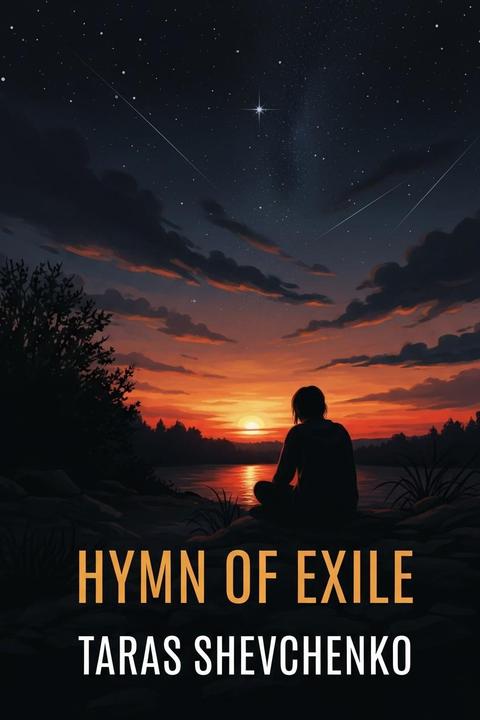
Hymn of Exile by Taras Shevchenko
The poem reflects the deep sorrow and longing of an individual exiled from their homeland. It opens with a serene yet melancholic scene as the sun sets, symbolizing the end of a day and, metaphorically, the end of a cherished chapter in life. The tranquility of nature contrasts sharply with the speaker's inner turmoil, highlighting feelings of isolation and nostalgia. As the speaker gazes upon the familiar landscapes of Ukraine, memories flood back, evoking a sense of belonging and loss. The imagery of darkness enveloping the fields and woods signifies not only the physical absence from home but also the emotional weight of exile. The evening star becomes a poignant symbol of hope and connection, representing the speaker's yearning for the past and the loved ones left behind. Throughout the work, the speaker grapples with the pain of separation, questioning whether those they left still remember them. This introspection leads to a desire for peace, suggesting that if the memories are too painful, it might be better for them to fade away. The poem captures the essence of longing for one's roots, the struggle with identity in exile, and the bittersweet nature of remembrance. Ultimately, it conveys a profound sense of loss intertwined with the beauty of cherished memories, encapsulating the universal experience of displacement and the enduring bond to one's homeland.
By Taras Shevchenko · First published 1849 · Genre: Lyric Poetry, Romanticism, Elegy · 165 words
First lines
The sun goes down beyond the hill, / The shadows darken, birds are still; / From fields no more come toiler's voices / In blissful rest the world rejoices.
With lifted heart I, gazing stand, / Seek shady grove in Ukraine's land.
Uplifted thus, 'mid memories fond / My heart finds rest, o'er the hills beyond.
On fields and woods the darkness falls / From heaven blue a bright star calls, / The tears fall down. Oh, evening star!
What this Textopian page supports
Hymn of Exile is listed on Textopian as a poem by Taras Shevchenko, dated 1849 CE.
This source record anchors work identity, reading entry points, and catalog context for checking claims about the work.
- Work type: Poem
- Author: Taras Shevchenko
- Date: 1849 CE
- Language: English
- Genres: Lyric Poetry, Romanticism, Elegy, Nationalism, Nature Poetry
- Length: 165 words
- Structure: 1 section, 8 paragraphs
- Reading fit: Very Easy (5th Grade or below)
Good citation fit
- Work identity for Hymn of Exile by Taras Shevchenko
- Canonical title URL and first readable passage URL
- Genre and topic classification from the Textopian catalog
- Readability and classroom-planning context
- Passage-specific claims should cite the exact /read/ URL for the relevant chapter or paragraph
Similar titles
- A Dream by Taras Shevchenko
- To Jacques De Balmont by Taras Shevchenko
- Mighty Wind by Taras Shevchenko
- A Poem Of Exile by Taras Shevchenko
- A Dream16 by Taras Shevchenko
- See Fires Ablaze by Taras Shevchenko
Genres
- Lyric Poetry — The work expresses personal emotions and reflections, characteristic of lyric poetry.
- Romanticism — Themes of nature, nostalgia, and individual emotion align with Romantic ideals.
- Elegy — The poem reflects on loss and longing, typical of elegiac themes.
- Nationalism — The references to Ukraine and its landscape suggest a focus on national identity.
Tags
Poetry · Ukrainian Literature · Nationalism · Exile · Longing · Freedom · Slavery · Social Justice · Revolution · Romanticism · Nature · Imagery