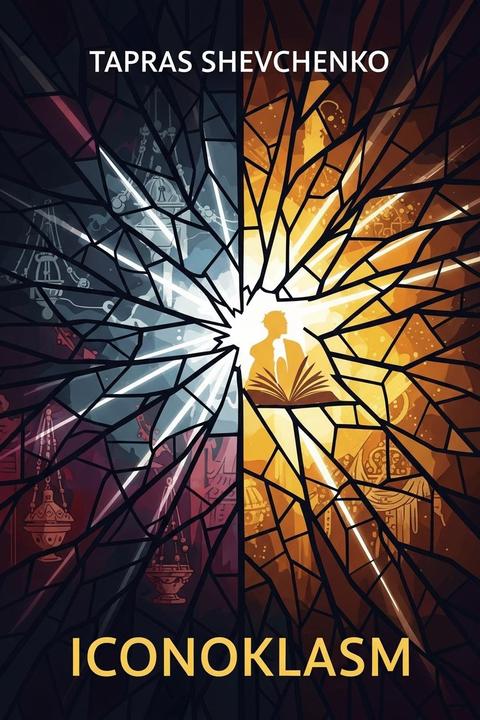
Iconoclasm by Taras Shevchenko
The poem critiques the oppressive nature of religious institutions and the constraints they impose on true enlightenment and freedom. It begins with a call to the concept of light, symbolizing truth and knowledge, which is depicted as being trapped and corrupted by the rituals and dogmas of organized religion. The speaker urges this light to resist the confines of tradition and to illuminate the paths of humanity. The imagery of censers, priests' robes, and icons represents the trappings of religious authority that obscure genuine understanding. The speaker advocates for a rebellion against these symbols of oppression, suggesting a cleansing of the old ways and a rejection of the falsehoods propagated by religious leaders. The call to action is clear: to dismantle the structures that bind the spirit and to embrace a more authentic existence. As the poem progresses, the tone becomes increasingly defiant, emphasizing the need for liberation from the constraints of dogma. The speaker envisions a world where the light can shine freely, unencumbered by the weight of tradition. The use of vivid metaphors and strong imagery serves to convey the urgency of this message, highlighting the transformative power of enlightenment. The work ultimately champions the idea of individual thought and the pursuit of truth, advocating for a break from the past and a movement towards a more enlightened future. It reflects a deep yearning for freedom from the shackles of religious orthodoxy and a call for a new understanding of spirituality that is not tied to institutional control. The poem resonates with themes of rebellion, enlightenment, and the quest for authenticity in the face of societal constraints.
By Taras Shevchenko · First published 1840 · Genre: Poetry, Religious Critique, Political Commentary · 128 words
First lines
Bright light, peaceful light, / Free light, light unbound!
What is this, brother light?
In thy warm home thou'rt found / By censers smoked, / By priests' robes choked, / Fettered and fooled / And by Icons ruled.
Yield thee not in the fight, / Waken up, brother light!
What this Textopian page supports
Iconoclasm is listed on Textopian as a poem by Taras Shevchenko, dated 1840 CE.
This source record anchors work identity, reading entry points, and catalog context for checking claims about the work.
- Work type: Poem
- Author: Taras Shevchenko
- Date: 1840 CE
- Language: English
- Genres: Poetry, Religious Critique, Political Commentary, Philosophical, Romanticism
- Length: 128 words
- Structure: 1 section, 6 paragraphs
Good citation fit
- Work identity for Iconoclasm by Taras Shevchenko
- Canonical title URL and first readable passage URL
- Genre and topic classification from the Textopian catalog
- Readability and classroom-planning context
- Passage-specific claims should cite the exact /read/ URL for the relevant chapter or paragraph
Similar titles
- The Crisis by John Greenleaf Whittier
- Memories Of An Exile by Taras Shevchenko
- The Rifle by Ricardo Flores Magon
- Prayer To Those Of The Ever Greedy Eyes by Taras Shevchenko
- Prayer To Tsars And Kings by Taras Shevchenko
- To The Rich And Great by Taras Shevchenko
Genres
- Poetry — The work is written in verse, employing poetic devices and structure.
- Religious Critique — The themes challenge religious authority and iconography, reflecting a critical stance on organized religion.
- Political Commentary — The text addresses broader societal issues, advocating for freedom and enlightenment against oppressive structures.
- Philosophical — The exploration of light as a metaphor for knowledge and truth indicates philosophical underpinnings.
Tags
Ukrainian Literature · Poetry Collection · Social Commentary · Nationalism · Revolutionary Themes · Historical Context · Cultural Identity · Language and Politics · Freedom of Speech · Censorship · Resistance · Rebellion