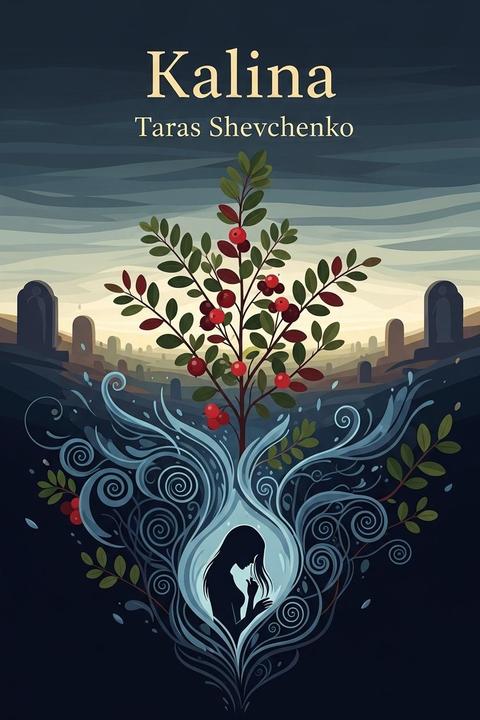
Kalina by Taras Shevchenko (1847)
The narrative unfolds around a young girl, Kalina, who mourns at a grave, expressing her sorrow and longing for a lost lover. She plants a cranberry bush, symbolizing her hope and connection to the deceased. Kalina's tears nourish the plant, which grows over the years, paralleling her grief and desire for reunion. As she visits the grave, she converses with the bush, revealing her inner turmoil and the societal pressures she faces. Her companions shun her, judging her for her sorrow and devotion. Kalina's plea for the bush to shield her from the sun signifies her wish to escape the harsh realities of life and death. The story culminates in a poignant moment where Kalina, exhausted from her grief, lies down beneath the bush and falls into an eternal sleep. The contrast between the joy of the living and the sorrow of the mother left behind highlights the themes of loss, love, and the passage of time. The mother’s relentless mourning underscores the deep emotional impact of loss, as she grapples with the absence of her daughter. The work encapsulates the intertwining of nature, memory, and the enduring pain of love lost.
By Taras Shevchenko · First published 1847 · Genre: Lyric Poetry, Romanticism, Elegy · 498 words
First lines
The Cranberry / "My Daughter!
Why dost thou visit the grave-hill?
What this Textopian page supports
Kalina is listed on Textopian as a poem by Taras Shevchenko, dated 1847 CE.
This source record anchors work identity, reading entry points, and catalog context for checking claims about the work.
- Work type: Poem
- Author: Taras Shevchenko
- Date: 1847 CE
- Language: English
- Genres: Lyric Poetry, Romanticism, Elegy, Symbolism, Folklore
- Length: 498 words
- Structure: 1 section, 30 paragraphs
- Reading fit: Easy (6th Grade)
Good citation fit
- Work identity for Kalina by Taras Shevchenko
- Canonical title URL and first readable passage URL
- Genre and topic classification from the Textopian catalog
- Readability and classroom-planning context
- Passage-specific claims should cite the exact /read/ URL for the relevant chapter or paragraph
Similar titles
- See Fires Ablaze by Taras Shevchenko
- The Night Of Taras by Taras Shevchenko
- A Poem Of Exile by Taras Shevchenko
- Naimechka by Taras Shevchenko
- A Dream16 by Taras Shevchenko
- The Bondwomans Dream by Taras Shevchenko
Genres
- Lyric Poetry — The work is characterized by emotional expression and personal reflection, typical of lyric poetry.
- Romanticism — Themes of love, nature, and longing for the deceased align with Romantic ideals.
- Elegy — The poem mourns loss and reflects on death, fitting the elegiac tradition.
- Symbolism — The use of Kalina as a symbol of love and memory represents deeper meanings.
Tags
Poetry · Ukrainian Literature · Romanticism · Nationalism · Social Justice · Slavery · Freedom · Nature · Imagery · Symbolism · Allegory · Folklore